
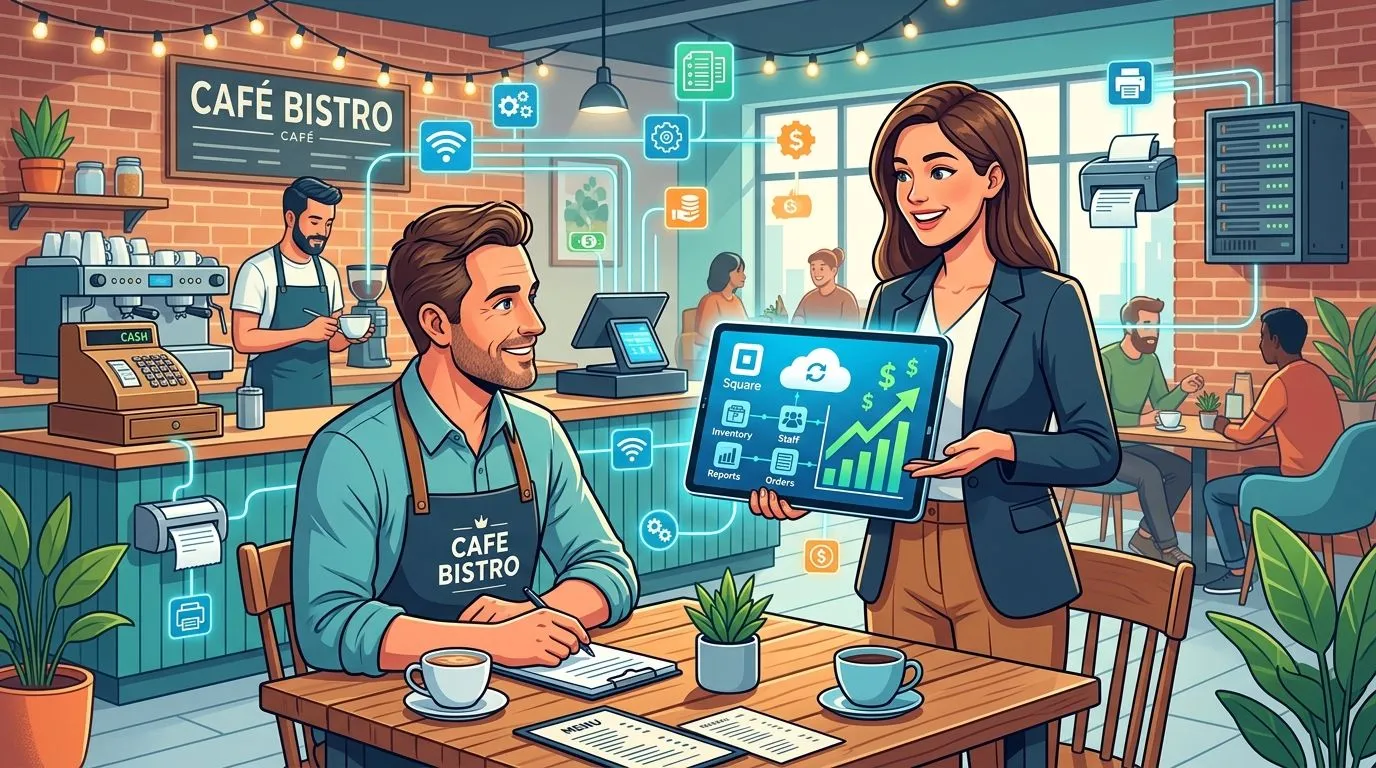
To become a Square reseller, enroll in Square’s official partner program, complete certification, and build your business around recurring software because the program increasingly rewards partners who build around recurring software rather than one-time hardware. The counterintuitive part is that getting approved is the easy step. Building a profitable channel business happens when you stop thinking like a hardware dealer and start selling restaurant workflow fixes that keep paying every month.
The Modern Square Reseller Opportunity
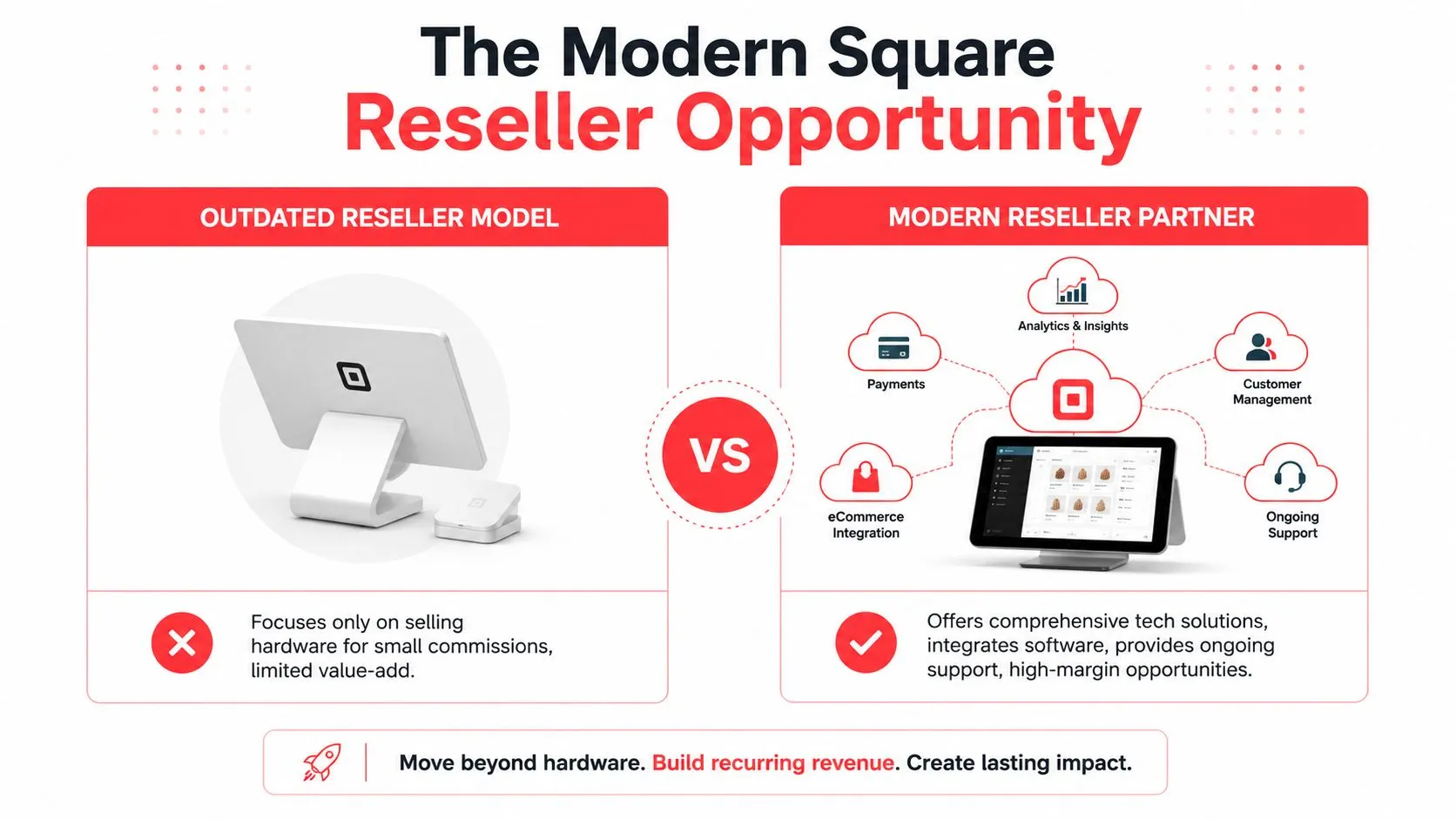
The Square reseller model only becomes attractive when software sits at the center of the deal.
A terminal sale creates a small one-time margin. A software-attached account can produce monthly revenue, implementation fees, support retainers, and expansion work over time. That is why the economics matter more than the badge. According to OrderOut’s breakdown of the Square reseller program, Square increasingly rewards partners who attach recurring software to their referrals. Partners should read that as a clear signal about where Square expects value to be created.
Why hardware-first reselling breaks down
Hardware-only deals are hard to scale into a healthy channel business. You install a register, answer a few support calls, and then start hunting for the next customer because the first one is not producing meaningful recurring income.
There is also a retention problem. Restaurants rarely stay loyal to a reseller who only handled setup. They stay with the partner who fixed an ongoing operating issue, such as online ordering sync, menu accuracy across channels, or staff workflow at peak hours. Software-attached clients tend to stick longer because removing the solution creates disruption inside daily service. They also buy more over time, which makes the account more valuable in year two than it was at launch.
That is the core shift. Square is pointing partners toward lifetime value, not box-moving.
What the modern reseller actually sells
A strong Square practice sells operating improvement. In restaurants, that usually means connecting the POS to the rest of the business so orders flow cleanly, staff touches are reduced, and management gets fewer exceptions to fix by hand.
The strongest offers usually include:
- Core platform: Square for payments and POS workflows
- Recurring software: Tools tied to daily use, such as online ordering, order routing, and channel management
- Implementation services: Menu mapping, testing, training, and launch
- Ongoing support: Post-go-live ownership of the workflow and issue resolution
Many new partners often overlook a significant profit opportunity. They treat software as an add-on instead of the main revenue engine. In practice, attaching software like OrderOut to Square gives the client a reason to keep paying you after the hardware is installed, because you are now supporting a business process, not just a device.
That changes the sales conversation. You are no longer quoting stands, terminals, and printers. You are pricing a restaurant outcome with recurring value behind it. For a broader view of where these buying decisions are heading, see these hospitality technology trends shaping restaurant operations.
Your Path to Official Square Partner Certification
Becoming an official Square partner is straightforward, but you need to treat it like a process, not a casual signup. The mechanics are simple. The business model decisions come right after.
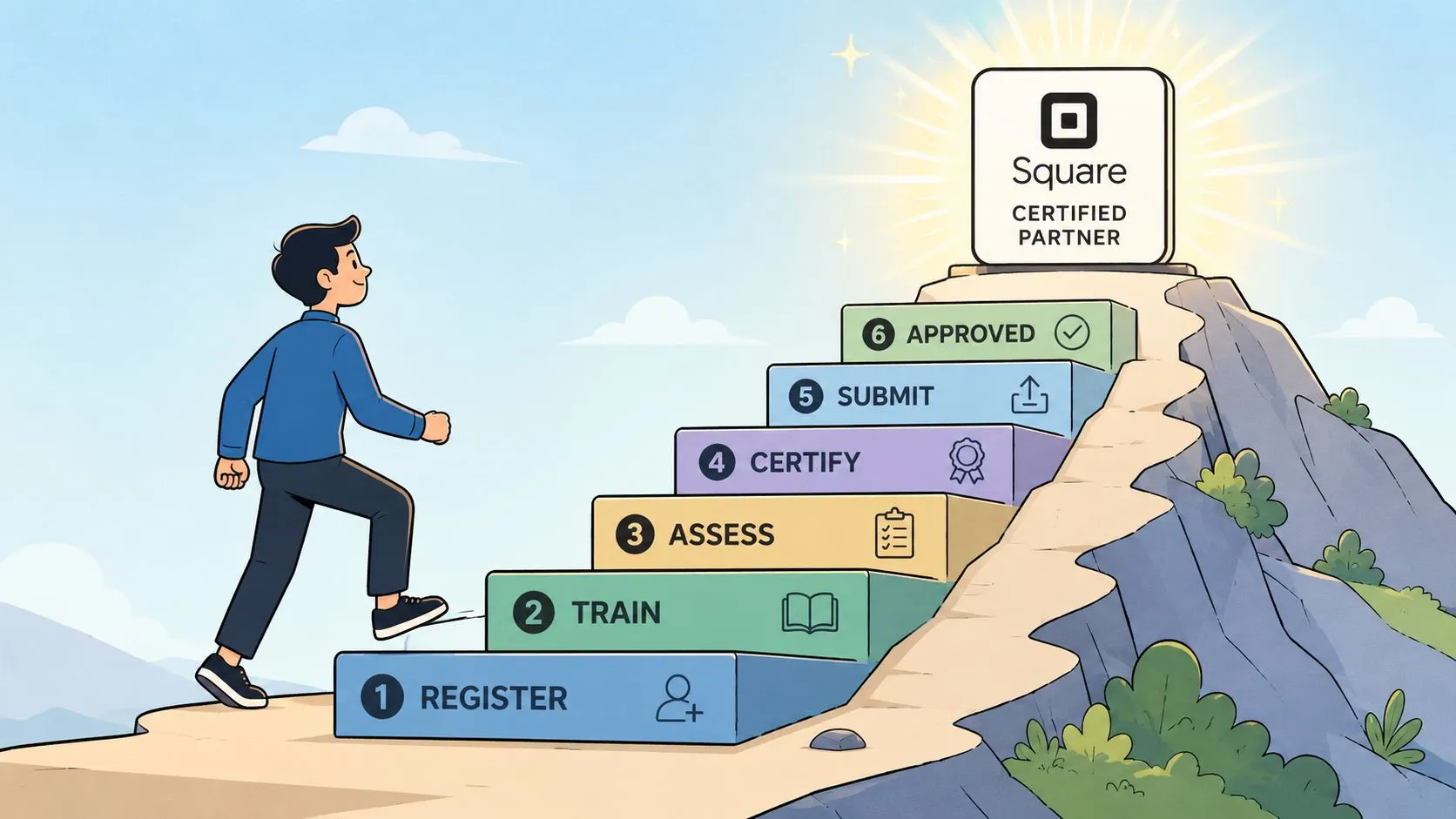
According to a Square reseller onboarding walkthrough on YouTube, self-onboarding is quick, after which partners receive their unique referral link and access to certification.
What the certification process looks like
The sequence is usually:
Apply through Square’s partner portal, complete self-onboarding, then receive your referral link and certification access.
Onboarding is your gateway to partner management, go-to-market resources, and support. Treat it as your operational handoff, not just a box to check.
What Square expects after signup
Certification isn’t just a badge. Partners are expected to understand Square Online, seller onboarding, and product workflows. Eligibility ties back to business legitimacy, relevant website content, and compliance standards.
Don’t wait until after approval to define your offer. You should already know which restaurant problems you’ll solve, how you’ll onboard locations, and what recurring service you’ll attach.
For a useful companion read on the structure of the program, see OrderOut’s article on the Square partner program.
What you should have ready before you apply
A partner who gets approved quickly usually has three things lined up:
- A clear restaurant niche: Independent restaurants, multi-unit groups, ghost kitchens, or another segment you can serve repeatedly.
- A support plan: Who handles setup, training, and first-week issues.
- A software strategy: What recurring product you’ll attach so the relationship doesn’t end with hardware.
If you stop at certification, you’ve earned access. You haven’t built a business yet.
Building Your High-Margin Solutions Stack
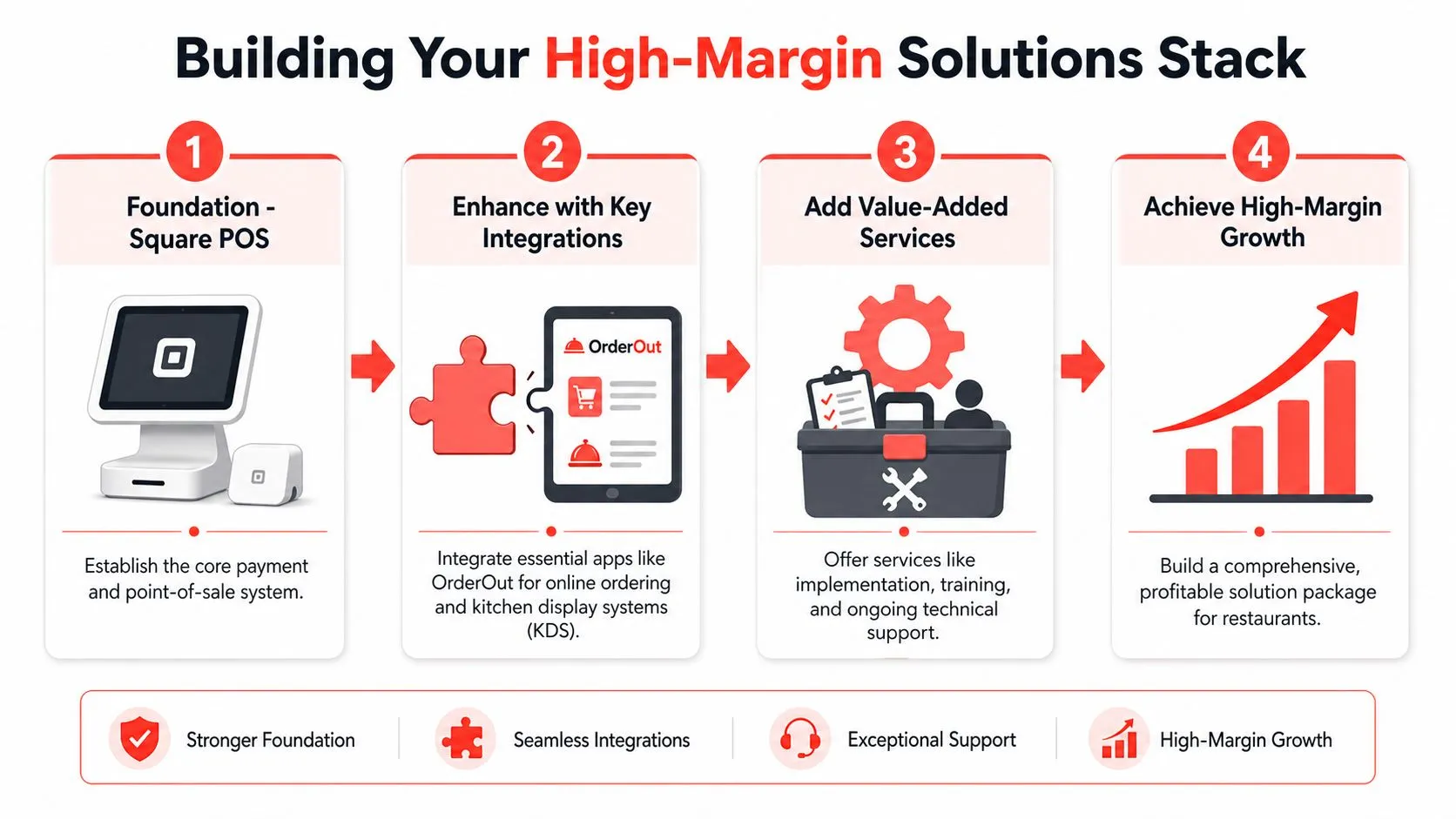
Margin comes primarily from attaching software that solves a daily pain the restaurant already feels. For Square restaurants, one of the clearest examples is delivery-to-POS integration. Staff shouldn’t be bouncing between Uber Eats, DoorDash, Grubhub, and the POS while re-entering tickets by hand.
Start with the workflow, not the app list
A good solutions stack for restaurants usually follows a simple logic:
| Layer | What it does | Why the client keeps paying |
|---|---|---|
| Square POS | Handles payments and in-store operations | It’s the operational core |
| Delivery POS integration | Sends marketplace orders into Square | It removes re-keying and tablet juggling |
| Implementation | Maps menus, modifiers, printers, and testing | The setup work is what makes the software usable |
| Support | Maintains accuracy as menus and channels change | Restaurants need ongoing ownership |
OrderOut for Square resellers gives partners a recurring operational service to sell alongside Square instead of relying on a one-time hardware event.
Why normalized menu mapping matters
In plain language, restaurants don’t need “an integration.” They need the order to land in Square correctly. If an Uber Eats combo comes through with the wrong modifiers, or a DoorDash add-on shows up as generic text, the kitchen still has a problem.
OrderOut’s 3rd-Party Order Engine normalizes marketplace order data into the POS schema before the order appears in Square, so modifiers like sizes, toppings, and sides match correctly rather than failing as loose text, according to OrderOut’s 3rd-party order engine documentation.
The integration only feels invisible when the menu mapping is disciplined. That’s why implementation is part of the product, not an afterthought.
For partners, that creates two advantages. First, you’re solving a problem the restaurant feels every shift. Second, you’re selling a service the client won’t want to rip out casually because it touches daily order flow.
If you want to understand the broader technical side of how these systems connect, this article on the POS integration API is worth reviewing.
Where to send prospects mid-conversation
When a Square prospect asks where to start, don’t bury the next step. If they’re already using Square, send them to the OrderOut listing in the Square App Marketplace so they can see the install path directly.
You can also point them to OrderOut’s 3rd-party order engine and a concrete example like Uber Eats and Clover delivery integration to show how channel-to-POS order flow works in a live restaurant context.
Your Go-to-Market Playbook for Restaurants
The easiest restaurants to close are not the ones shopping for terminals. They’re the ones already losing time to channel chaos.
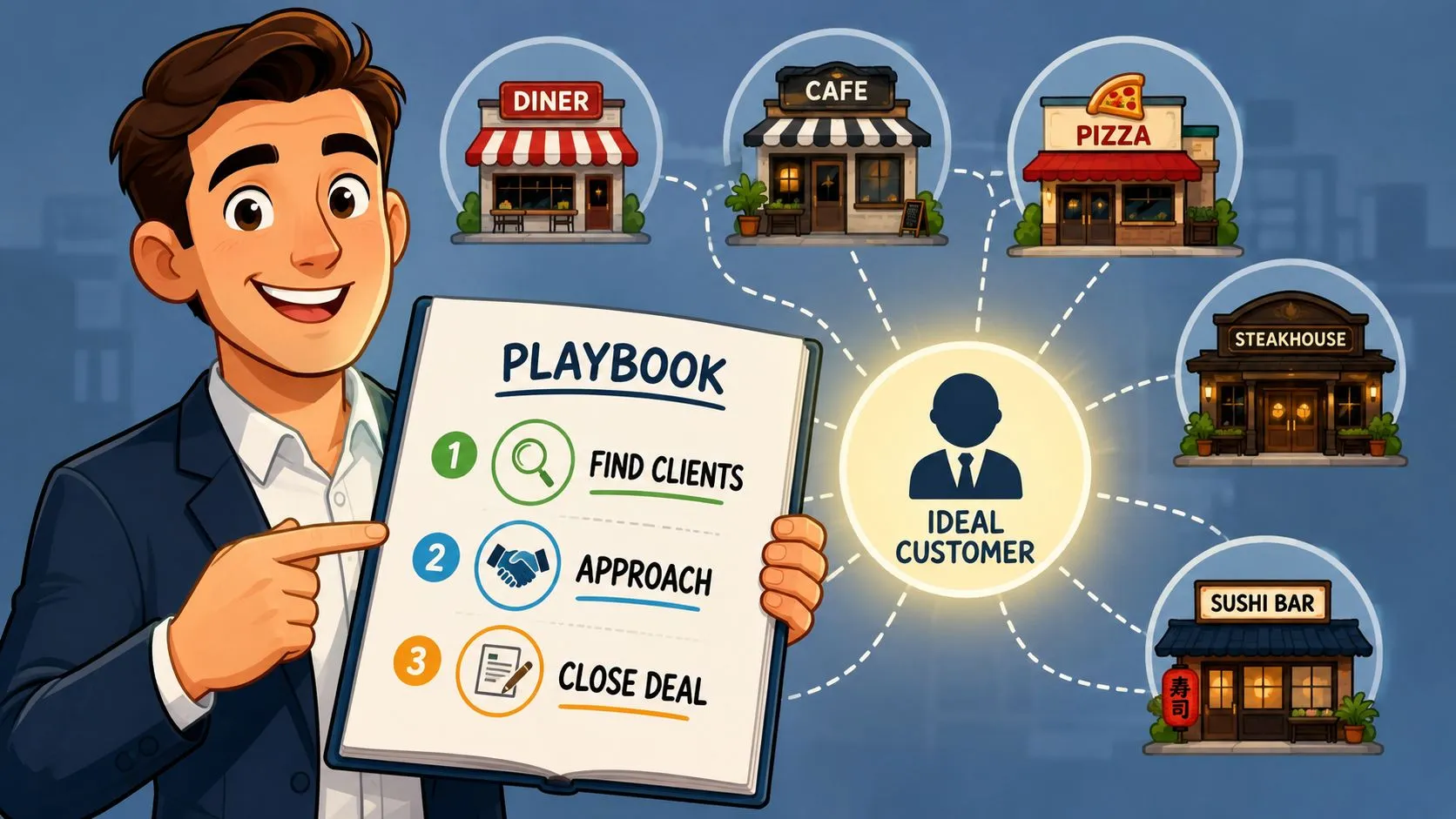
According to OrderOut’s guide on reselling Square POS, the highest-value prospects are restaurants with multi-channel friction, such as Uber Eats, DoorDash, and phone orders, where staff keep re-entering tickets and creating labor waste. New resellers often miss this by chasing low-margin, one-time hardware buyers.
Qualify restaurants by pain
A useful first meeting isn’t a demo. It’s discovery. You’re trying to confirm whether the operator has a repeatable workflow problem that justifies a recurring solution.
Ask questions like:
- Order flow: Where do Uber Eats, DoorDash, and Grubhub orders land today?
- Manual work: Who re-enters those orders into Square?
- Rush periods: What breaks first during lunch or dinner volume?
- Phone pressure: Are staff missing calls because they’re tied up on the line or re-keying orders?
- Menu changes: How often do modifiers, combos, or pricing create order confusion?
The best prospects answer with operational detail, not vague frustration. They can point to a printer bottleneck, a menu mismatch, or a host who acts like an air traffic controller every night.
Sell the operational fix
A partner wins faster when the conversation stays grounded in restaurant work. For example, a location using Uber Eats and DoorDash might have staff manually copying delivery tickets into Square while also answering phone orders. That creates interruptions, missed details, and constant context-switching.
When you position delivery POS integration correctly, you’re not selling “software.” You’re selling one cleaner order path into the POS. That usually leads to better staff focus and fewer hand-entry mistakes.
If you’re building your own outreach and sales motion, this guide to a restaurant marketing plan can help structure your prospecting.
A practical side note. Operators who tighten order handling usually care about waste control too, because bad tickets often become remakes. Beacon Recruitment’s food waste guide for restaurants is a useful resource to share when you want to connect cleaner order intake with fewer avoidable mistakes.
Here’s a short walkthrough that helps frame the sales conversation visually:
What your offer should sound like
The strongest pitch is usually plain:
“We’ll help you run Square as the source of truth, push delivery orders into the POS instead of retyping them, and own the setup so your staff doesn’t have to.”
That lands better than a feature dump. Restaurant operators buy fewer headaches. Features just explain how.
If a prospect is ready to install and they run Clover in some locations, the OrderOut app on the Clover App Market is the cleanest place to begin.
For partners building a repeatable channel offer, the OrderOut reseller program is the page to keep on hand.
Common Reseller Pitfalls and How to Avoid Them
Margin problems usually start long before pricing. They start with a weak offer, loose implementation, and no plan for keeping the account attached to recurring software.
A Reforming Retail analysis of Square’s restaurant reseller program made the economics plain. A partner who relies on terminals and one-time installs has to keep hunting for the next deal. A partner who attaches software, support, and change management can grow revenue inside the same account over time. That’s the lesson.
Pitfall one: demoing features instead of showing operating cost
New resellers often walk through screens, devices, and menu buttons. Restaurant owners rarely buy because a screen looks cleaner. They buy when they can see what the current process is costing them every week.
Build demos around one expensive failure. Show what happens when staff re-enter delivery orders by hand during a rush, when modifiers get missed, or when a phone order ties up the front counter. Put a rough dollar value on remakes, voids, labor drag, and manager interruptions. That sales motion is stronger than a hardware pitch because it ties the software to a financial problem the operator already feels.
Pitfall two: quoting software without scoping the edge cases
Recurring revenue disappears fast when the account was undersold.
Restaurants with combo meals, half-and-half pizzas, location-specific menus, or messy modifier structures need more scoping than a quick discovery call. If you skip that work, the deal closes faster and the launch goes worse. Then support hours eat the margin you expected from the subscription.
I treat menu complexity, printer routing, and marketplace differences as part of pre-sale qualification, not post-sale cleanup. A short technical review before signature saves a lot of bad revenue.
Pitfall three: treating onboarding like admin work
Setup is where profitable accounts either stabilize or start churning. Menu mapping errors, prep station confusion, and untested order flows do more damage than a weak proposal.
Own the first live week. That means checking modifier behavior, testing real orders, confirming print routing, and making sure the staff knows what to do when an item 86s mid-shift. If you need a practical checklist for those implementation details, this POS integration FAQ for OrderOut and restaurant workflows is a useful reference.
Pitfall four: handing support to a generic inbox
Restaurants do not separate software issues neatly. If tickets stop printing, they blame the whole stack. If a marketplace menu breaks, they call the person who sold the system.
Partners who keep accounts tend to own triage, even when another vendor handles the final fix. That does not mean offering unlimited free support. It means setting response expectations, defining what is billable, and staying close enough to protect the recurring revenue.
Pitfall five: chasing any restaurant that uses Square
Some accounts will never justify a software-led offer. A low-volume operator with simple menus and limited off-premise demand may still be a fit for Square, but not for the kind of recurring integration stack that makes a reseller business work.
Good reseller accounts have operational complexity, staff pressure, and enough order volume for workflow mistakes to show up in labor, guest experience, or both. Qualify hard. A smaller pipeline with the right accounts beats a full pipeline of low-retention installs every time.
Frequently Asked Questions
How do I become a Square reseller officially?
Start by applying through Square’s partner portal, then complete the onboarding and certification path. The initial application is quick, and the full process includes referral setup and certification access before you’re ready to sell.
Where does the real revenue come from as a Square partner?
The durable revenue comes from recurring software and services attached to Square, not just hardware placement. Partners who solve day-to-day restaurant problems tend to build better retention than partners who only sell devices.
What kind of restaurant is the best fit for a reseller offer?
The best fit is usually a restaurant dealing with multiple order channels at once, such as Uber Eats, DoorDash, Grubhub, and phone orders. Those operators already feel the cost of manual order handling, so they understand the value of an integrated workflow much faster.
Do I need to handle implementation myself?
You need to own the implementation outcome, even if your process includes platform support. In practice, that means making sure menu mapping, modifier accuracy, printer routing, and test orders are handled before the restaurant goes live.
Where can I learn more about partner and POS integration questions?
If you want a practical companion resource, OrderOut’s POS integration frequently asked questions covers common setup and workflow concerns that come up during restaurant deployments.
If you want to build a Square reseller business around recurring restaurant software instead of one-time hardware installs, start with a practical onboarding path and a service offer you can support after go-live. Visit OrderOut, then request access to the OrderOut reseller portal.