
The Square Partner Program is an ecosystem for developers, agencies, and resellers to create solutions for Square merchants, enabling revenue through software sales, integrations, and referrals. In its current form, the opportunity is large and software-led: Square’s partner ecosystem rewards partners who bring in qualifying software referrals and build services on top of Square rather than chasing one-off hardware margin.
Most partner writeups stop at “join the program.” That’s not enough if you need a business model. The practical question is how to turn access to Square merchants into recurring revenue without getting trapped in one-time setup work or low-margin hardware deals.
For restaurant-focused partners, the answer is straightforward. Sell Square as part of a workflow fix, not as a terminal. Delivery order injection is one of the clearest examples because restaurant teams still struggle when Uber Eats, DoorDash, and Grubhub orders arrive in one system and staff have to force them into another. That gap creates service issues, kitchen confusion, and support burden for the partner who sold the stack in the first place.
That’s why the most durable version of the Square channel model is software plus services. If you want a current example of how Square partnerships are being applied in restaurant operations, see OrderOut’s Square point of sale partnership announcement. The broader lesson is simple: partners who solve operational friction keep accounts longer, expand faster, and earn more predictably than partners who only move hardware.
Introduction
The Square Partner Program works best when you treat it as a solutions business, not a resale catalog.
That shift matters because the economics have changed. The old reseller mindset focused on terminals, onboarding help, and whatever markup the channel could hold onto. The modern Square model pushes partners toward software adoption, implementation, integrations, and ongoing account value. For agencies, ISVs, and restaurant technology consultants, that’s a much healthier position because recurring software revenue is easier to defend than a one-time hardware margin.
In practical terms, that changes how you pitch restaurants. Don’t lead with devices. Lead with workflow. A restaurant owner cares less about who supplied the box on the counter than whether online orders reach the POS correctly, whether staff can stop re-keying tickets, and whether managers can rely on one operational source of truth during a rush.
Practical rule: The stronger your operational fix, the less your offer gets compared on price alone.
For restaurant partners, delivery integration is one of the clearest entry points. Third-party delivery is now standard operating reality for many locations, but plenty of merchants still run it through extra tablets and manual entry. That creates friction for the merchant and support work for the partner. If you remove that friction with a repeatable integration offer, you’ve moved from commodity reseller to operational advisor.
That’s the actual frame for the Square Partner Program in 2026. It’s not just a badge or directory listing. It’s a route to build a services layer on top of Square, with recurring revenue tied to software usage and merchant dependence on the systems you implement.
Understanding the Modern Square Partner Ecosystem
Square is large enough that partners can build a real services business around it: a seller base in the millions, very high annual payment volume, and broad partner adoption among enterprise accounts. For how OrderOut works that channel, see the Square reseller program. For a channel partner, that matters for one reason. You are not trying to create demand for partner help from scratch. You are entering a market where merchants already expect outside specialists to handle setup, integration, and ongoing optimization.
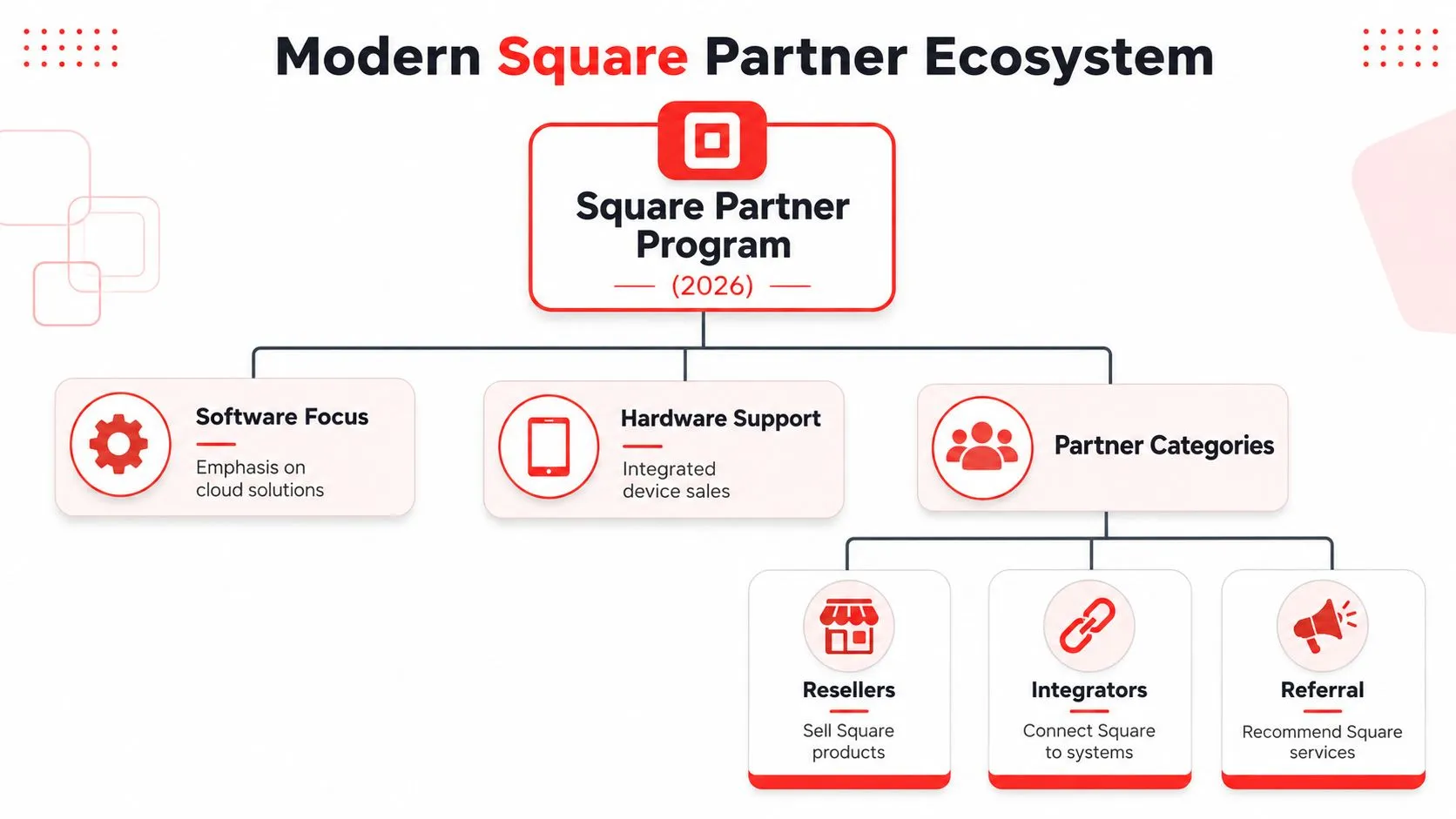
That expectation changes how partners should position themselves. The strongest Square partners are not selling access to Square. They are selling a defined operational outcome inside Square. In restaurants, the highest-value outcomes usually sit around online ordering, delivery flow, menu accuracy, and reducing staff work during service.
Square’s ecosystem reflects that shift. Certified partners span agencies, systems integrators, and ISVs because merchants often need more than software activation. They need someone to configure the system around how the business runs, connect outside platforms, and stay involved after launch when edge cases show up in production.
What the ecosystem rewards now
The partner model favors firms that can package repeatable work into a clear offer:
- Software referral and activation: Bringing in the right merchant still matters, but the best referrals convert because they are tied to a defined use case.
- Implementation services: Restaurants pay for setup when it removes launch risk, shortens time to value, and prevents operational mistakes.
- Integration work: Connected systems create more account stickiness than standalone installs.
- Ongoing support and optimization: Menu changes, modifier rules, store hours, and third-party ordering issues create recurring service demand.
The trade-off is straightforward. Broad generalists can win small one-off projects, but specialists usually keep accounts longer and earn more per merchant over time.
Restaurant partners have an advantage here because the pain is easy to see. A merchant does not need a long strategy deck to understand the cost of extra delivery tablets, re-entered tickets, missing modifiers, or staff checking three systems during a rush. Those are daily failures with labor and revenue consequences.
That is why delivery integration is such a strong wedge into the Square ecosystem. A partner who can explain how Square delivery order injection works inside restaurant operations is selling something concrete: fewer manual steps, cleaner order flow, and less room for front-of-house and kitchen errors. That is much easier to price and retain than generic “integration support.”
A useful comparison comes from adjacent software categories. Vendors that can become a certified partner often gain trust faster because buyers assume the firm can implement correctly, not just sell the tool. Square works the same way. Certification helps open conversations. Recurring revenue comes from solving a business problem the merchant keeps paying to avoid.
For restaurant-focused partners, that usually means building around one repeatable offer. Connect third-party delivery into Square correctly. Keep menus and modifiers aligned. Stay on the account as the operator adds locations, channels, and ordering complexity. That is the modern Square ecosystem in practice. It rewards partners who turn platform access into an ongoing operating fix.
Partner Tiers and Revenue Models
Square partner economics get better once you stop treating the program like a referral fee and start treating it like a service business with recurring software attached.
For restaurant-focused partners, the core question is not just how Square pays. The crucial question is which model gives you enough control to stay in the account after setup, expand into more locations, and attach ongoing revenue through delivery operations, menu maintenance, and support.
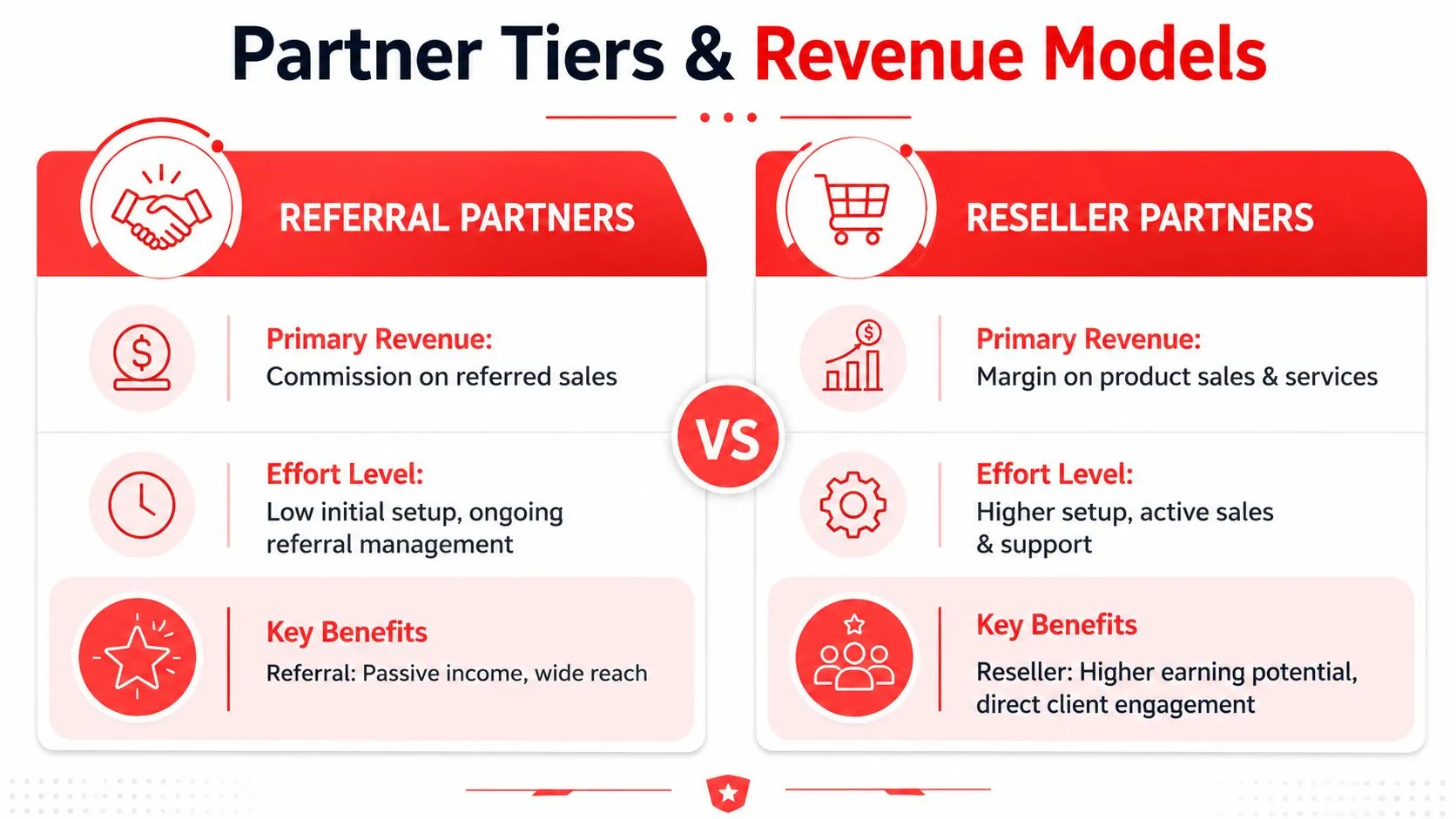
What each model is good for
Square partnerships usually fall into three practical buckets.
| Partner type | Best fit | Revenue logic | Main trade-off |
|---|---|---|---|
| Referral partner | Agencies and consultants with merchant relationships | Referral income tied to software adoption | Limited control once the merchant is handed off |
| Systems integrator | Firms connecting Square with delivery, ordering, ERP, or other operating systems | Implementation fees, support retainers, and stronger account retention | More delivery responsibility and support load |
| ISV | Product companies serving a repeatable restaurant or retail use case | Recurring software revenue with better long-term margins | Higher product, onboarding, and support demands |
Referral is the fastest path in. It is also the easiest model to outgrow.
A pure referral partner can open doors, but another firm often captures onboarding, configuration, support, and expansion work. For a restaurant operator, that means the partner with the deepest operational role usually becomes the trusted advisor. For you, it means the highest-value revenue often sits in implementation and recurring service, not in the initial introduction.
That is why systems integration is where many serious restaurant partners build their margin. If you connect delivery channels into Square, clean up menu mapping, and stay responsible for order flow, you own a problem the client keeps needing solved. Tools like OrderOut fit naturally into that model because they let you package a repeatable service instead of selling custom cleanup every month.
How to evaluate the revenue mix
The best Square partners usually stack three revenue streams:
- Initial implementation revenue
- Recurring software or managed service revenue
- Expansion revenue as the merchant adds locations, brands, or ordering channels
That mix matters. One-time setup fees help cash flow, but recurring revenue is what gives the channel model real durability. In restaurant accounts, recurring income usually comes from staying attached to live operations. Delivery integration monitoring, menu change support, modifier mapping, and exception handling are all billable if you package them correctly.
I have seen partners miss this by selling integration work as a one-off project. They finish the launch, leave the account, and then wonder why margins stay thin. A better model is to define a monthly operating scope from day one. For example: delivery channel connection, Square order injection oversight, menu sync support, and issue response under a clear SLA.
Development support only matters if the offer is repeatable
Square may support partners building integrations, but funding alone does not create a business. It offsets build cost. It does not fix weak packaging, inconsistent onboarding, or custom work that has to be re-scoped for every merchant.
The safer approach is to start with a narrow use case that repeats. Restaurants are a strong example because the pain is consistent across accounts. Third-party delivery creates order injection issues, modifier mismatches, menu drift, and staff confusion. If your team can solve that in a standard way, the revenue model becomes much stronger.
That is also why it helps to study adjacent channel models. This guide to the Clover reseller program for restaurant partners shows the same pattern. Resale gets you in the door. Ongoing operational software and support is what builds a recurring income stream.
If the scope changes from scratch for every merchant, you are running a services shop. If the work can be packaged, priced, and supported the same way across accounts, you are building channel revenue.
For Square partners focused on restaurants, the winning model is usually simple. Use Square as the system of record. Add OrderOut to solve the delivery integration problem that operators feel every day. Then keep the account on a monthly service plan tied to live order flow, not just initial setup.
Your Path to Becoming a Square Partner
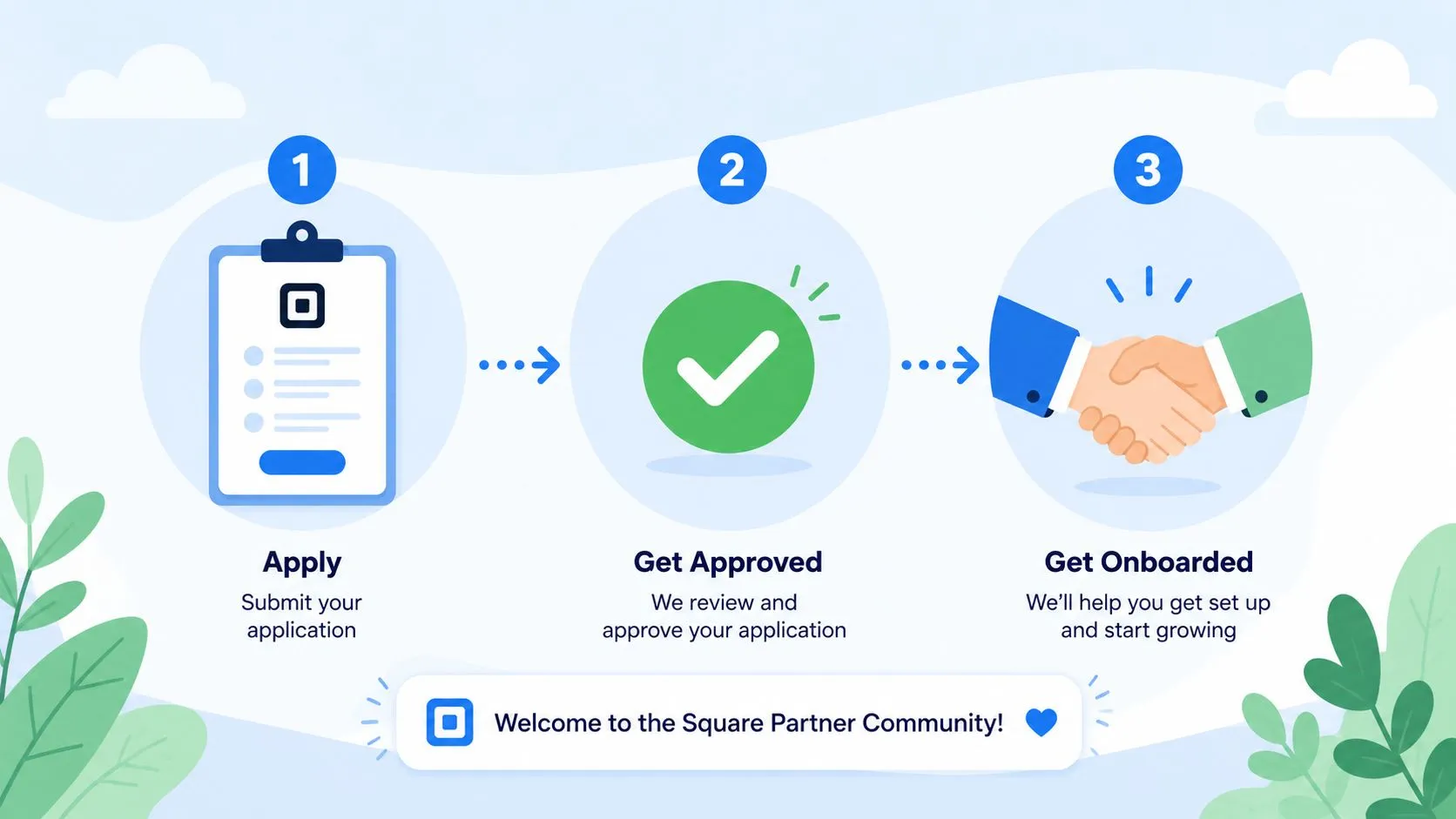
The fastest way into the Square partner ecosystem is to show that you can produce merchant outcomes that repeat. Partners who walk in with a defined restaurant offer usually move faster than firms pitching broad POS consulting.
Start with a packaged use case
Square wants to know what you do for sellers, how you deliver it, and whether you can support it at scale. For restaurant-focused partners, the strongest answer is usually operational, not generic. A message like “we help delivery-heavy restaurants push marketplace orders into Square and keep menu data aligned” is easier to understand, easier to sell, and easier to support than a broad promise to help with technology.
That distinction matters. A partner application is stronger when the offer already has a target buyer, a standard onboarding path, and a support model your team can repeat.
Published program summaries often mention partner support channels, API access, seller exposure through Square teams, and directory visibility. Those benefits help after you know exactly which merchant problem you plan to own.
Build your application around proof of execution
Square does not need a long theory deck. It needs evidence that your team can win, onboard, and retain merchant accounts. Good applications usually cover four points:
- Merchant segment: Independent restaurants, multi-unit operators, ghost kitchens, or brands with meaningful third-party delivery volume
- Delivery model: Implementation, menu mapping, staff training, post-launch support, or managed onboarding
- Revenue plan: One-time setup, monthly service, bundled software, or a mix of services and recurring fees
- Technical approach: Direct API work, managed integrations, or a packaged workflow built around existing tools
The best submissions also show restraint. A narrow offer beats a long list of possible services because it signals that the team knows where margin comes from and where support can get expensive.
For restaurant partners, that usually means starting with one problem that operators already pay to fix. Delivery integration is a strong candidate because the pain shows up in daily operations, not just in IT planning. Staff waste time correcting orders, managers chase menu mismatches, and owners feel the margin hit in labor and refund costs.
If that matches your motion, review the Square reseller program for restaurant partners and compare it against your current onboarding, support, and pricing model.
Later in the process, it helps to see how Square presents partner-facing material directly:
Keep the first offer tight
Start with one package, one merchant profile, and one implementation path. That keeps presales simple and protects your delivery team from custom work disguised as opportunity.
A practical starter offer for restaurants might include account review, menu mapping, delivery app connection, staff training, and a monthly support plan. OrderOut can fit into that model as the delivery integration layer, while Square stays the system the restaurant already runs day to day. That combination gives partners a cleaner sales story and a better shot at recurring income than a one-time installation project.
The goal is not to become everything to every Square seller. The goal is to become the partner restaurants call when delivery operations start costing them time, accuracy, and margin.
Creating Value by Reselling OrderOut with Square
Recurring revenue in the Square channel usually comes from fixing an operating problem the restaurant feels every shift. Delivery order injection is one of the clearest examples because it affects labor, ticket accuracy, menu control, refund volume, and speed of service at the same time.
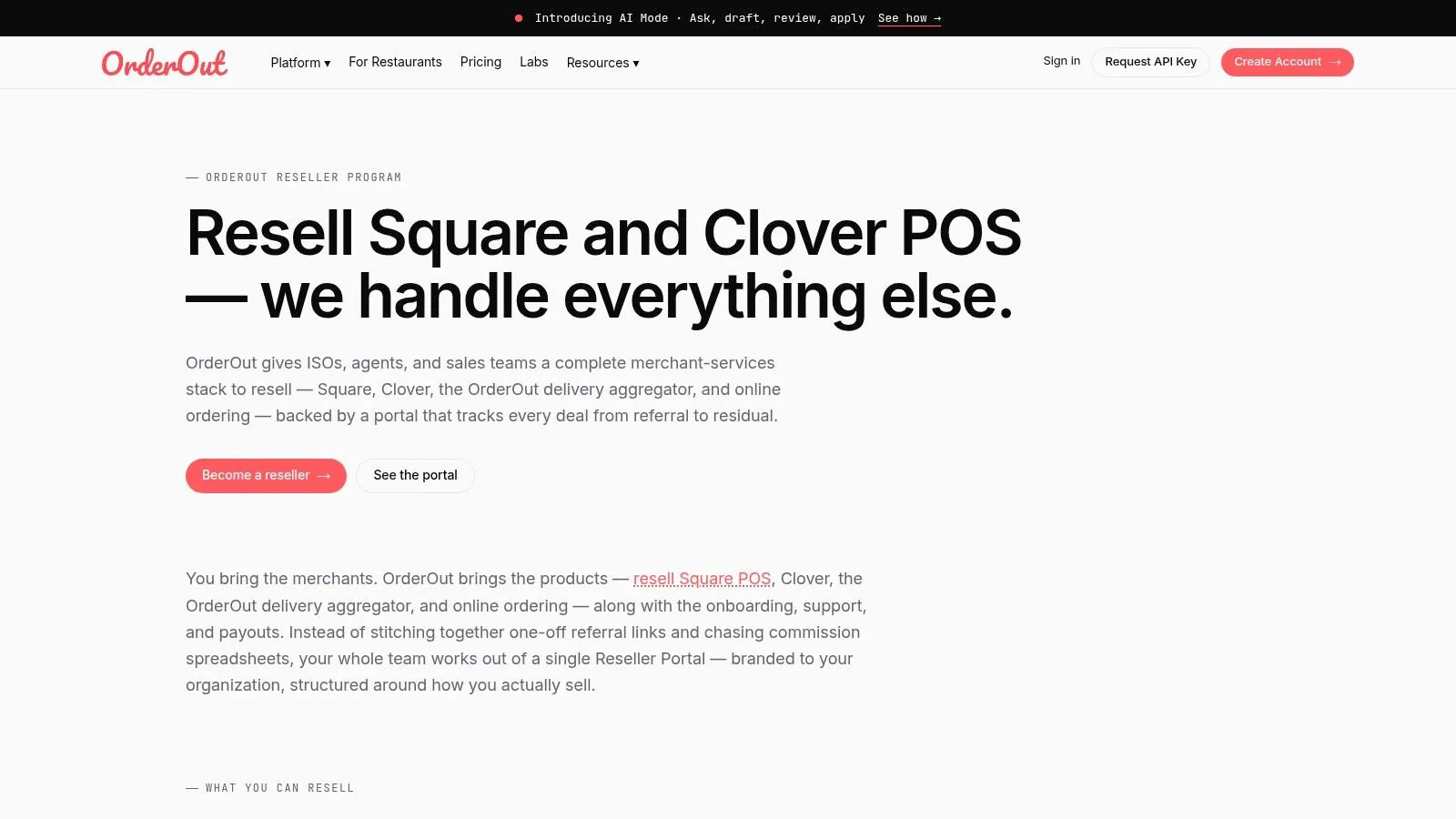
Restaurant owners rarely describe the issue in technical terms. They talk about modifiers arriving wrong, staff retyping orders from delivery tablets, and managers trying to reconcile sales across disconnected systems. That is where a partner can win with a focused offer. Square handles the core POS and payment workflow. OrderOut handles the delivery order flow into the POS, so the restaurant runs one cleaner process instead of several manual ones.
That difference matters because it gives you a service to sell, support, and renew.
OrderOut connects third-party delivery orders to Square, supports menu mapping, and reduces the need for staff to work from multiple tablets during service. For a partner, the value is straightforward. You are no longer selling a generic promise to “help with delivery.” You are selling a defined implementation with a clear operational result.
Why restaurants buy this
Restaurants usually approve this project for practical reasons:
- Less manual entry: Staff spend less time rekeying orders and correcting avoidable mistakes.
- Better ticket quality: Orders reach the kitchen through the POS workflow the team already uses.
- Simpler training: New staff learn one order process instead of bouncing between tablets and the register.
- Stronger support retention: The merchant depends on an ongoing workflow you can maintain, not just a one-time install.
In my experience, this sale works best when you stay close to margin and labor. Owners care about technology, but they buy relief from waste, confusion, and refund-driven friction.
How to package it for recurring income
The strongest partner offers are narrow enough to deliver repeatedly and broad enough to justify a monthly fee. A practical bundle often includes Square configuration, delivery app connection, menu mapping, testing, launch support, and a recurring support plan for menu changes, modifier issues, and exception handling.
Some groups will want more than front-of-house order flow. If the discussion expands into inventory, reporting, or integrating with your ERP, clean delivery data entering Square first makes that next step much easier. Bad order data upstream creates expensive reconciliation work downstream.
For merchant education after the first call, send the POS integration FAQ for restaurant workflows. It covers the implementation questions operators ask once they understand the value but want to know how the rollout works in practice.
A good reseller motion here is simple. Charge for setup. Charge for onboarding and menu work. Keep a monthly support agreement in place because delivery menus, modifiers, and app settings change constantly. That is how this becomes a channel business with recurring income instead of a string of one-off projects.
If you need a concrete merchant example, point them to the third-party order engine for restaurant delivery integration or a workflow page such as Uber Eats, DoorDash, and Grubhub order injection into Square through the third-party order engine.
Frequently Asked Questions
What is the main revenue opportunity in the Square Partner Program?
The strongest opportunity is software-led revenue, not hardware markup. Square’s current partner model rewards qualifying software referrals and supports integration work, which makes recurring software and services more attractive than one-time resale alone. For restaurant partners, that usually means packaging Square with an operational workflow fix.
How does delivery POS integration help a Square partner keep accounts longer?
It gives the merchant a system they rely on every day. When Uber Eats, DoorDash, and Grubhub orders move directly into the POS instead of being typed in manually, the partner becomes tied to an important operating process rather than just the original sale. That usually leads to steadier support relationships and more room for ongoing services.
Do restaurant clients still need extra tablets with a delivery integration setup?
The goal of a connected setup is to remove extra tablets from the core order-entry workflow. When third-party delivery orders inject into Square, staff can work from the POS as the operational source of truth instead of juggling disconnected devices. That simplifies training and reduces avoidable handoffs during service.
Can a partner start small with one restaurant use case?
Yes. That’s usually the better approach. Start with one repeatable offer, such as third-party delivery into Square for independent restaurants or small multi-location groups, then standardize menu mapping, testing, onboarding, and support before expanding into adjacent services.
What should a partner do first if they want to sell this with Square?
Start by validating the workflow on a live or test merchant account, then package it as a defined service. For setup paths and product details, review delivery POS integration for Square partners, developer and integration partner options, restaurant pricing for connected order workflows, and the OrderOut FAQ for restaurants and partners.
Conclusion
The Square Partner Program now makes the most sense for partners who sell outcomes, not equipment. The economics point that way, the ecosystem structure supports it, and restaurant merchants are already looking for help with the messy parts of operations that default POS setups don’t solve on their own.
For most restaurant-focused agencies, ISOs, ISVs, and payment professionals, delivery integration is one of the clearest ways to build that outcome-driven model. It’s visible to the merchant, useful to staff, and easier to package into recurring service than a generic consulting engagement. When you combine Square with a defined delivery-to-POS workflow, you stop being just another reseller and start acting like the operator’s systems partner.
That’s the practical path. Keep the offer narrow, solve one painful workflow well, document the install, and build recurring revenue from support and software adoption instead of chasing one-time margins.
Create your account and begin onboarding through OrderOut at the reseller portal for restaurant partners and operators.
New to the OrderOut Reseller Portal? The help center for merchant services agents has written steps, screenshots and a short video for each job in the portal — signing your Master Agreement, adding an agent, creating an onboarding link and tracking a merchant application. Every change ships with a note in what’s new in the Reseller Portal.