
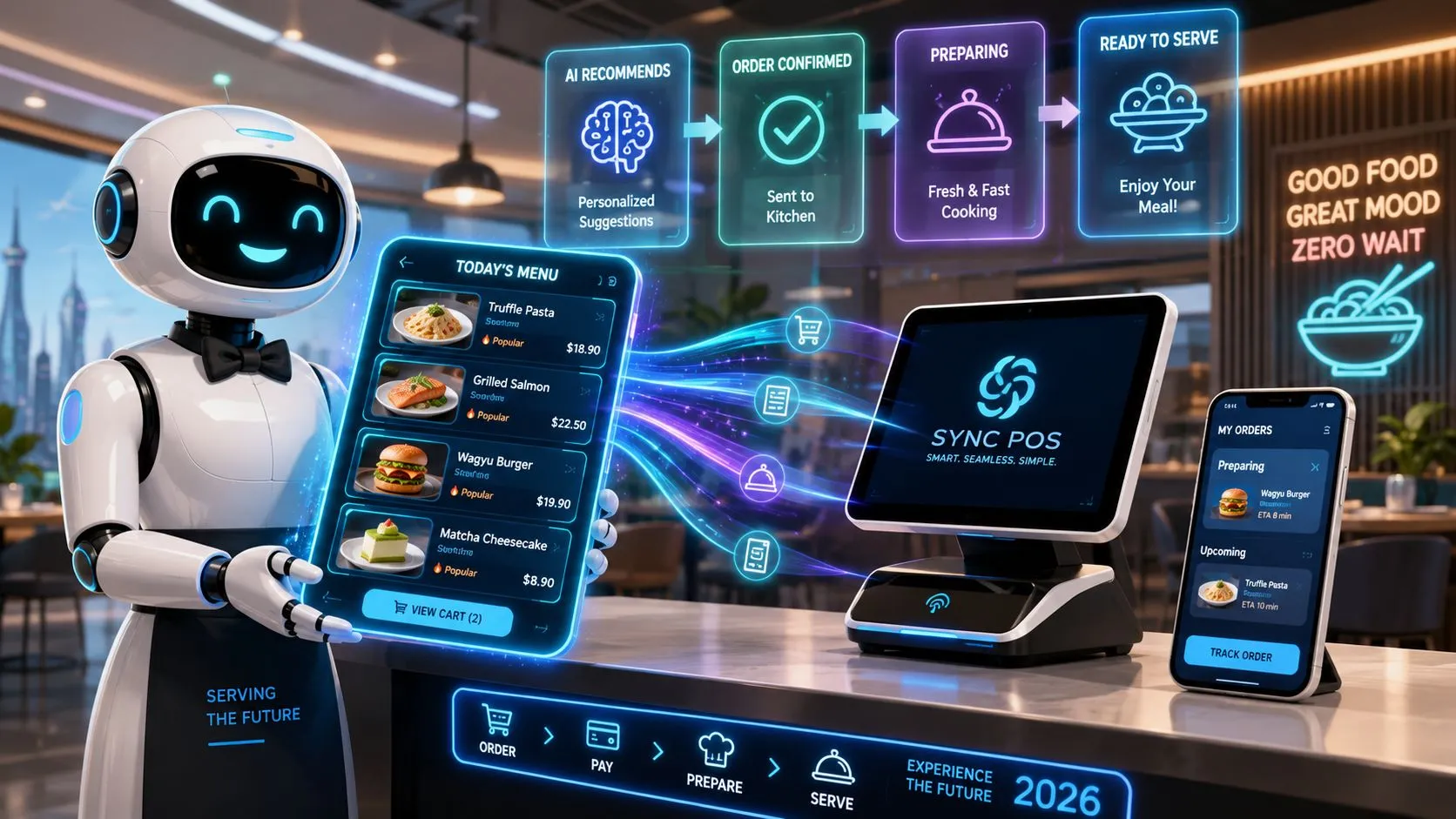
Agentic commerce for restaurants is a future where AI assistants, acting on behalf of customers, autonomously find, customize, and place food orders through platforms like Uber Eats and DoorDash, directly interacting with your restaurant’s systems. It matters now because global agentic commerce transaction value is projected to reach $3.5 trillion in 2026, and by 2030 the US restaurant and retail market could see up to $1 trillion in orchestrated revenue, with 15% to 25% of total e-commerce sales flowing through agentic channels.
Most restaurant articles stop at the big prediction. Operators need the ground-level version. If AI assistants start shopping for customers, comparing menus, checking availability, and placing orders automatically, the restaurants that win won’t just have good food. They’ll have systems that can accept those orders cleanly, without a staff member re-entering every ticket from a tablet.
That’s why this shift is less about futuristic robots and more about restaurant operations. If your menu data is messy, your delivery channels are fragmented, or your POS isn’t the source of truth, agentic ordering won’t feel exciting. It’ll feel like more chaos. If your order flow is clean, this becomes a practical advantage. For a broader look at how restaurants are modernizing systems, see this guide to restaurant digital transformation.
What Is Agentic Commerce for Restaurants
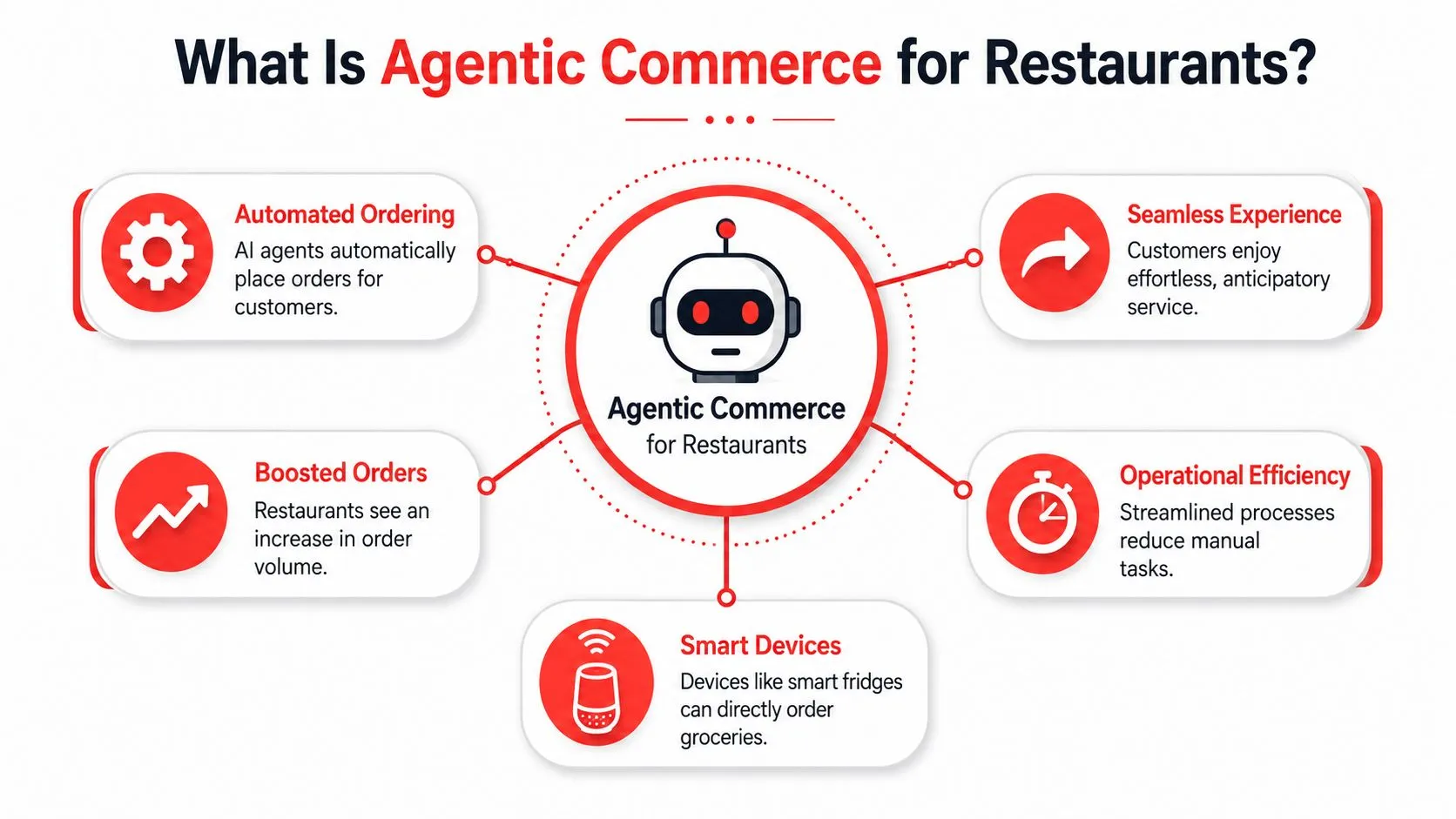
Agentic commerce means a software agent acts like a personal food shopper for the customer. Instead of a person opening Uber Eats, searching manually, reading every modifier, and checking out step by step, the agent does that work for them.
A simple way to think about it is this. Traditional online ordering is a customer using a digital menu. Agentic commerce is a customer telling an assistant, “Find me a gluten-aware dinner for four under my preferences, avoid peanuts, and reorder sides we liked last time,” and the assistant handles the rest.
Why operators should care
This isn’t a niche idea. Juniper Research projects that by 2030, the US restaurant and retail market alone could see up to $1 trillion in orchestrated revenue from agentic commerce, with global projections reaching as high as $3 trillion to $5 trillion, and 15% to 25% of total e-commerce sales flowing through agentic channels.
That changes the job of restaurant tech. Your ordering stack isn’t just serving human customers anymore. It’s preparing for software buyers that move fast, compare options instantly, and expect reliable menu and availability data.
Practical rule: If a digital channel still depends on a staff member copying orders from one screen into another, it isn’t ready for agentic demand.
What it looks like in plain language
For restaurant owners, agentic commerce restaurants will feel familiar at first. Orders may still originate through channels like Uber Eats or DoorDash. The difference is upstream. The customer may never browse manually. Their AI assistant may choose the restaurant, customize the meal, and complete checkout for them.
That creates a new kind of competition. You’re not only trying to appeal to human eyes. You’re also making your menu understandable to machines that sort by availability, match dietary needs, and prefer reliable ordering paths.
A clean digital operation helps on both fronts. Humans get smoother ordering. AI agents get structured, dependable information. Restaurants get fewer operational surprises when digital demand picks up.
How Agentic Ordering Will Actually Work
The easiest way to understand this shift is to follow a few real-world scenarios.
Allergy filtering at machine speed
A customer tells an AI assistant they need dinner from a local restaurant, but one person in the household has a severe nut allergy. The assistant checks restaurant listings, scans menu structure, reviews available modifiers, and narrows the list to options that fit the request. Then it places the order through a platform the restaurant already uses.
To the operator, that order may look normal when it arrives. What changed is the path the customer took to get there. The decision process was faster, more specific, and more dependent on clean menu data.
Group ordering with fewer back-and-forth steps
A company office needs lunch for a team. Instead of one employee texting everyone, building a spreadsheet, and entering a large order by hand, an AI assistant can gather preferences, assemble the meal, and submit the final cart. That kind of order is where messy modifiers usually cause problems.
If your menu names are inconsistent or options are unclear, the agent struggles. If your digital menu is structured and current, the agent can complete the order without friction.
Reordering on behalf of the customer
A repeat guest might say, “Order what I got last Friday, but swap the drink and add fries.” That’s a natural fit for AI assistants. They remember patterns well and can execute routine decisions quickly.
In hospitality, this broader movement is part of what some teams call digital labor. The Agentic AI in Restaurants and Hospitality report describes the deployment of “silicon staff” and Large Action Models that can autonomously operate software and handle complex guest interactions, and notes that agentic systems are forecasted by SiteMinder to resolve 80% of operational issues by 2029.
The important takeaway for operators isn’t the label. It’s that software is moving from assisting a person to acting on their behalf.
Many owners already see a version of this on the phone side, where automation handles routine guest interactions before staff gets involved. This overview of an AI phone answering system for restaurants shows a similar pattern. The system isn’t replacing hospitality. It’s handling repetitive ordering tasks so the team can focus on service and exceptions.
The Technical Bridge to the Agentic Future
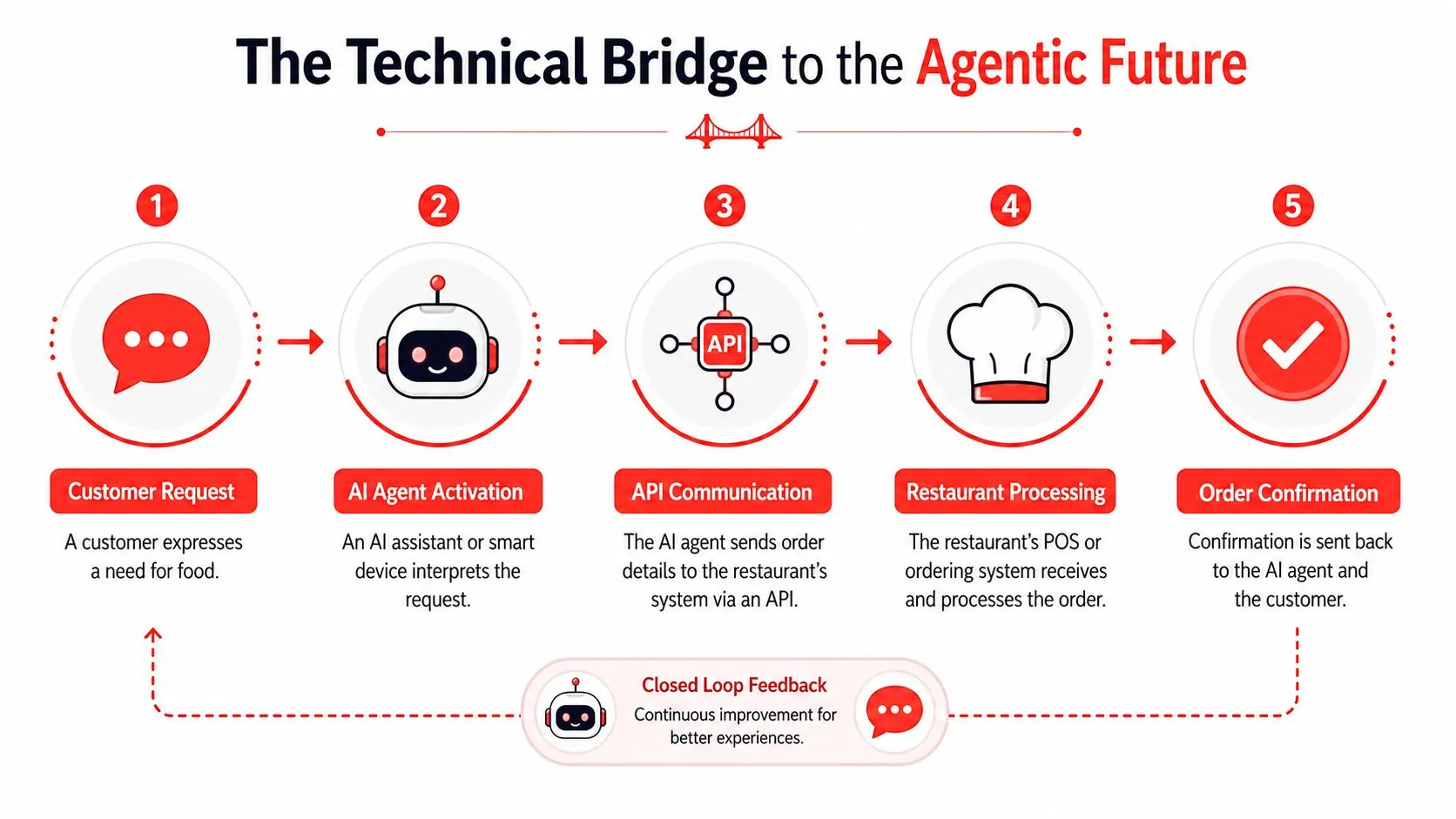
Agentic ordering only works if restaurant systems can accept outside instructions reliably. In simple terms, AI agents need a way to “talk” to your restaurant. For most operators, that conversation won’t start inside a custom app. It will happen through the delivery channels and ordering systems already in use.
Where restaurants get stuck
Here’s the weak point. An AI assistant can build and submit the perfect order through Uber Eats, DoorDash, or Grubhub, but if that order lands on a separate tablet and someone has to retype it into Clover or Square, the chain breaks.
At low volume, manual entry is a nuisance. At machine speed, it’s a bottleneck. The future order path has to be machine-readable from end to end, not machine-generated at the top and manually recreated at the bottom.
That is why delivery POS integration matters so much. The key bridge isn’t the chatbot or the shopping agent. It’s the operational layer that turns marketplace orders into clean POS tickets.
Why normalized order data matters
A useful way to think about this is translation. Uber Eats, DoorDash, and Grubhub each format menus and modifiers in their own way. Kitchens don’t want three logic systems. They want one consistent ticket format.
OrderOut’s Square Grubhub integration explanation describes how the platform uses a normalized POS schema to map disparate marketplace menus into a single operational format before the order reaches Clover or Square, ensuring kitchens receive standard ticket formatting.
That technical detail matters because consistency is what keeps digital scale from becoming operational noise. If a customer’s AI agent places a customized order through DoorDash, the kitchen still needs a clear ticket. If another order comes through Grubhub, it should look just as predictable at the line.
A deeper look at the mechanics of that bridge is in this guide to restaurant POS integration APIs.
The workflow is easier to grasp when you see it in action:
This is also where implementation details start to matter. The technical model for agentic ordering depends on exposed resources like menu and restaurant info, side-effecting tools such as order placement, live inventory updates, and a user confirmation gate before a purchase is completed. If those data flows aren’t current, AI agents make bad decisions or abandon the transaction.
Your Restaurant Readiness Checklist
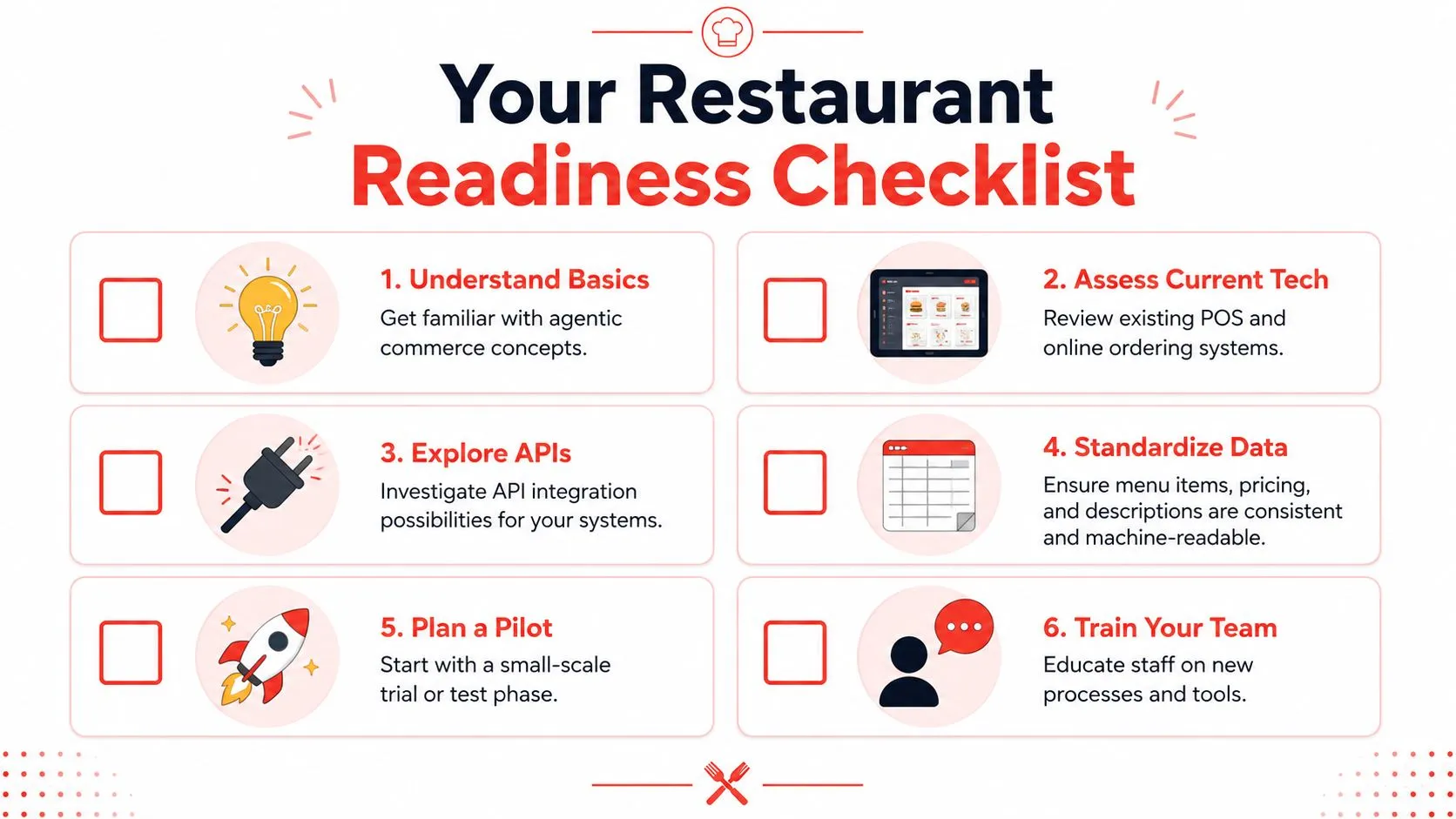
Most operators don’t need to build AI. They need to get the basics right so AI-driven ordering can work through the channels they already use.
Start with operational hygiene
Use this checklist as a practical filter:
- Make the POS your source of truth: If staff still bounce between tablets and the POS, clean that up first. Agentic commerce restaurants need one operational record for what was ordered, how it was modified, and where it should print.
- Audit menu names and modifiers: Machines don’t handle vague menu structure well. Inconsistent option names, duplicate modifiers, and unclear item logic create avoidable confusion.
- Check inventory visibility: If an item is sold out, that needs to be reflected quickly across ordering surfaces. AI agents won’t tolerate stale data for long.
- Reduce handoffs: Every extra step creates another chance for a mistake. A smoother path today also makes your setup more ready for tomorrow’s order volume.
- Review your order-entry process: This article on restaurant order entry automation is a helpful benchmark for spotting where staff time is still being spent on repetitive copy work.
Clean menu data isn’t glamorous, but it’s one of the most important prep steps for agentic ordering.
Pick the first step you can take this week
For many Clover operators, the fastest move is to install a delivery-to-POS integration and stop relying on manual re-keying. You can start from the OrderOut app in the Clover App Market, where it’s available as a free-to-install app with no payment information required.
If you’re evaluating tools before installing, these pages give the practical overview:
The point isn’t to chase a trend. It’s to remove the fragile parts of your current setup so you’re ready when more orders start arriving from software-driven buying behavior.
The Operational Impact of Getting Ready Now
The smartest reason to prepare for agentic commerce isn’t future hype. It’s that the same fixes solve today’s delivery headaches.
Better order flow today
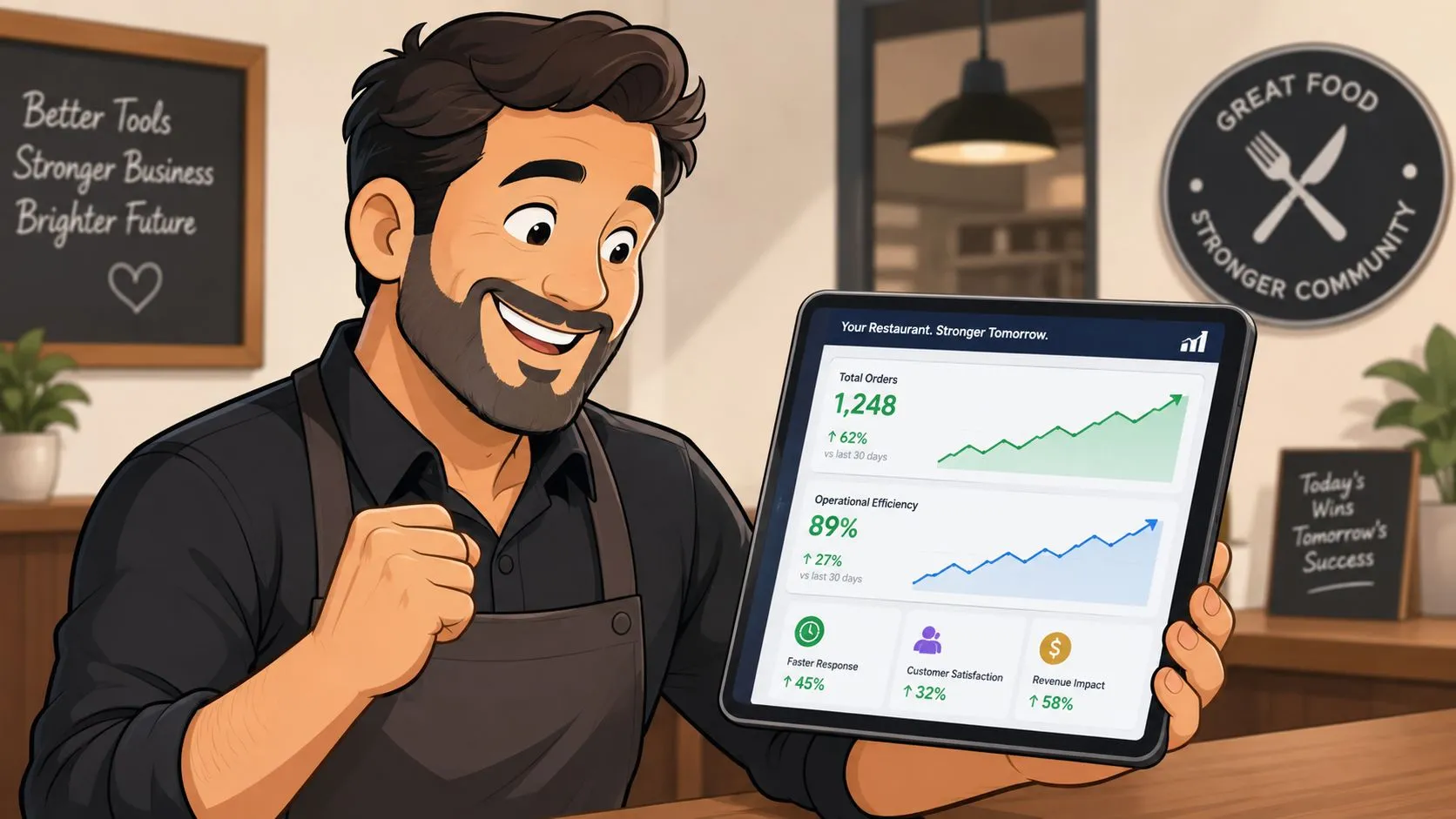
When third-party orders go straight into the POS, staff stops acting as a human middleware layer. They don’t have to monitor tablets, re-enter items, or second-guess whether a modifier was copied correctly.
That has an immediate operational effect. The team can stay focused on cooking, packing, and serving instead of clerical cleanup.
OrderOut’s POS integration overview states that it delivers 100% order accuracy by eliminating manual re-keying of third-party delivery orders from Uber Eats, DoorDash, and Grubhub directly into Clover or Square POS systems, preventing mistakes that come from human data entry.
Less friction for staff
The hidden cost of bad order flow isn’t only the wrong ticket. It’s the constant mental switching. A cashier looks at one screen, enters data into another, answers a question from the line, then returns to the tablet. That environment creates avoidable stress.
A more automated setup simplifies the job. Digital orders arrive in a familiar format. The kitchen sees a standard ticket. Managers spend less time troubleshooting avoidable errors. This broader topic is covered well in this look at automation in restaurants.
The restaurants that feel “faster” often aren’t moving faster by hand. They’ve removed unnecessary handoffs.
Why this matters for agentic commerce restaurants
If AI assistants begin sending more precise, more frequent, and more complex orders through delivery channels, the restaurants that have already fixed manual entry will absorb that demand more smoothly. The ones still treating third-party ordering as a tablet workflow will feel the strain first.
This is why readiness isn’t a future-only project. Strong delivery POS integration improves the current operation, protects ticket quality, and creates a cleaner foundation for the next wave of digital ordering.
Navigating Security and Ethical Questions
Operators are right to be cautious. If software agents can place orders, they can also create new failure points.
The hard part is that the public data is still thin. Modern Restaurant Management notes that agentic commerce introduces new fraud vectors that require new detection domains, but no public data currently exists on how often autonomous agents submit fraudulent orders to restaurants. That means the risk is real, but the playbook is still forming.
What to watch closely
A few questions matter more than the buzzwords:
- Who placed the order: Was it a human customer acting directly, or an agent acting on their behalf?
- Where did it enter the system: Did it come through a known channel with a clear audit trail?
- Can you trace the order cleanly: If something goes wrong, can your team reconstruct what happened from one source of truth?
Those questions get easier when all digital orders land in the POS through a consistent path. Fragmented systems make disputes harder. Centralized records make them easier to review.
Keep control of the customer experience
Some owners worry that agentic commerce means losing the relationship with the guest. That can happen if your operation becomes invisible behind marketplaces and automation. It doesn’t have to.
The stronger approach is to treat clean integration, accurate menus, and operational clarity as control tools. They help you decide what your restaurant exposes, how orders are fulfilled, and where exceptions are handled. They also support adjacent decisions, like packaging choices that hold up well when more ordering becomes automated and off-premise. For a useful operational lens on that side of the business, Afida’s guide to sustainable food packaging insights is worth a read.
Frequently Asked Questions
What makes agentic commerce different from regular online ordering
Regular online ordering usually means a person browses, clicks, and checks out manually. Agentic commerce means an AI assistant does those steps for the customer based on goals, preferences, and constraints. For restaurants, that raises the importance of structured menu data and reliable order acceptance.
Do restaurants need to build their own AI to participate
No. Most restaurants won’t need to build a custom AI system. In practice, many orders will still come through established channels such as Uber Eats, DoorDash, and Grubhub. The bigger issue is whether your systems can accept those orders cleanly and process them without manual re-entry.
Does OrderOut work with Clover and Square
Yes. OrderOut injects third-party delivery orders directly into Clover and Square instead of leaving staff to re-key them from separate tablets. It also maps marketplace menus into a normalized POS schema so kitchens receive a cleaner, more consistent ticket format.
Do I need extra tablets for Uber Eats, DoorDash, and Grubhub
The goal is the opposite. OrderOut is built around removing extra delivery tablets and manual re-keying so the POS remains the operational source of truth. That matters now for staff productivity and later for agentic ordering, where extra handoffs become even more fragile.
Is OrderOut free on Clover
Yes. OrderOut is available as a free-to-install app on the Clover App Market with no payment information required. If you want to see fit and setup options before onboarding, these pages are useful: OrderOut pricing, OrderOut FAQ, OrderOut’s Square delivery integration, and a channel-specific example like Grubhub Clover delivery POS integration.
If you’re getting ready for agentic ordering, start with the operational foundation that matters now: clean delivery-to-POS flow, no extra tablets, and no manual re-keying. Learn more about OrderOut, then create your free account and start onboarding in a few clicks through the OrderOut dashboard.