
A Clover reseller program is a partner model that lets ISOs, ISVs, agents, and POS dealers sell Clover to merchants, then build a recurring revenue business around payments, support, and the right software stack. The bigger question isn’t whether you can resell Clover. It’s whether you can turn each merchant into a long-term account instead of a one-time hardware sale.
Most new partners focus too narrowly on terminals, pricing sheets, and application approval. That gets you in the door, but it doesn’t build a durable restaurant channel. Restaurants don’t buy a POS because they want a box on the counter. They buy it because they need fewer operational headaches, cleaner order flow, and one system staff can run during a rush.
That’s where a reseller either becomes replaceable or becomes valuable. If you only sell Clover, you compete on rate, hardware, and contract terms. If you bundle the right operating tools around Clover, you start acting like a restaurant technology advisor. That’s a very different business.
What Is the Clover Reseller Program
The Clover reseller program is the framework partners use to sell Clover hardware, merchant processing, and related services to businesses, then earn revenue from the merchant relationship over time.
For a new partner, that sounds simple enough. Get approved, sell devices, place merchants, collect residuals. In practice, the partners who last in this channel do something more useful. They package Clover into an operating system for the restaurant, not just a payment terminal.
Why hardware-only deals stall
A bare Clover pitch usually turns into a commodity conversation. The merchant asks about rates, lease terms, and whether your device is cheaper than the last rep’s offer. That race gets ugly fast, especially in restaurants where owners have heard every pitch already.
A better position is to solve workflow problems Clover touches every day:
- Delivery order handling: Uber Eats, DoorDash, and Grubhub create operational drag when staff must manage separate tablets.
- Menu control: If the POS menu and marketplace menu drift apart, staff spend time fixing avoidable mistakes.
- Phone and online ordering: Restaurants want fewer disconnected systems, not more.
That’s why I advise partners to think in terms of account value, not just placement volume. The strongest offers combine POS, payments, and software that makes the restaurant easier to run.
What profitable partners understand early
The money in this channel comes from what happens after the install. Residuals matter, but retention matters first. A merchant who feels supported, sees clean operations, and understands what they bought is more likely to stay.
Practical rule: If your offering doesn’t reduce a restaurant’s daily friction, you’re selling a product. If it does, you’re building an account.
That same logic shows up in adjacent channels too. If you want a useful comparison point, the Square reseller program shows how the best partner models shift from simple resale to bundled operational value.
Where software changes the economics
Restaurants don’t experience technology as separate categories. They experience it as one shift, one staff, one order queue, one printer line. If delivery orders are still getting re-entered by hand, the merchant won’t care that the POS hardware looks modern.
That’s why delivery-to-POS software matters inside a Clover practice. It gives the partner a way to sell operational clarity, not just processing. For restaurant-focused ISOs and ISVs, that’s often the difference between thin margins and a stable recurring book.
Who Can Become a Clover Reseller
Clover fits several partner types, but not every applicant is equally positioned to build a strong business around it. The best fit is usually a company that already serves restaurants and can combine sales discipline with operational understanding.
The partner profiles that make sense
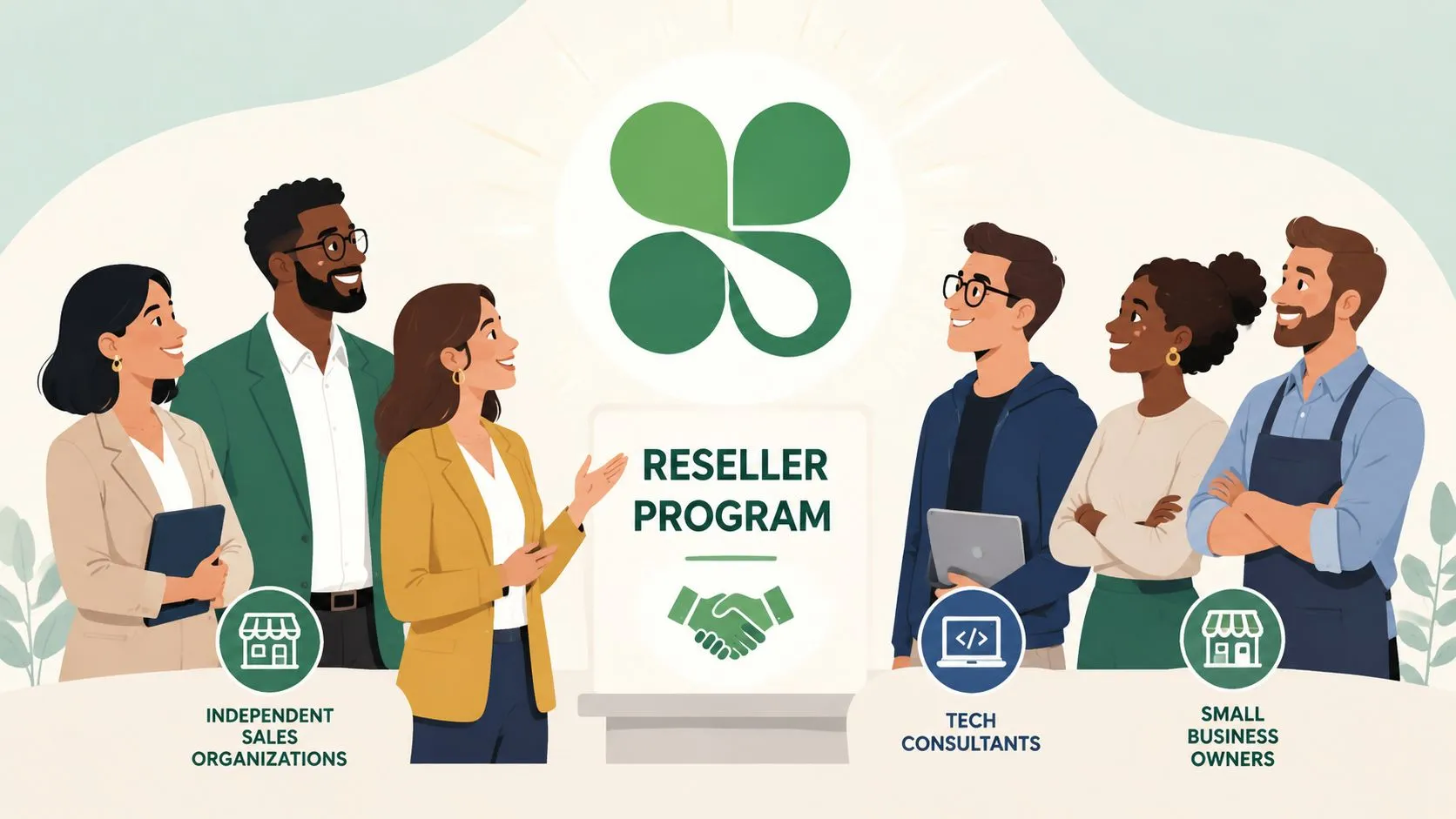
Some partner categories show up again and again in the Clover ecosystem:
- ISOs and payment agents: They already understand merchant underwriting, processing relationships, and residual economics. Their upside comes from moving beyond rates and adding operational software to the sale.
- ISVs: They bring product depth. If their software solves a restaurant problem, Clover becomes part of a broader solution.
- POS dealers and local channel partners: They often win on relationships, installation support, and on-site trust.
- Agencies and consultants serving restaurants: These groups can work if they already influence software decisions and are willing to handle consultative sales.
The common thread is access to merchants and the ability to guide a buying decision credibly.
The real filter isn’t just eligibility
A lot of people can apply. Fewer can sell this well.
The strongest Clover partners usually have these traits:
| Partner quality | Why it matters |
|---|---|
| Restaurant focus | Restaurant operators ask operational questions, not abstract tech questions |
| Technical comfort | Integrations, menu logic, and workflow setup can’t be hand-waved |
| Contract discipline | Written terms protect both the merchant and your reputation |
| Consultative selling | Restaurants respond better to problem-solving than generic processing pitches |
A partner who can explain how Uber Eats orders should land in the POS will usually outperform a rep who only talks about rates.
Restaurants don’t need another rep. They need someone who can tell them what will break, what will save time, and what they’ll actually be using on a Saturday night.
What to assess before you apply
Before you chase approval, audit your own business model.
Ask yourself:
- Do you already serve restaurants, or are you trying to learn the segment while selling into it?
- Can your team support a merchant after install, especially when menu or delivery workflows need attention?
- Do you have a recurring revenue plan beyond processing alone?
If you want a partner structure built around branded resale and recurring restaurant software, start by reviewing the OrderOut reseller program for restaurant technology partners.
Navigating the Application and Certification
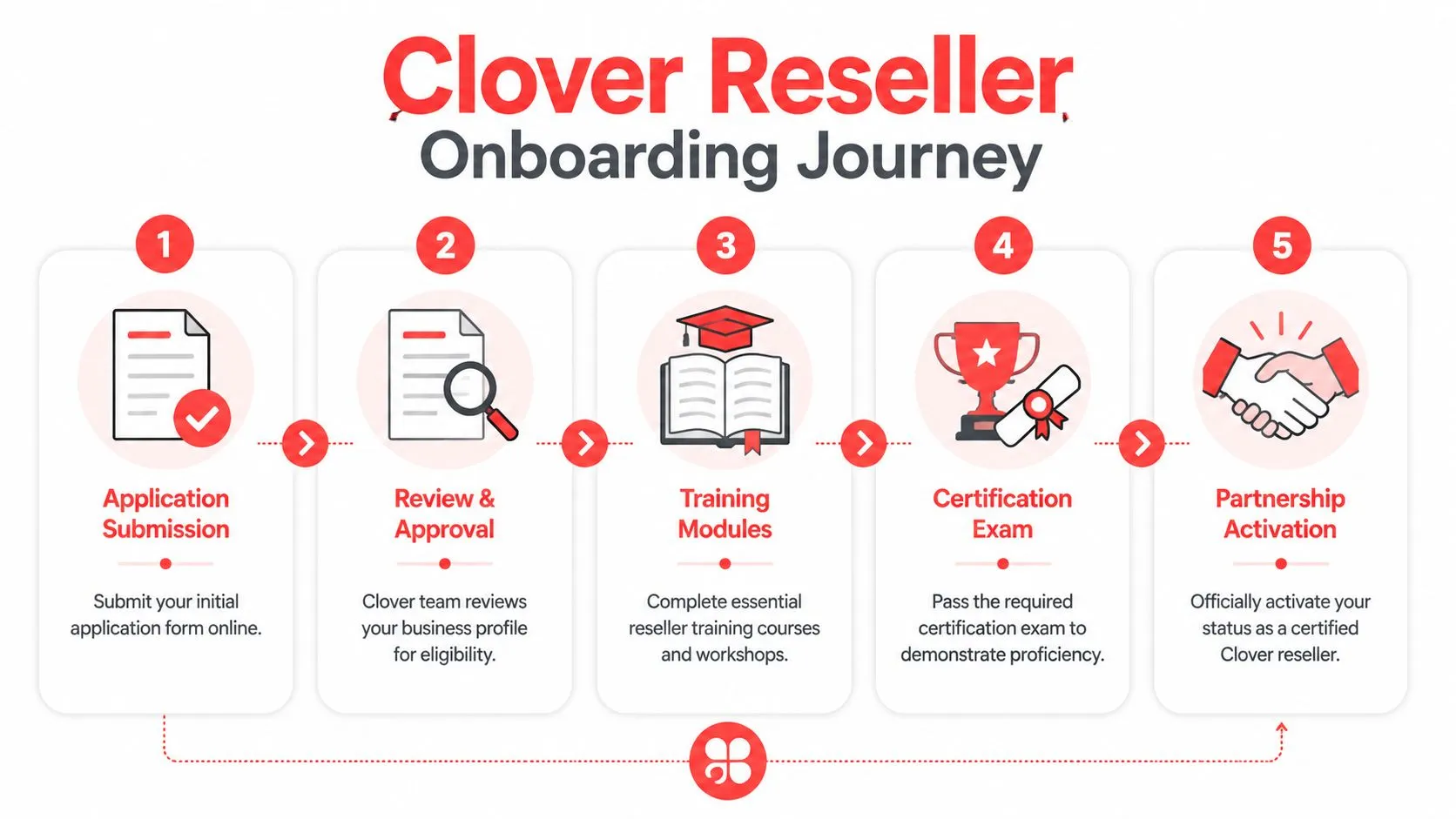
The official path into Clover is more structured than many new partners expect. Clover’s developer documentation says the Certified Dealer Program requires a step-by-step technical application methodology: partners first submit a business case through Clover’s developer portal application process, and after review and approval, a support analyst starts a Technical Discovery meeting to validate integration capabilities and partner readiness.
Start with the business case
This first step matters more than many applicants think. Clover isn’t just checking whether you want to sell. It’s checking whether your model makes sense, whether you understand the merchants you serve, and whether your offer has operational credibility.
A good business case usually answers practical questions clearly:
- Who you serve: Restaurant operators, multi-unit groups, local independents, retail, or mixed verticals
- How you sell: Direct, referral, partner-led, or software-first
- What you add: Integration knowledge, onboarding support, software, or channel reach
If you’re vague here, the rest of the process gets harder.
Prepare for technical discovery
Once Clover reviews the application and moves you forward, the Technical Discovery conversation becomes the key checkpoint. Here, partner readiness stops being theoretical.
Clover’s application documentation also notes that the process enforces strict device specifications on certified devices. For an ISV or integration-minded partner, that means you need to be comfortable talking about compatibility, deployment realities, and how your stack behaves in production.
Field note: Don’t show up to Technical Discovery with only a sales story. Show up with a workflow story.
If your strategy includes delivery integration, menu sync, or layered software, be ready to explain how that works for an operator in plain English first, then in technical terms if asked.
What applicants often underestimate
The application is not just a paperwork exercise. It’s a readiness exercise. Clover wants to know whether you can support real merchants without creating downstream operational problems.
Three habits help:
- Use plain language: Explain merchant outcomes before technical architecture.
- Document your process: Onboarding steps, support handoffs, and escalation paths should be clear.
- Show restaurant relevance: Generic partner language is weaker than a specific restaurant workflow.
Treat certification as a screening tool
Certification isn’t the business. It’s a gate. The actual work starts after approval, when you have to sell, implement, and retain merchants in a crowded channel.
That matters because approval doesn’t automatically produce margin. The partners who turn certification into revenue are the ones who already know how the restaurant will use Clover in combination with the rest of the stack.
Build a Modern Tech Stack for Restaurants
If you want the Clover reseller program to produce durable recurring revenue, sell a restaurant operating stack, not just a POS terminal.
The fastest way to become interchangeable in this market is to stop at hardware and payments. Restaurant owners care about what happens when DoorDash fires three orders at once, Uber Eats has a menu mismatch, and the host stand is already juggling in-house traffic. That’s the environment your bundle has to survive.
Solve tablet chaos first
One of the most common restaurant pain points is still manual order handling from third-party delivery apps. According to OrderOut’s Clover API integration guide, manual re-entry from Uber Eats, DoorDash, and Grubhub into Clover wastes staff time and increases order-entry mistakes. The same article explains that automating the flow removes the need for staff to act as the bridge between apps and POS.
For a reseller, that’s a strong operational wedge. You’re no longer saying, “We can place Clover.” You’re saying, “We can stop your team from typing delivery orders into the POS during the rush.”
A concrete restaurant example makes this easy to understand. If a store runs Clover and takes orders from Uber Eats, DoorDash, and Grubhub, staff shouldn’t be bouncing between tablets and the POS just to keep tickets moving. The better workflow is direct order injection into the POS so Clover stays the source of truth.
Why menu mapping decides whether integration works
Delivery integration only works well when menu structure is clean. Base items, modifiers, combos, and tax logic all need to line up between the marketplace and the POS. If they don’t, restaurants get confusing tickets, failed injections, and support calls that should have been avoided.
That’s why menu hygiene needs to be part of your reseller playbook. Before rollout, it’s worth giving operators practical resources on marketplace setup and setting up your online menu so the front-end ordering experience and back-end POS logic don’t drift apart.
Here’s the plain-language version. If the customer sees one thing on DoorDash but Clover expects another, the order won’t arrive cleanly.
Later in the sales process, you can add the technical explanation. Order data has to map into a normalized POS schema, especially around modifiers and bundled meals, or injection errors start showing up where staff can least afford them.
Bundle software that creates stickiness
A single, well-chosen software layer can reshape your economics. OrderOut’s Clover reseller program is built around helping partners resell delivery-to-POS integration, online ordering, and AI phone ordering under the partner’s brand to restaurant clients. For a Clover-focused partner, that means one merchant relationship can support more than one recurring revenue stream.
You also want merchants to understand the app path clearly. If you’re working in the Clover environment, the simplest in-context next step is the OrderOut app on the Clover App Market.
A quick product walkthrough helps illustrate what that looks like in practice:
Build around one operational source of truth
The best restaurant stacks keep the POS at the center. Delivery apps can generate demand, but they shouldn’t force the staff to manage separate workflows forever.
A practical bundle for many restaurant accounts looks like this:
- Clover for in-store operations
- A delivery order engine for marketplace orders
- A branded online ordering path the restaurant controls
- Phone ordering automation when call volume is a bottleneck
- Clear onboarding and support ownership
If you sell that stack well, you stop sounding like another processor rep and start sounding like the person who can simplify operations.
Understanding Your Revenue and Margins
The Clover reseller program can be financially attractive, but only if you understand where margin comes from and where it disappears.
A useful benchmark comes from Turnkey’s overview of Clover reseller economics, which explains that residual revenue sharing is central to the ecosystem, with upfront placement incentives and ongoing commissions that vary by ticket size and card mix. That’s the part most new partners pay attention to first.
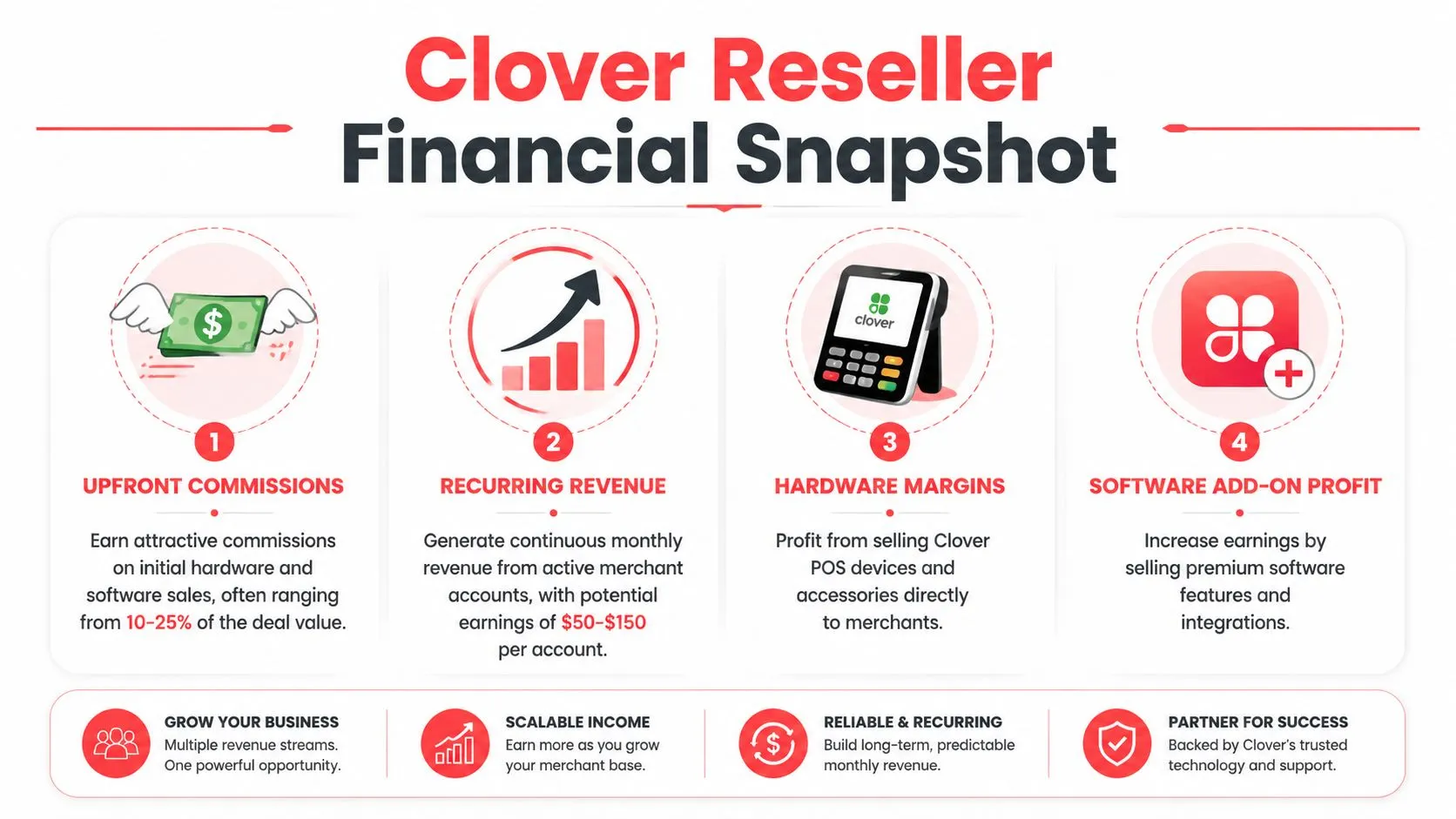
The four margin buckets to watch
Think about revenue in layers, not one line item.
| Revenue layer | What it looks like |
|---|---|
| Processing residuals | Ongoing earnings tied to merchant transaction volume |
| Upfront placement income | Initial bonus or deal-based compensation |
| Hardware margin | Device and accessory markup where applicable |
| Software revenue | Recurring income from tools the restaurant keeps using |
The first two get the attention. The fourth often determines whether the account becomes meaningfully profitable.
Why software improves account quality
Residual income can be solid, but it also leaves you exposed to churn if the merchant never sees you as more than a processor. Software changes that because it ties your value to daily operations.
A delivery integration layer is especially useful in restaurants because it touches active workflows. If the merchant depends on delivery orders flowing cleanly into Clover, your relationship becomes harder to displace.
That’s also why I tell partners to measure success beyond placements. A framework like Prometheus Agency’s AI ROI framework is useful thinking here, not because every restaurant software layer is “AI,” but because it pushes you to evaluate operational outcomes, staff burden, and process quality rather than just headline revenue.
Software margin gets stronger when it solves a problem the staff feels every day.
Don’t confuse gross revenue with good revenue
Not every account is worth the same effort. A merchant with messy menu data, unclear ownership, and weak onboarding discipline can consume support hours that erase the upside of the deal.
That’s why partners need a simple profitability lens:
- Can this merchant adopt the workflow cleanly?
- Will the merchant use the software layer you bundle?
- Does the operational pain justify the added implementation effort?
If you want to pressure-test restaurant economics more broadly, this restaurant profit margin calculator guide is a useful companion because it helps frame software purchases in the context of operating reality rather than sales theory.
Avoid Common Contract and Compliance Pitfalls
A lot of merchants don’t switch providers because another reseller had a better pitch. They switch because the last one created mistrust.
That problem isn’t hypothetical. Limelight Payments’ 2026 Clover reseller analysis says over 60% of business owners report negative experiences with resellers due to opaque rate structures and verbal promises that weren’t documented in writing. If you’re building a Clover practice for restaurants, that’s your opening.
Transparency is a sales advantage
Restaurant operators are used to hearing verbal assurances about rates, device terms, support, and cancellation language. Then the paperwork shows up and the details don’t match the conversation. Once that happens, trust is gone.
The practical fix is simple:
- Put every pricing term in writing
- Explain equipment ownership clearly
- Spell out monthly software charges
- Address cancellation terms before signature, not after
- Define who supports what after go-live
This isn’t just compliance hygiene. It’s positioning. A partner who explains total cost plainly stands out in a market where many merchants expect confusion.
Use plain-English contract review
A helpful habit is to review proposals the same way other service-contract specialists do. Resources like this guide to payroll service contracts are useful because they show how to surface obligations, renewal language, and service boundaries in clear terms the buyer can understand.
If a term matters to the merchant, it belongs in the document, not just in the sales conversation.
Protect the book you are building
Bad contracts don’t just hurt the merchant. They hurt your future referrals. In restaurant channels, reputation moves locally and fast. One account that feels trapped can poison a neighborhood.
Partners who want a cleaner book should use a short internal rule: no undocumented promises, no skipped fee review, no vague equipment language. The merchants may not remember every technical detail of the sale. They will remember whether you were clear.
Frequently Asked Questions
Is the Clover reseller program mainly for ISOs, or can ISVs and agencies join too?
It’s a fit for ISOs, ISVs, POS dealers, payment agents, and some agencies that already advise restaurants on tech decisions. The key requirement isn’t the label on your business card. It’s whether you can sell consultatively and support the workflow after the sale.
What’s the difference between being a reseller and being an affiliate?
A reseller usually owns more of the sales process and merchant relationship. That can include onboarding, packaging the solution, and supporting the account. An affiliate model is usually lighter-touch and more referral-based.
Do I need to provide technical support for delivery-to-POS software myself?
You need to understand the workflow well enough to sell it and set expectations correctly. In most good partner setups, the software provider handles the deeper integration layer while you stay accountable for the overall merchant relationship and rollout quality.
Can I bundle Clover with delivery integration, online ordering, and phone ordering under one offer?
Yes, and that’s often the smarter way to sell restaurants. Operators usually prefer one coherent operating stack over separate tools stitched together after the fact. If you want answers to common implementation questions, review OrderOut’s restaurant technology FAQ.
Can a partner keep its own brand in front of the restaurant?
In many partner models, yes. That’s especially useful for agencies, ISOs, and multi-location consultants that want the merchant to experience one branded relationship instead of a chain of disconnected vendors.
If you’re building a restaurant-focused partner business, start with a stack you can explain clearly, sell transparently, and support without creating chaos for the operator. Learn more about OrderOut, then request access to the OrderOut reseller portal.
New to the OrderOut Reseller Portal? The help center for merchant services agents has written steps, screenshots and a short video for each job in the portal — signing your Master Agreement, adding an agent, creating an onboarding link and tracking a merchant application. Every change ships with a note in what’s new in the Reseller Portal.