
The best quotes about tipping are short, respectful messages matched to the customer touchpoint, such as a receipt, delivery package, social post, or etiquette reminder. Six practical options can help restaurant teams recognize service, support staff, thank digital tippers, and encourage local-business support without turning gratitude into pressure.
Tipping norms have shifted sharply over time. In the United States, a 10% tip was customary during the first half of the 20th century, rising to 15% by the 1980s and increasingly moving toward 20% in recent years, according to Pew Research Center’s tipping-culture report. The same report found that 72% of U.S. adults believe tipping is expected in more places today than it was five years ago.
That change creates a communication problem for operators. A tip prompt should clarify appreciation, not make a guest feel trapped. The six quotes below cover earning appreciation, recognizing the team, supporting delivery, confirming digital gratitude, explaining etiquette, and reinforcing local-business support. Each one includes practical placement guidance for payment, pickup, delivery, follow-up, and social engagement.
The operational side matters too. Uber Eats, DoorDash, and Grubhub orders can flow directly into Clover or Square through OrderOut, without extra tablets or manual re-keying. Cleaner order handling gives staff more room to deliver the service your message is asking customers to recognize. For visual ideas beyond restaurant copy, see this complete guide to metal signs.
1. Great service deserves great tips
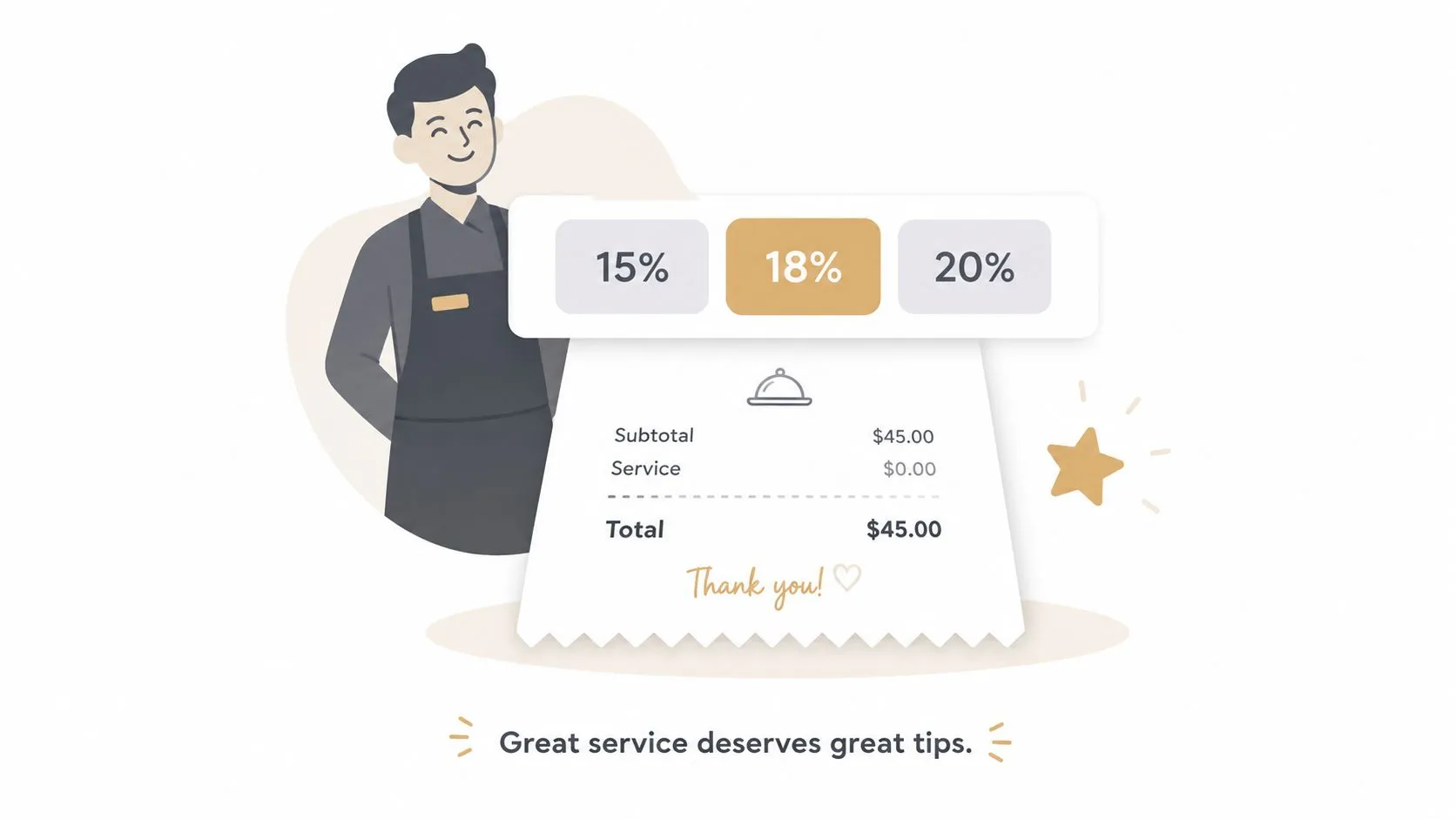
“Great service deserves great tips” connects the guest’s experience with the tipping decision. It recognizes service as the reason for appreciation and leaves room for guests to choose an amount that reflects their visit. That makes the quote useful when the team wants a respectful prompt rather than a fixed expectation.
Place it after the guest has seen the work. A receipt prompt on a Clover or Square terminal gives the message immediate context. A quick-service restaurant can position it beside the payment terminal, while a full-service restaurant can place it above its digital gratuity options after the meal.
Practical rule: Ask for appreciation after the service is visible and complete.
The quote also suits public-facing content when the surrounding copy names the work involved. For example: “Our kitchen handled tonight’s rush with care. Great service deserves great tips.” A behind-the-scenes photo of prep staff, a packed pickup shelf, or a delivery handoff gives the sentence credibility without overstating the experience.
Tip choices should remain easy to understand. Restaurant tipping behavior varies by service format. Toast card-payment data reported by Duck-Hub’s restaurant tipping statistics showed average tips of 19.2% for full-service restaurants and 15.8% for quick-service restaurants in Q3 2025, while Square’s broader restaurant network recorded an overall average tip of 15.4% in 2024. Those figures support flexible choices instead of one aggressive default.
Order accuracy also shapes whether the prompt feels fair. OrderOut’s restaurant guest-service guidance describes practices that connect guest communication with reliable service workflows. When third-party orders reach Clover or Square correctly, staff spend less time correcting transcription problems and more time delivering the service the message references.
Rotate this quote with other respectful prompts and review more than tip totals. Managers can compare complaints, abandoned payment flows, and guest comments to judge whether the wording feels appreciative, clear, and appropriate for the service moment.
2. Your tip helps us take care of the team
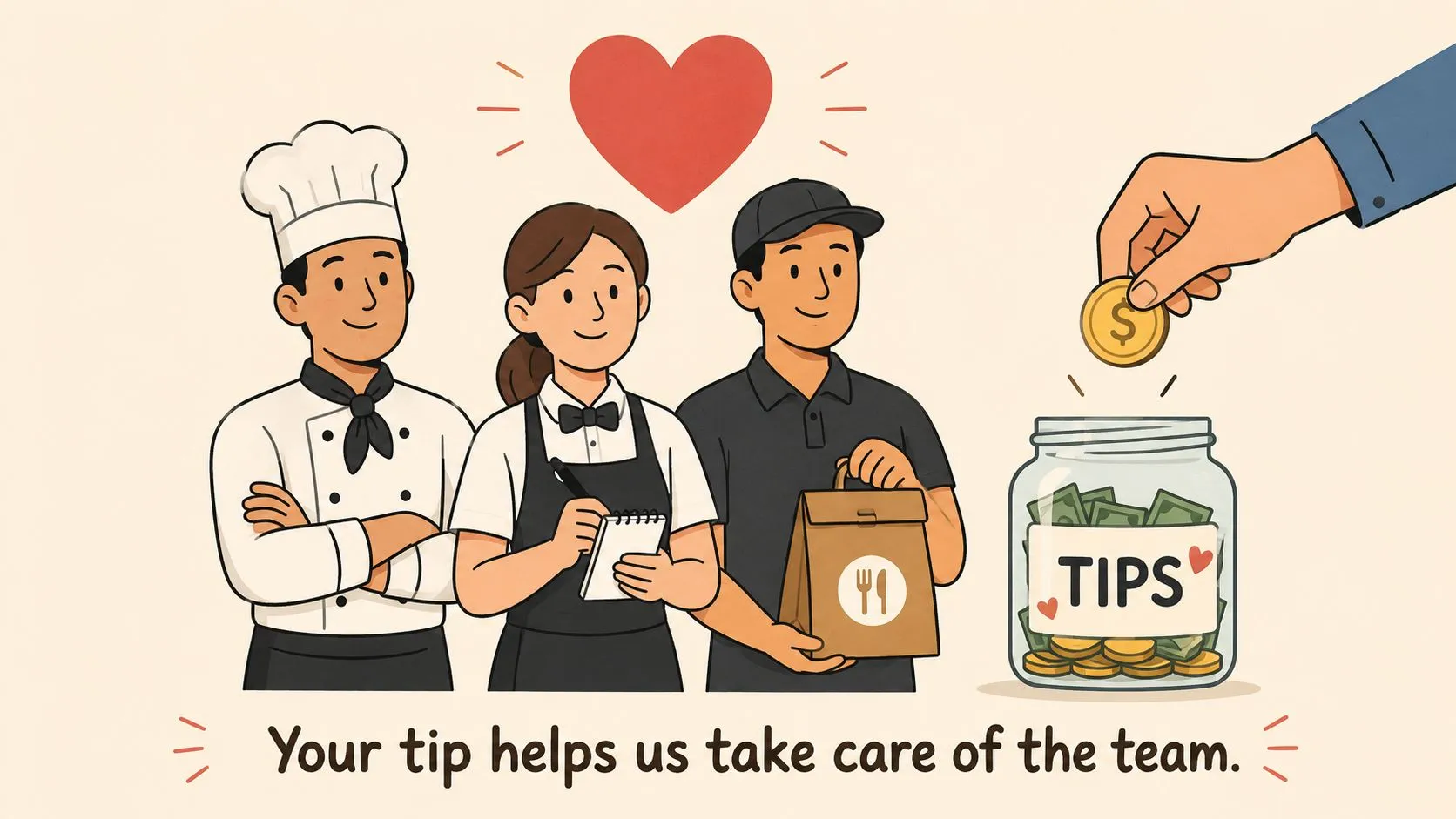
“Your tip helps us take care of the team” shifts attention from a transaction to the people who keep the restaurant running. Use it when the message should recognize kitchen staff, counter workers, packers, servers, and delivery support rather than focus on one visible interaction.
Place the quote on a receipt, pickup sign, or post-order thank-you. Customers connect more when the people behind the order are visible and identifiable. For example: “Maya prepared your order, and James packed it for pickup. Your tip helps us take care of the team.” The staff names make the request more specific, although managers should confirm that employees are comfortable being identified.
The wording must match the restaurant’s actual tip-distribution policy. Explain internally how tips are handled before the message appears on receipts, social posts, or packaging. Clear staff guidance prevents a customer-facing promise from conflicting with payroll or house policy.
A team-focused message can run throughout the year, with occasional updates tied to real staff stories. A work anniversary, new certification, or team member learning a new station gives customers a concrete reason to notice the people behind the order. These stories strengthen restaurant identity, though managers should keep the tone informative rather than turning every update into a payment request.
The quote also fits third-party delivery orders, where several employees may contribute to one customer experience. OrderOut sends marketplace orders into the restaurant’s existing POS workflow, while tip visibility and staff attribution tools can help teams connect gratuity records with the relevant order and service roles. That information supports clearer internal explanations and makes follow-up easier when managers review how tips are handled.
Use OrderOut’s restaurant tip-chart guidance to align customer-facing wording with the way the operation explains gratuity internally. Consistent language reduces questions about who benefits and when tips are recorded.
A short video can reinforce the same idea when staff members are comfortable appearing on camera.
Test the quote on pickup receipts during a limited menu period, then ask staff whether guests mention it. Their feedback can show whether the message feels warm, unclear, or too direct.
3. Tip your driver. They drive it home
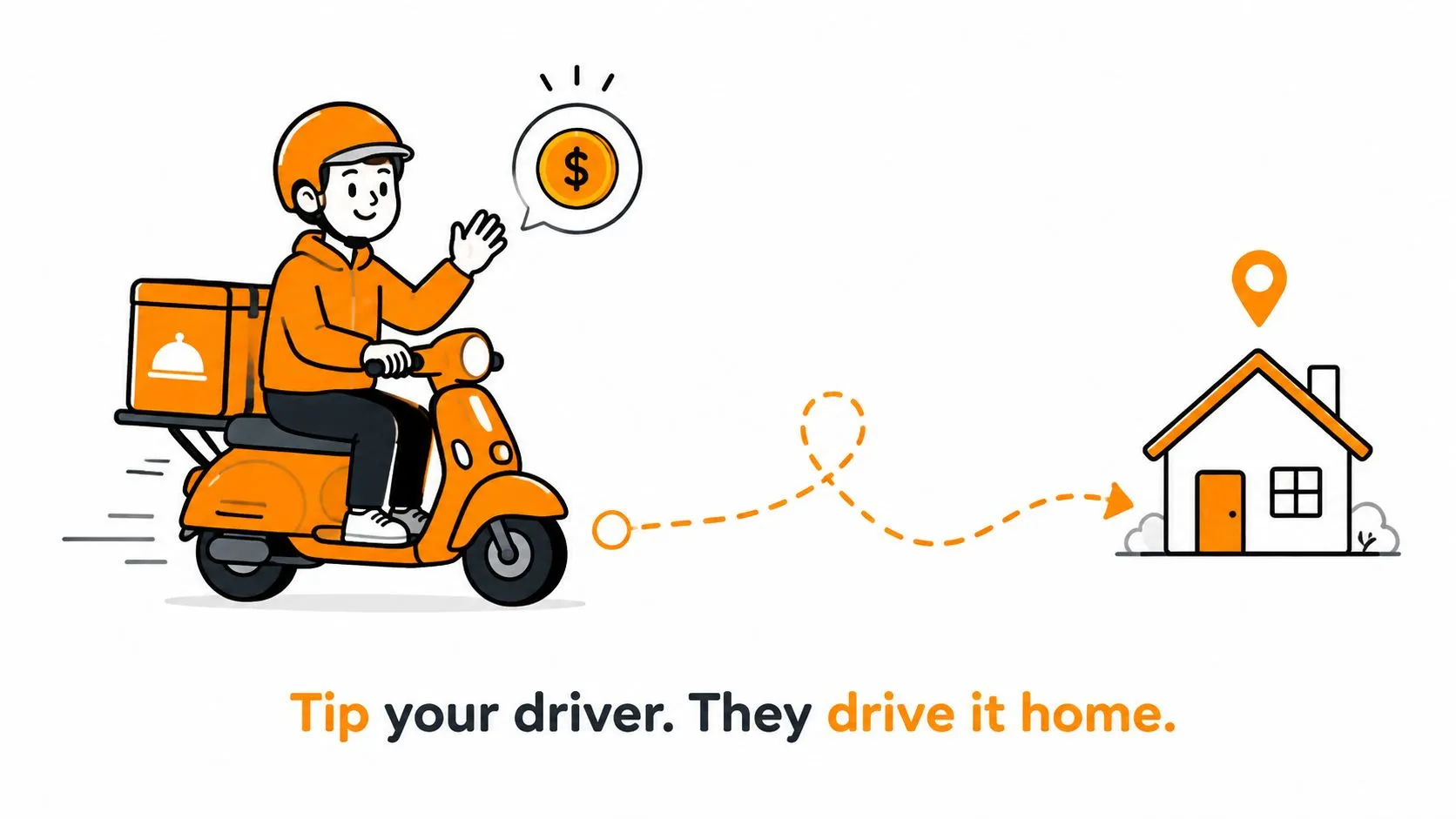
“Tip your driver. They drive it home” works at the delivery moment because it names the person customers can recognize. Its rhyme adds energy without turning the request into a demand. Use this quote when the goal is to connect appreciation with the final handoff.
Place it on a delivery sticker where the customer sees it while opening the bag, or on an insert that does not affect food safety or order identification. A small vehicle icon may draw attention, but the words must remain clear on their own. Keep the message separate from pickup packaging, where no driver has carried the order to the customer.
Delivery confirmations for Uber Eats, DoorDash, and Grubhub can use the same wording. The timing links the customer’s gratitude to the delivery work. Check the platform and local arrangement before implying that the restaurant controls how a third-party driver is paid.
Tip language should identify the person or team being recognized, but it should not promise a distribution policy the restaurant cannot verify.
Driver tips have a direct role in delivery-worker income. Data & Society’s research on food-delivery platforms reports that tips commonly represent about 40% to 50% of worker pay and average roughly 10% to 20% of an average food-delivery order. That context supports delivery-specific wording instead of printing a generic “please tip” message on every receipt.
The quote also depends on accurate order handling. A DoorDash order arriving on a separate tablet may require an employee to read it, re-enter it, and confirm modifiers manually. OrderOut’s delivery-to-POS workflow guidance explains how a third-party order can move into the restaurant’s established process. Its delivery POS integration maps marketplace menus to a normalized POS structure and injects orders into Clover or Square, reducing duplicate entry and giving the kitchen a clearer order record.
Operators should reserve this quote for delivery touchpoints, such as bag stickers, inserts, and handoff confirmations. Use a team appreciation message on dining-room receipts and pickup orders, where the customer is recognizing restaurant service rather than a driver’s final trip.
4. Tipped you digitally? Your support means everything
A guest taps 20% on the payment screen, receives the receipt by email, and sees: “Your support means everything.” The message arrives after the decision, so it reads as recognition rather than another request. That distinction makes the quote a strong fit for confirmed digital gratuity.
Use it on a digital receipt, post-delivery email, or SMS follow-up after the tip has been recorded. Configure the trigger through the POS or payment workflow. Sending “thanks for tipping” to a guest who selected no tip creates an avoidable service mistake.
A digital receipt footer works especially well for Square or Clover because the customer has just completed a payment interaction. The same approach can follow a third-party delivery order when the restaurant has access to the tip information and the message fits the platform relationship.
Keep the follow-up focused. Pairing gratitude with an immediate promotion can make the thank-you feel transactional. If a loyalty invitation belongs in the message, place it after the appreciation and do not imply that another tip is required.
Practical versions include:
- Confirmed tip: “Thanks for supporting our team today.”
- Digital receipt footer: “Tipped digitally? Your support means everything. The team at [Restaurant Name].”
- Personal follow-up: “Maya says thanks for tipping. Your support means everything.”
Accurate triggers depend on clean payment and order records. OrderOut’s payment-processing integration guidance helps operators review how payment data, receipts, and order records fit together. The copy can stay short, while the underlying workflow identifies the correct customer and order.
Do not use this quote to replace service recovery. If an order is late or missing an item, address the problem first with an apology and a clear resolution. Send gratitude after the restaurant has fulfilled that responsibility.
5. A tip is how you say thank you to our team
“A tip is how you say thank you to our team” gives guests a clear reason for tipping while preserving their choice. It suits first-time guests, tourists, and customers who may be unfamiliar with a restaurant’s tipping expectations.
Place the quote beside the decision point. On a receipt prompt, position it above the available choices, then show 15%, 18%, 20%, and custom. Match those options to the restaurant’s policy and payment system, and include an easy-to-find no-tip path. Clear presentation reduces hesitation and keeps the decision voluntary.
Pew’s 2023 survey found that 92% of U.S. adults who dine at sit-down restaurants always or often tip, including 81% who say they always tip, as reported in the Pew Research Center report. The survey also found that 57% of Americans would tip 15% or less for an average sit-down meal. Use the message to explain appreciation, rather than suggesting that one percentage fits every guest or service model.
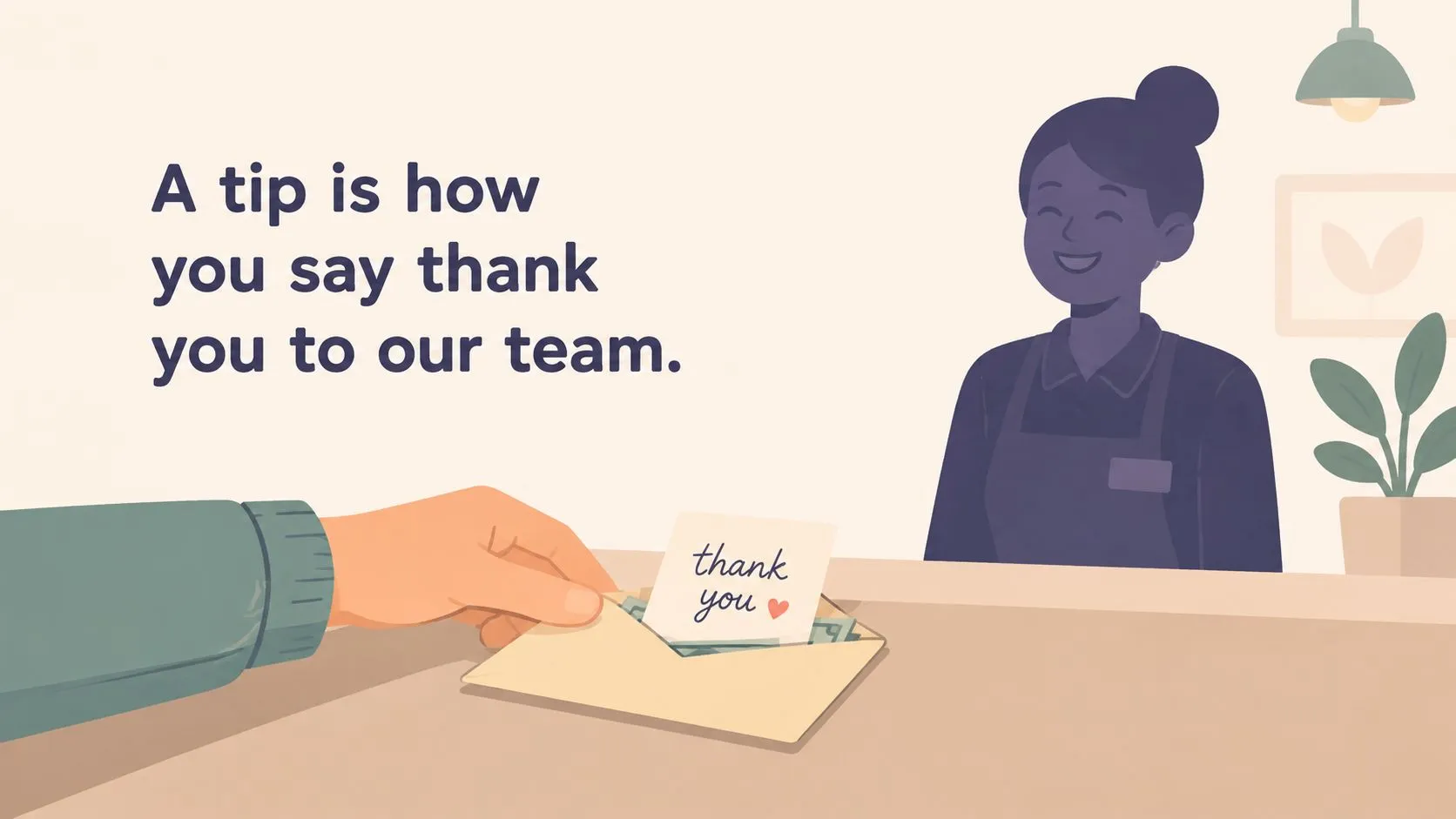
Counter-service teams can place the quote on a small sign beside the terminal. Full-service restaurants can print it on receipts or display it during digital checkout. For social content, pair the wording with an authentic staff moment, since a staged appeal can weaken the message.
The quote carries an ethical boundary: gratitude must describe the customer’s choice, never pressure a guest to compensate for an unresolved problem. If an order is inaccurate or delayed, invite feedback and fix the underlying issue before using appreciation copy. OrderOut’s tip-jar sayings resource provides additional wording for rotating messages while keeping the customer’s decision clear.
6. Tip equals helping us stay open for you
“Tip equals helping us stay open for you” frames gratuity as support for a restaurant’s long-term place in the neighborhood. It can connect with customers who intentionally support local businesses, yet it carries more emotional risk than the other five quotes. If the restaurant appears financially secure, the wording may sound alarmist or manipulative.
Use it when the context is genuine. A community email about keeping a seasonal location operating, a social post during a difficult period, or a local campaign for a neighborhood restaurant can support the message. A routine checkout prompt needs a lighter touch. Guests should not feel responsible for the entire business model while paying for a meal.
Tipping sentiment remains mixed. Bankrate’s tipping-culture survey found that 63% of Americans have at least one negative view of tipping. Square data cited in the same research showed average food-and-beverage tips falling from 15.17% in Q1 2025 to 14.99% in Q2 2025, while full-service restaurant tips declined from 14.76% to 14.64%. A practical message acknowledges financial pressure without assigning blame to guests.
Avoid unsupported cost claims. Statements such as “labor costs are X%” or “rent is Y%” require current figures from your own operation. Share financial context only when customers can understand it and your team can support it.
The quote can also accompany direct-ordering efforts. A restaurant-owned ordering page may give the business more control over its customer relationship than relying only on a marketplace. OrderOut can bring marketplace orders into the POS, helping teams keep channel activity organized while they assess that broader strategy.
Use the wording sparingly. Pair it with fair pricing, clear service charges, and transparent staff compensation so the message builds community loyalty without placing the business’s full burden on the guest.
6-Quote Tipping Message Comparison
| Message | Implementation complexity 🔄 | Resource requirements ⚡ | Expected outcomes 📊⭐ | Ideal use cases 💡 | Key advantages ⭐ |
|---|---|---|---|---|---|
| Great service deserves great tips. | Very low 🔄 (copy-only) | Minimal ⚡ (receipt/buttons, signage) | Higher receipt conversions; goodwill 📊 ⭐⭐⭐ | Receipts, digital signage, social posts | Broad appeal; non-confrontational |
| Your tip helps us take care of the team. | Low–Moderate 🔄 (needs staff stories, authenticity) | Moderate ⚡ (photos, narratives, translations) | Stronger loyalty among socially conscious customers; tip lift possible 📊 ⭐⭐⭐ | Independent restaurants, delivery orders, social storytelling | Humanizes tipping; builds brand loyalty |
| Tip your driver. They drive it home. | Low 🔄 (print label or receipt line) | Low ⚡ (stickers/packaging, small print runs) | Increased delivery-specific tips; clear attribution 📊 ⭐⭐⭐ | Third‑party/in‑house delivery, packaging, confirmations | Memorable, driver-focused, direct |
| Tipped you digitally? Your support means everything. | Moderate 🔄 (automation to target only tippers) | Moderate ⚡ (POS/SMS/email integration) | Improved retention and positive sentiment among tippers 📊 ⭐⭐ | Post-purchase SMS/email, digital receipts, loyalty follow-ups | Gratitude-driven; closes the loop |
| A tip is how you say thank you to our team. | Low 🔄 (educational copy) | Minimal ⚡ | Encourages voluntary tipping culture; modest uplift 📊 ⭐⭐ | First-time customers, multicultural markets, receipts | Respectful, educational framing |
| Tip = helping us stay open for you. | Moderate 🔄 (sensitive/community messaging) | Moderate ⚡ (transparent metrics, community content) | Can boost local support but risks backlash if overused 📊 ⭐⭐ | Community campaigns, email, off-peak receipts | Appeals to local loyalty; links tipping to sustainability |
Put Each Quote to Work
The right tipping message depends on what the customer has just done. Use service-focused wording, such as “Great service deserves great tips,” at payment, where the guest can connect the request to the meal or transaction. Use team-focused language in staff stories, pickup areas, and social posts, where customers can see the people behind the order.
Reserve driver-specific copy for delivery bags, confirmations, and delivery-focused communications. “Tip your driver. They drive it home” is more useful than a generic prompt when the delivery handoff is the central service moment. Use “Tipped you digitally? Your support means everything” only after a tip has been confirmed, and use etiquette-focused language when guests may be unfamiliar with your expectations.
The sustainability message requires the most judgment. “Tip equals helping us stay open for you” should describe a real local-business challenge, not manufacture urgency. Customers are already navigating changing expectations, and Popmenu’s 2024 survey found that 38% of consumers said they tip restaurant servers 20% or more, down from 42% in 2023 and 56% in 2021. The same survey found 30% said they tip 10% or less, up from 19% the prior year, according to Popmenu’s published survey findings.
Use this operator checklist before publishing a new quote:
- Keep the choice voluntary: Don’t shame guests who select a lower amount or no tip.
- Place the message thoughtfully: Match the wording to payment, pickup, delivery, follow-up, or community engagement.
- Show accurate options: Make percentages, custom amounts, and no-tip paths easy to understand.
- Match your policy: Explain who receives tips accurately and train staff on the same language.
- Rotate with purpose: Change messages when the customer moment changes, not just to create noise.
- Protect the workflow: Keep marketplace orders accurate in Clover or Square so the service behind the message is reliable.
OrderOut connects Uber Eats, DoorDash, and Grubhub orders directly to Clover or Square, with no extra delivery tablets and no manual re-keying. Each marketplace menu maps to a normalized POS schema, which helps staff work from one operational source of truth. Restaurants can review OrderOut’s Clover delivery integration, and Clover users can install OrderOut free from the Clover App Market.
Frequently Asked Questions
Does OrderOut work with Clover and Square?
Yes. OrderOut connects third-party delivery orders from Uber Eats, DoorDash, and Grubhub with POS systems including Clover and Square. The goal is to remove extra tablets and manual re-keying so restaurant staff can manage incoming orders in the POS workflow.
How do third-party orders reach the POS?
OrderOut maps each marketplace menu to a normalized POS schema, including menu items and modifiers, then injects the order into the connected POS. The restaurant still needs accurate menu mapping and operational setup so the order reaches the kitchen correctly.
Is Clover installation free?
OrderOut is free to install through the Clover App Market. Restaurant owners can begin from the OrderOut Clover App Market listing.
Where can restaurant owners begin?
Owners can start onboarding through the OrderOut dashboard. The setup is designed to help restaurants connect their delivery channels and POS workflow without adding another tablet-based entry process.
OrderOut brings Uber Eats, DoorDash, and Grubhub orders directly into Clover or Square, helping your team spend less time re-keying orders and more time delivering the service your tipping messages recognize. Visit OrderOut to review the delivery-to-POS workflow and start onboarding your restaurant.