
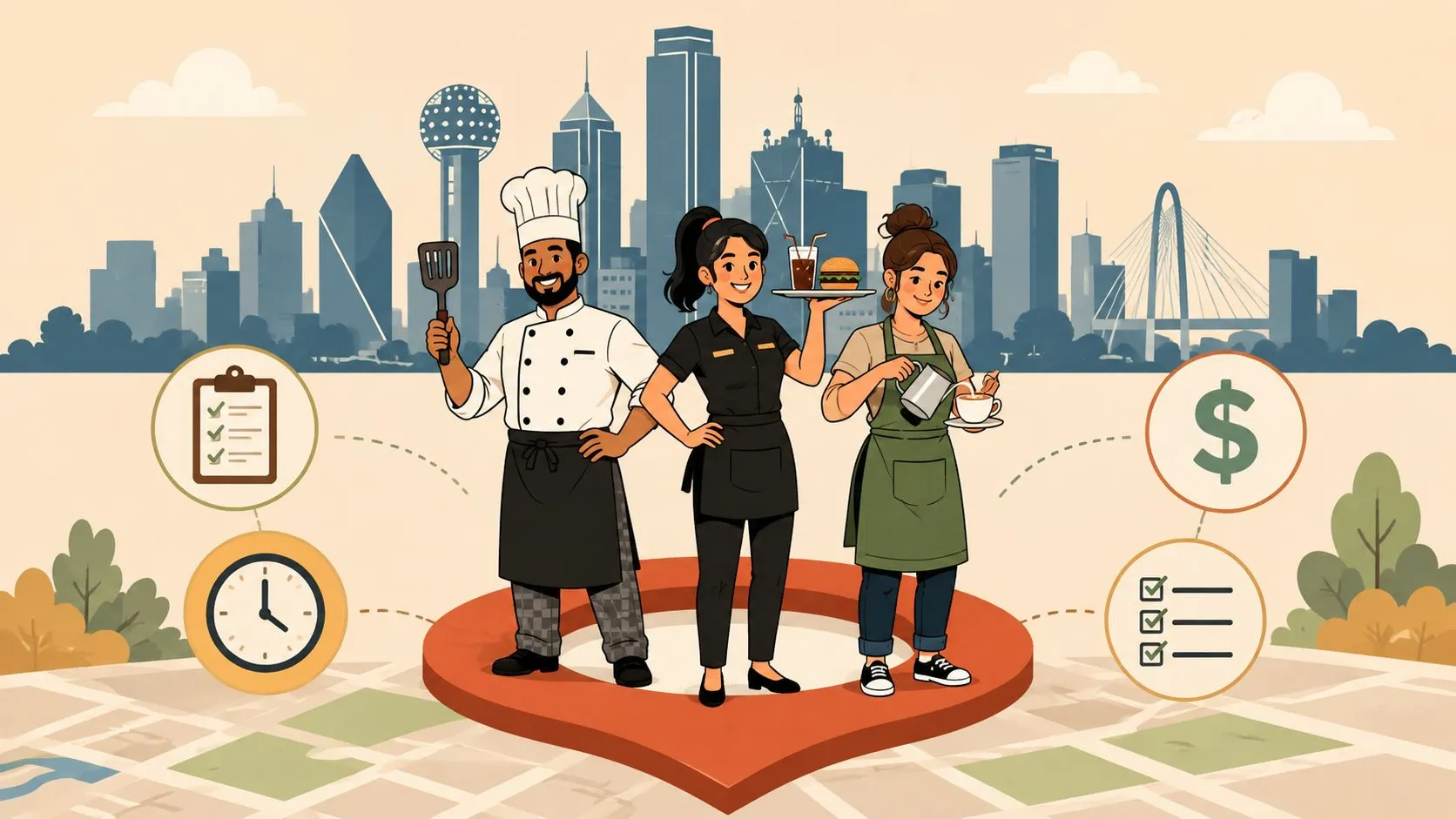
Restaurant jobs in Dallas, Texas are available through hospitality-specific marketplaces, flexible shift platforms, professional culinary networks, and direct local restaurant groups. Dallas-Fort Worth’s food services and drinking places workforce reached 344.67 thousand employees in June 2026, up from 341.44 thousand in May, so candidates have a large, active labor pool to work with.
That scale creates opportunity, but it also creates noise. The best place to apply depends on whether you want a fast hourly application, flexible shifts, a chef-track role, management work, or steadier employment with a local restaurant group. The options below separate those paths so you can spend less time submitting generic applications and more time contacting employers that match your experience and schedule.
Listings change quickly. Before applying, verify the current role, location, schedule, pay, required experience, and application instructions. Dallas neighborhoods and commute patterns can also shape whether a job is practical, so filter by the area you can reliably reach, not only by title.
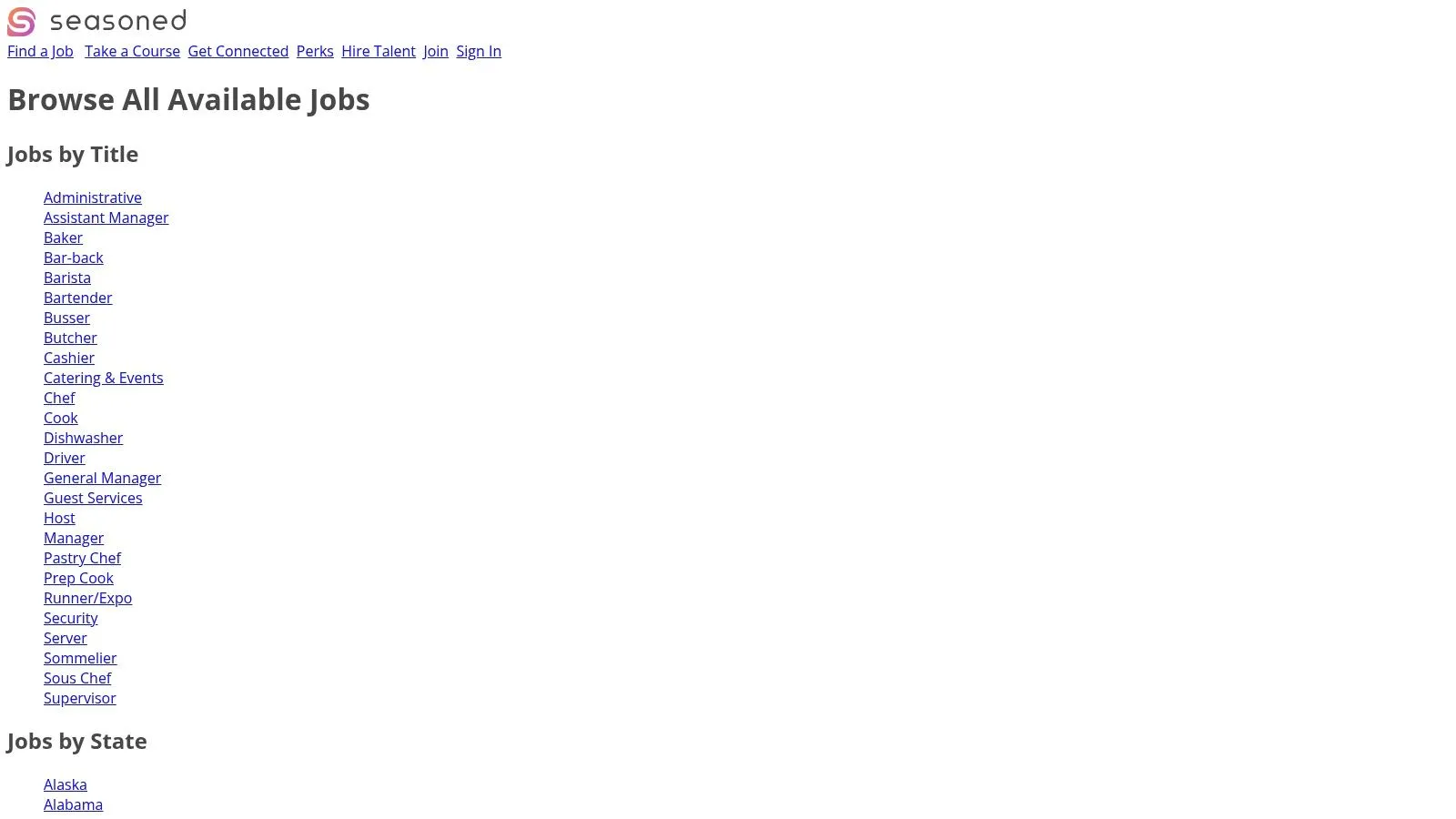
1. Seasoned
Seasoned is a strong starting point for candidates looking for hourly restaurant jobs in Dallas, Texas. Its listings focus on hospitality rather than covering every industry, which makes it easier to search for front-of-house and back-of-house roles such as servers, bartenders, cooks, and related restaurant positions.
The application flow is designed for mobile use, a practical advantage if you’re applying between shifts or from your phone. Filters for role and schedule can help narrow the search, while employer profile pages give you more context before you commit time to an application.
Practical rule: Use Seasoned for speed, but treat every listing as a lead that needs verification.
A quick application can help you reach several Dallas employers efficiently, but speed shouldn’t replace judgment. Check whether the posting names a specific restaurant, gives a clear work location, identifies the expected schedule, and explains the hiring process. Some listings may be templated or no longer reflect an active opening, so confirm details through the employer’s listed channel when anything looks incomplete.
Best fit for hourly applicants
Seasoned is better suited to hourly FOH and BOH candidates than to people searching primarily for senior management. A server who wants dinner shifts, a bartender looking for a new venue, or a cook seeking a kitchen opening can usually get more value from the platform than a general executive candidate.
Before applying, prepare a short role-specific resume and make your availability obvious. Mention relevant station experience, customer-service work, food-safety training if applicable, and whether you can work opening, closing, weekend, or high-volume shifts. If you’re evaluating long-term culinary earnings, compare the role with the progression described in this guide to a yearly salary for chefs, while remembering that actual compensation depends on the employer and position.
Seasoned works best as a broad first pass. Use it to identify realistic openings, then investigate the employer before accepting an interview or shift.
2. Poached
Poached is a hospitality-specific job marketplace with a dedicated Dallas market. It can be particularly useful for cooks, chefs, bartenders, and kitchen staff because the audience and listings are built around restaurant and hospitality work rather than general employment searches.
The platform covers independent restaurants as well as multi-unit groups. That range matters because the application experience can differ significantly between a small operator and a larger organization. A neighborhood restaurant may prioritize availability and station readiness, while a larger group may use more formal screening and training processes.
Poached also supports mobile applications and, in some markets, one-off shifts. That makes it useful for candidates who are searching for a permanent role but aren’t opposed to short-term work while they compare employers.
Best fit for culinary and bar work
Poached deserves priority if your background is in the kitchen or behind the bar. A line cook can search by station and experience, while a bartender can compare concepts based on service style, menu, and expected responsibilities. Candidates with stronger experience should read the entire posting instead of applying only by title, since duties can differ between high-volume casual restaurants, chef-led kitchens, hotels, and event operations.
A clear resume still matters. Explain the stations you’ve worked, the service environments you know, and any responsibilities beyond basic production, such as prep organization, inventory support, training, or opening and closing duties. For servers, a focused restaurant server job description can help you understand the responsibilities employers commonly expect and the language worth reflecting in your application.
A targeted application usually beats a long list of loosely related jobs.
Poached’s main trade-off is that the candidate experience depends on the employer. Some postings will be detailed and current, while others may leave questions about scheduling, compensation, or interview timing. Employer pricing may also require direct contact, but that concern matters more to operators posting jobs than to candidates searching for work.
Use Poached when you want a hospitality-only audience and a realistic route into culinary, bar, or restaurant operations roles.
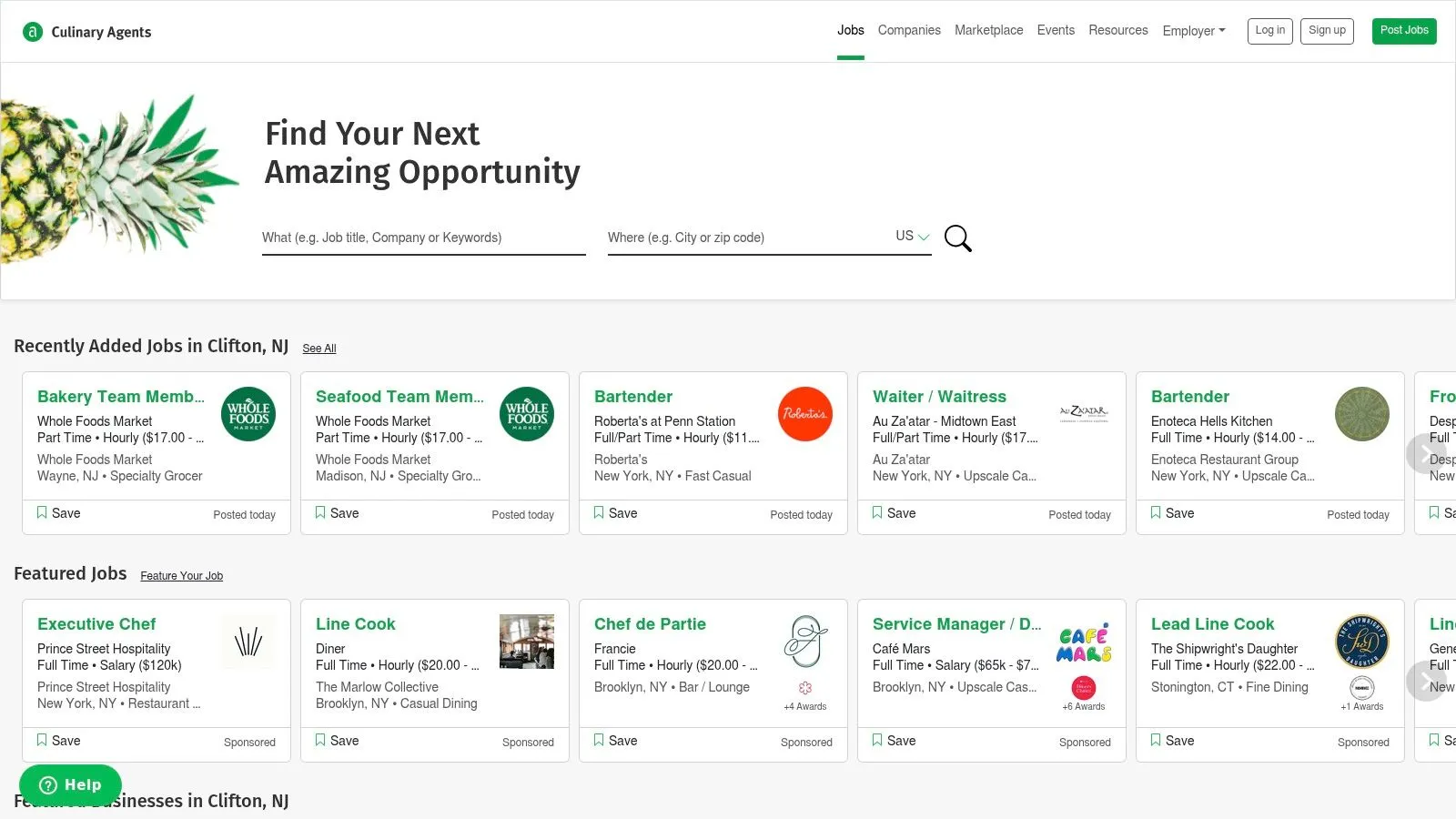
3. Culinary Agents
Culinary Agents is designed for candidates who want more than a quick hourly application. It combines a hospitality job board with professional candidate profiles, making it a better match for chefs, pastry professionals, beverage specialists, supervisors, and managers pursuing a longer-term culinary career in Dallas.
The profile can function as a digital resume. That gives employers a clearer view of your experience when your background includes multiple kitchens, concepts, or levels of responsibility. It also helps candidates present themselves professionally when applying to roles that require more than basic availability.
Build a profile that supports advancement
Culinary Agents is most useful when you can explain your progression. List the environments you’ve worked in, the responsibilities you owned, and the skills that transfer to the target role. A chef-track candidate should distinguish prep and line experience from menu development, ordering, cost control, training, or team leadership. A manager should identify scheduling, service oversight, guest recovery, and staff development experience where those duties apply.
Entry-level candidates can still use the platform, but they may find fewer purely entry-level openings than on hourly-focused marketplaces. The trade-off is presentation. A complete profile can make it easier for a professional kitchen or hospitality group to understand where you fit.
For applicants moving from serving into leadership, a well-organized sample resume of a waiter can clarify how to describe transferable strengths without overstating experience. Focus on facts you can support, such as training new team members, handling guest concerns, managing sections, or supporting opening and closing routines.
Culinary Agents also has a mobile app for discovering and applying to roles. Use it to monitor relevant Dallas openings, but don’t apply indiscriminately. Save time for roles whose concept, schedule, responsibilities, and growth path match what you’re trying to build.
This is the better option for professional culinary and management searches, not necessarily the fastest route for someone who needs any available hourly shift.
4. Harri
Harri connects candidates with branded hospitality employer pages and current openings. Instead of searching only through a broad list of restaurant jobs in Dallas, Texas, you can often identify a named concept, review its available roles, and apply through a more direct employer path.
That structure suits candidates who care about the workplace as much as the title. A polished-casual or upscale restaurant may have different service standards, training expectations, and scheduling practices from a high-volume casual operation. Reading the employer’s role description can reveal those differences before you invest time in an interview.
Search by employer, not only by title
Harri isn’t a single centralized Dallas board in the same way a general job site might be. You may need to search employer by employer, and openings fluctuate by brand and season. That takes more effort, but it can reduce the noise that comes from applying to anonymous or thinly described listings.
Look for details that affect your decision:
- Role scope: Confirm whether the position is hourly, supervisory, culinary, beverage-focused, or management.
- Concept expectations: Note service style, guest interaction, dress standards, and any stated technical skills.
- Schedule language: Check whether the employer explains opening, closing, weekend, event, or variable-shift requirements.
- Application route: Follow the named employer’s process and retain a copy of the position details.
Candidates seeking leadership roles should prepare for questions about staffing, service standards, conflict resolution, and operational accountability. A focused guide to restaurant manager interview questions can help you organize examples before the interview.
Harri is a good choice when you already have target employers in mind. It’s less efficient if you want to send a high volume of general hourly applications, but stronger when you want a clearer line to a specific hospitality group and its culture.
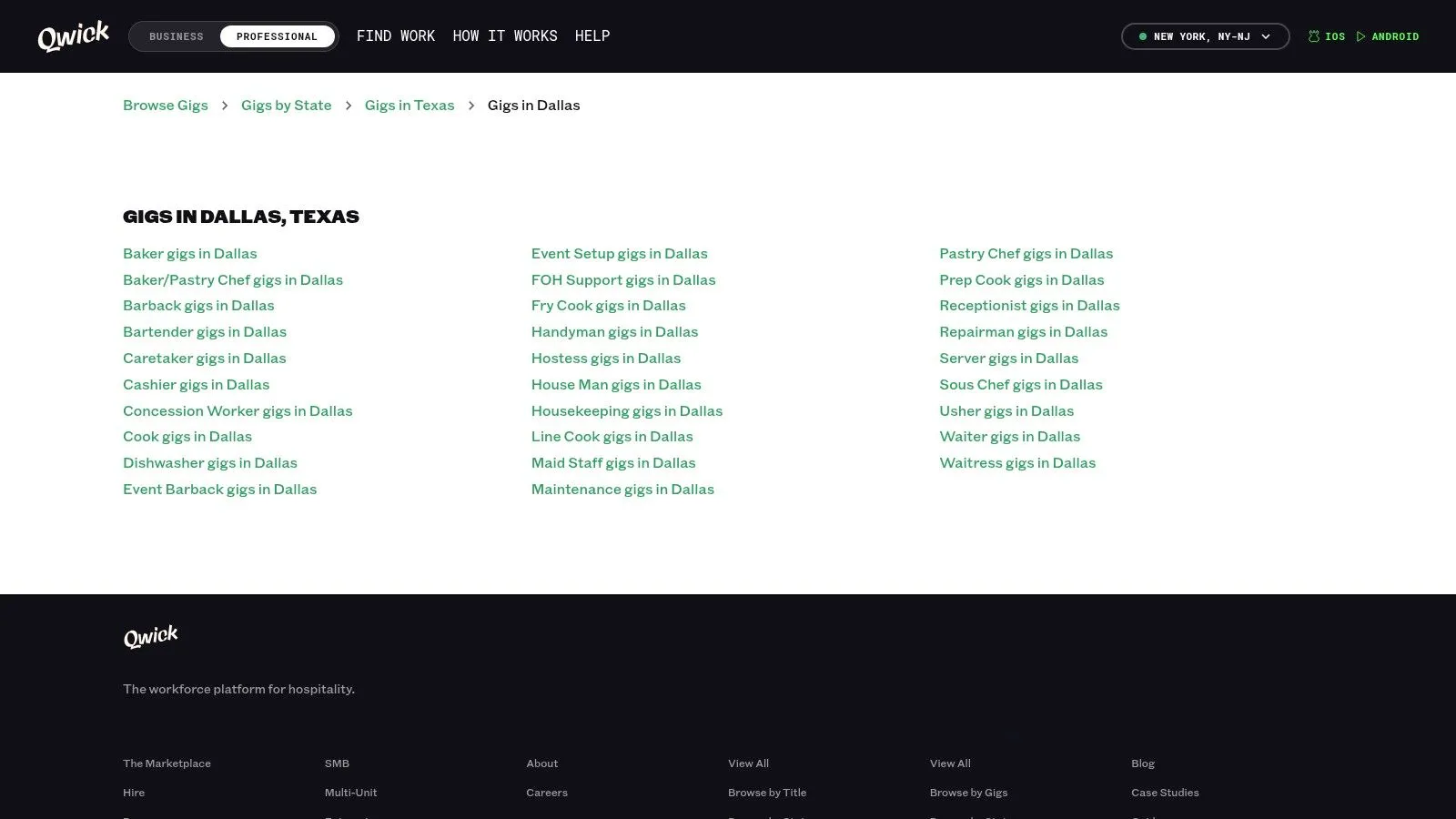
5. Qwick
Qwick is designed for flexible hospitality work across Dallas-Fort Worth. Candidates can browse short-term and same-day opportunities in bartending, serving, cooking, dish, catering, and event staffing.
The platform suits people between steady jobs, balancing another commitment, testing venue types, or filling schedule gaps. Shift-based work keeps you active without requiring an immediate commitment to one restaurant.
Choose Qwick for schedule control
Qwick uses app-based onboarding, ratings, and shift browsing. Candidates must complete the platform’s onboarding and verification requirements before booking work, so prepare your profile and documents before relying on it for near-term income. Reviewing restaurant staff scheduling best practices can also help you assess whether listed shift details are clear enough to plan around.
After approval, compare shifts by location, duties, timing, and stated requirements. A banquet service shift, restaurant floor shift, and kitchen support shift may require different clothing, pace, tools, and customer interaction. Read each listing closely before accepting it.
Flexible work gives you control over individual commitments, but it doesn’t guarantee consistent weekly hours.
That trade-off defines Qwick’s value. Gig work can provide income while you search for a permanent position, while also showing which venues fit your working style. Track the locations, shift types, and duties you handle well, then use that experience in later applications.
Operators should account for what candidates need from the platform: predictable shift information, clear arrival instructions, and accurate role descriptions. Candidates can favor reliable employers through their choices and ratings, and report mismatches between listings and actual duties through the platform’s process.
Qwick is the strongest match on this list for candidates who place schedule control above a guaranteed long-term relationship with one restaurant. It is less suitable when you need fixed weekly hours or a defined promotion path.
6. Instawork
Instawork provides app-based access to flexible restaurant and event staffing in Dallas. Its roles span FOH and BOH work, and the platform can serve candidates who need fast access to shifts while looking for a more stable position.
The practical difference between Instawork and a conventional job board is the booking model. Instead of submitting an application and waiting through a conventional hiring cycle for every opening, eligible professionals can review available shifts and manage work through the app. That can be useful during a gap between jobs or when your availability changes from week to week.
Use shifts to test the right environment
Instawork can also help candidates evaluate venues before pursuing longer-term work. Pay attention to whether a shift gives you experience in the type of operation you want next, such as event service, restaurant floor work, prep, dish, or line support. A series of well-matched shifts can strengthen your practical experience, but don’t describe temporary work as a permanent position unless you were hired directly.
Availability fluctuates, and user experiences can differ across gig platforms. Read the shift terms carefully, arrive prepared, and keep your app profile accurate. If your schedule opens up, update it quickly so you don’t accept work you can’t reliably complete.
Instawork may also support longer assignments or temp-to-hire possibilities with venues, but candidates should confirm those terms with the platform or employer rather than assume every shift leads to a permanent offer. The app is a bridge, not a substitute for checking the employer’s expectations.
Use Instawork when you need flexible access to restaurant or event work and want to keep a path open toward a longer placement. If your main goal is a permanent culinary or management career, pair it with Culinary Agents or direct employer applications instead of relying on gig shifts alone.
7. Harwood Hospitality Group
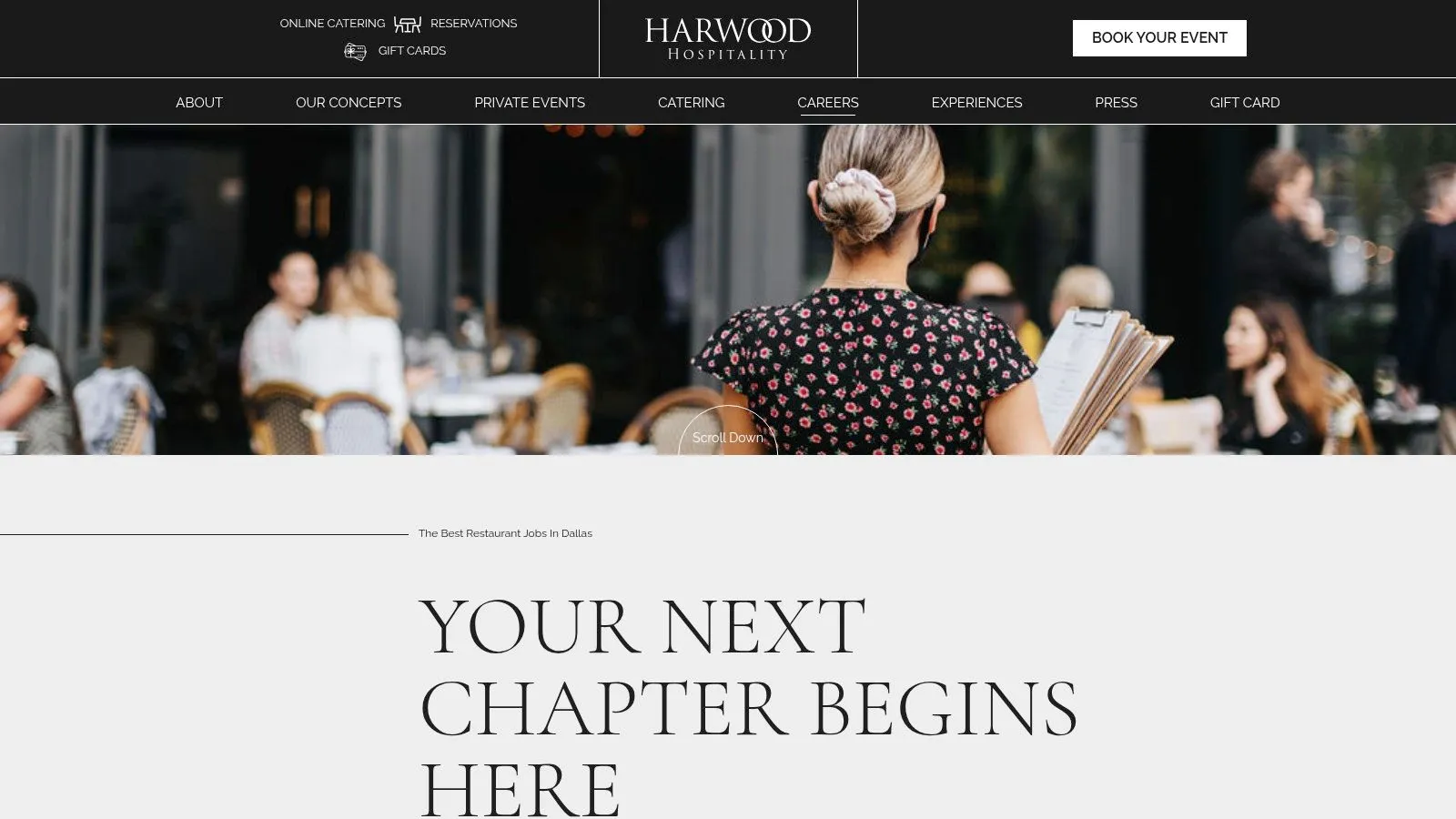
Harwood Hospitality Group offers a direct local-employer route for candidates who want to apply to a Dallas-based multi-concept restaurant and hotel operator. Its central careers hub can show recurring openings across multiple concepts, including FOH, bartending, culinary, and leadership positions.
The main advantage is continuity. Instead of moving between unrelated employers, you can apply to a group with several venues and potentially build experience across concepts as your skills develop. The corporate careers page also identifies benefits such as dining discounts, paid time off, and a 401(k), though candidates should confirm eligibility and current terms for the specific role.
Best fit for steadier local employment
Harwood Hospitality Group is a better match for someone who wants a direct employer relationship, structured brand standards, and a possible internal growth path. It can suit a server looking for a more established operation, a bartender pursuing a specific concept, a culinary worker seeking consistent training, or a manager ready to lead within a local group.
The trade-off is geographic and competitive. Openings are concentrated around the group’s Dallas footprint, including the Harwood District, so commute feasibility matters. You won’t get the same geographic spread as a shift app, and a desirable opening may attract applicants with closely matched experience.
Before applying, study the concept named in the posting. Adjust your resume to the role, explain the shifts you can work, and show that you understand the difference between guest-facing service and operational support. A generic application can make you look interchangeable, while a focused application can show why that particular concept fits your background.
Apply directly when you value steadier employment over maximum scheduling flexibility. Keep a marketplace application as a backup if the group doesn’t have a current opening that matches your experience.
Dallas Restaurant Jobs: 7-Platform Comparison
| Platform | 🔄 Complexity | ⚡ Speed / Resource needs | 📊 Expected outcomes | Ideal use cases | 💡 Key advantages |
|---|---|---|---|---|---|
| Seasoned | Low, mobile‑first, minimal setup | Fast applications; low candidate effort ⚡ | Quick reach to multiple Dallas hourly openings; mostly FOH/BOH ⭐⭐ | Hourly servers, bartenders, cooks seeking rapid applications in Dallas | Hospitality‑only listings, employer profiles, schedule filters |
| Poached | Low, standard job board + mobile app | Moderate, mobile apply; network reach speeds sourcing ⚡ | Strong visibility for culinary/bar roles; better‑qualified applicants ⭐⭐⭐ | Chefs, cooks, bartenders for independent & multi‑unit Dallas venues | Targeted hospitality audience; recognized among kitchen pros |
| Culinary Agents | Medium, profile/resume setup recommended 🔄 | Moderate, initial profile time reduces future effort ⚡ | Higher‑tier/management placements; professional presentation attracts upscale concepts ⭐⭐⭐ | Chef‑track, pastry, beverage, management candidates | Candidate profiles as digital resumes; hospitality filters |
| Harri | Medium, employer‑by‑employer search, branded pages 🔄 | Moderate, direct employer apps; less aggregated noise ⚡ | Clear line to named brands; good fit for polished‑casual/upscale roles ⭐⭐ | Candidates seeking direct employer visibility with growth paths | Branded employer pages, detailed role descriptions |
| Qwick | Low, app onboarding and vetting required 🔄 | Very fast, same‑day shift booking; on‑demand ⚡⚡ | Immediate gig income; variable hours and venue variety ⭐⭐ | Flexible workers needing same‑day or short‑term shifts | On‑demand shifts, ratings, try venues before long‑term commitment |
| Instawork | Low, app booking with basic verification 🔄 | Fast, quick access to paid shifts and timekeeping ⚡⚡ | Rapid paid shifts; possible temp‑to‑hire transitions; availability varies ⭐⭐ | Workers seeking flexible shifts or event staffing in Dallas | App booking, timekeeping, broad FOH/BOH coverage |
| Harwood Hospitality Group | Medium, corporate careers hub; standard hiring process 🔄 | Moderate, direct employer hiring; steadier schedules ⚡ | Steadier employment with benefits and internal mobility ⭐⭐⭐ | Candidates seeking full‑time, stable roles within a Dallas operator | Consistent training, benefits (PTO, 401(k)), clear growth paths |
Choose a Dallas Hiring Path and Apply
Dallas restaurant hiring is large enough to support several distinct paths, but the right option depends on what you need from the job. The metro’s Food Services and Drinking Places workforce reached 344.67 thousand employees in June 2026, according to monthly labor data tracked by FRED. That scale gives candidates choices, but it also means a broad search can produce too many weak matches.
Choose Seasoned or Poached if your priority is reaching several hourly employers quickly. Seasoned is especially practical for FOH and BOH applicants who want a mobile-first application process. Poached is a strong alternative for culinary, kitchen, and bar roles where hospitality-specific listings matter more than general job volume.
Choose Culinary Agents if you’re pursuing a chef, pastry, beverage, supervisory, or management track. Its professional profile format makes the most sense when you can show a clear record of responsibility and want employers to evaluate more than immediate availability. Choose Harri when you have named Dallas hospitality brands in mind and want to apply through employer-specific pages.
Choose Qwick or Instawork when flexibility is the priority. These platforms can help you pick up short-term, same-day, or event-related work, but shifts can vary and shouldn’t be treated as guaranteed weekly employment. Use them to bridge a gap, test different venues, or build relevant experience while continuing a permanent-job search.
Choose Harwood Hospitality Group when you want a direct application to a Dallas-based operator and prefer a more established relationship with one organization. Review the specific concept, commute, schedule, benefits, and advancement expectations before applying.
Dallas restaurant application checklist
- Role-specific resume: Lead with the FOH, BOH, culinary, beverage, or leadership experience that matches the posting.
- Clear availability: State the days and shifts you can reliably work, including opening, closing, weekends, or events where relevant.
- Preferred shift: Explain whether you’re seeking full-time, part-time, temporary, on-call, or flexible work.
- Relevant experience: Name stations, service styles, systems, training duties, and operational responsibilities you can support.
- References: Prepare them when the employer requests references, and confirm that each person is comfortable being contacted.
- Posting verification: Recheck the current location, role details, schedule, pay, and application channel before submitting.
Dallas also has a real mismatch between job volume and compensation. The DFW Labor Market Update reported that leisure and hospitality added 4,100 jobs in one month, while food preparation workers had median annual earnings of $30,686 and a median advertised salary of $28,032. Those figures don’t tell you what every restaurant pays, but they do support a practical conclusion: compare the full opportunity, including schedule, commute, advancement, and stability, rather than judging a posting by title alone.
For management and supervisory candidates, the Dallas Regional Chamber hospitality profile lists 7,589 food service manager jobs with median hourly earnings of $28.14, alongside 32,493 first-line supervisor jobs with median hourly earnings of $17.78. The difference reinforces the value of asking about training and promotion paths when you apply to an hourly role.
Pick one primary route and one backup today. Apply to a small set of well-matched openings, tailor each application, and follow up through the employer’s listed channel instead of sending the same resume everywhere. If you’re applying to a group or high-volume restaurant, keep your phone available and respond promptly, because a clear, reliable candidate is easier to move forward than an applicant whose availability remains unclear.
Restaurant operators hiring in Dallas can also improve the candidate experience after the application by keeping delivery orders out of separate tablets and manual re-entry. OrderOut sends Uber Eats, DoorDash, and Grubhub orders directly into Clover or Square, helping staff work from one POS workflow with fewer entry errors and less tablet juggling. Visit OrderOut to see how the integration can make busy restaurant shifts more manageable for both managers and front-line teams.