
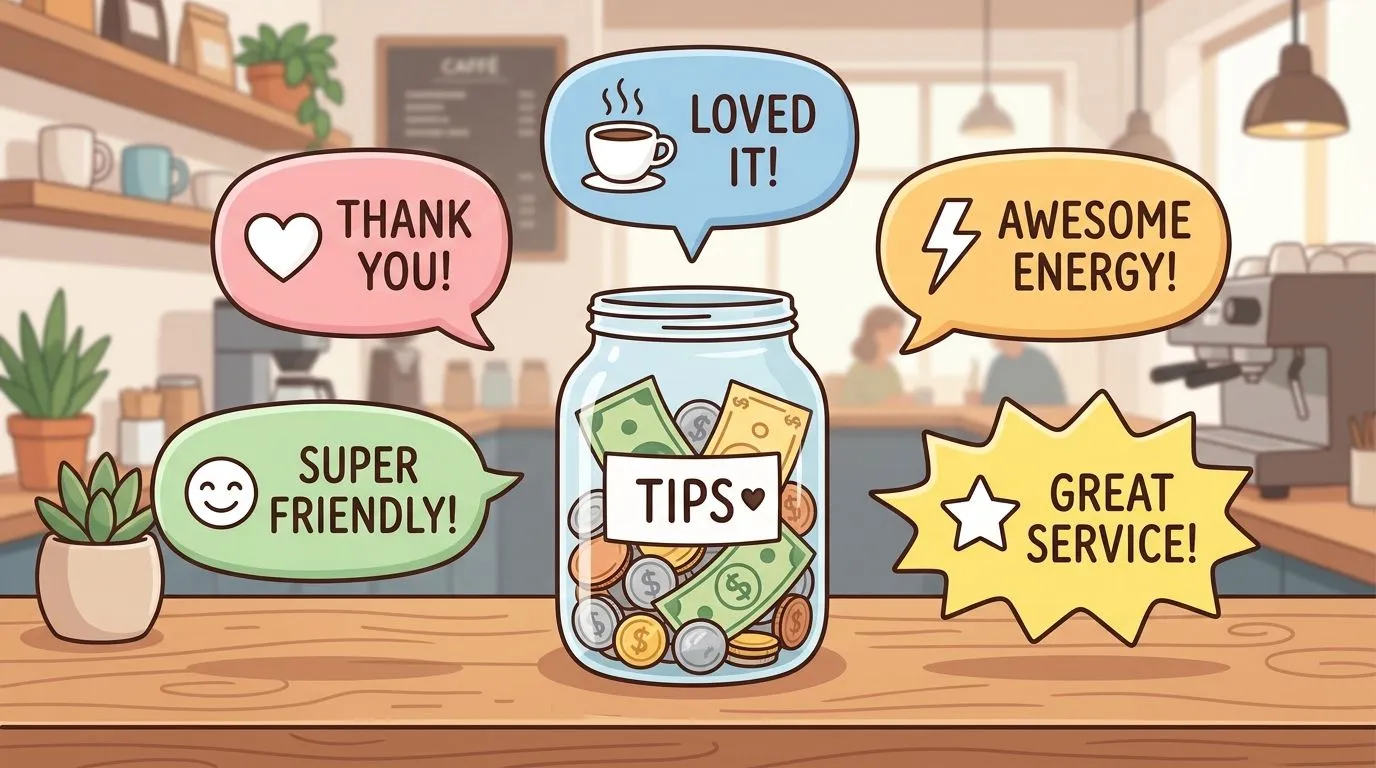
The best tip jar sayings are short, voluntary-sounding phrases that match the restaurant’s tone and clearly show who the tips support. In practice, that means choosing wording your guests can read at a glance, then keeping the same message steady across counter service, receipts, Clover or Square checkout, and third-party orders from Uber Eats, DoorDash, and Grubhub.
Restaurants have been using tipping language for a long time, and the wording still matters because customers respond to clear cues. A thoughtful sign can make the tip feel personal, while a cluttered or clever-but-confusing line usually gets ignored. For operators, the primary goal is simple, consistent messaging that fits the moment and doesn’t slow down the line.
That consistency matters even more when orders are coming from multiple places at once. With OrderOut’s Clover delivery integration, third-party delivery orders can flow straight into Clover without extra tablets or manual re-keying, so your team can stay focused on accurate fulfillment instead of bouncing between screens. On Square, the same operational logic applies, the POS stays the source of truth and the message stays aligned.
1. Tips Feed the Team
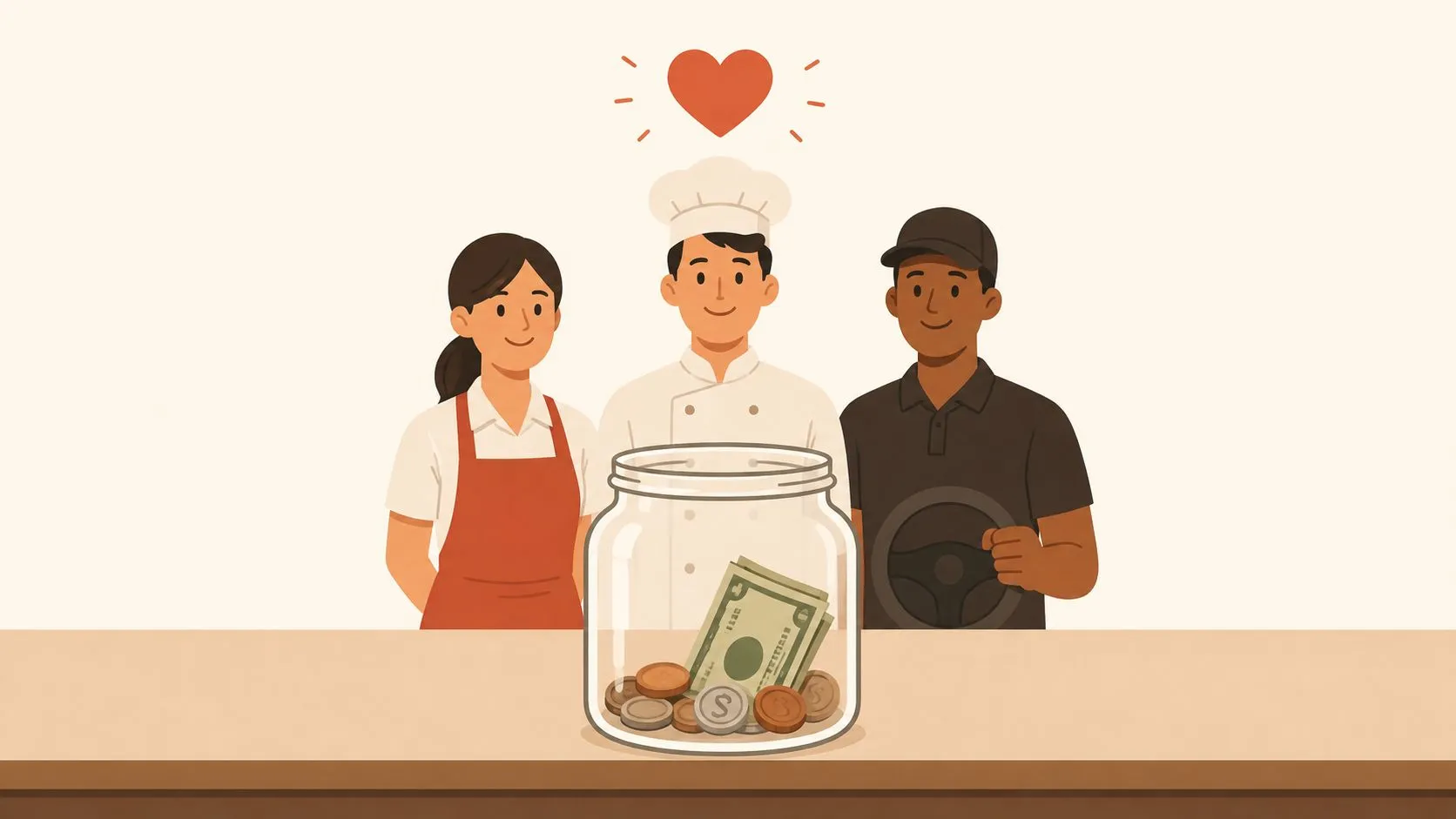
“Tips Feed the Team” works because it makes the support feel human, not abstract. Customers know their money isn’t going into a black box, it’s helping the people who took the order, packed the food, or handled the handoff. That directness is especially useful at a Clover checkout screen, on a Square receipt, or on a unified delivery flow that includes Uber Eats, DoorDash, and Grubhub orders.
Make the support visible
A line like this does better when it sits right before the tip prompt, because the customer is already making a payment decision. If you want it to feel more personal, add a role call-out such as “Tips feed our delivery drivers” or “Tips feed the kitchen team.” That kind of wording makes the benefit concrete without sounding pushy.
A useful rule is to keep the same phrase across every channel. If guests see one message at the counter and a different one on delivery checkout, the experience feels disjointed. OrderOut’s tip jar ideas make the same point in a different setting, a clear sign and a quick scan prompt work better when the ask is easy to understand in seconds.
Practical rule: if the guest can’t tell who benefits from the tip right away, the message is too vague.
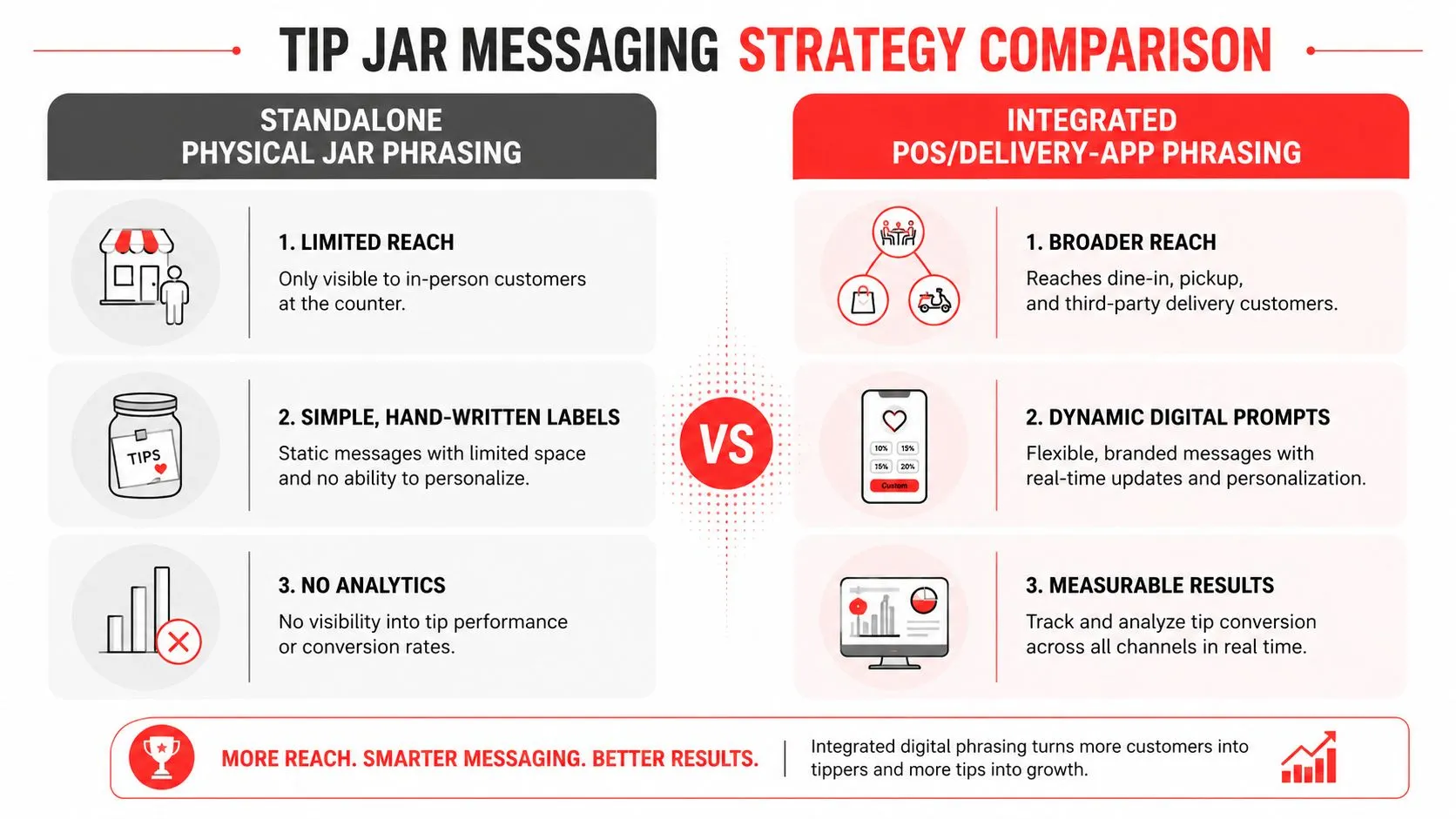
For a quick-service restaurant, this can be printed on a receipt or shown on a digital payment screen. For a delivery-heavy concept, it can appear at the point where the order is finalized, which keeps the message tied to the actual service experience.
2. Love What We Do? Show Your Support
This kind of line works because it sounds like appreciation, not pressure. It tells guests that tipping is a way to support a business they already enjoy, which fits independent restaurants with a strong local identity. A neighborhood taqueria, a boutique pizza shop, or a craft coffee counter can all use it without sounding stiff.

Keep the brand in the message
The strongest version of this phrase feels like it belongs to your restaurant, not a generic template. Use your logo colors, a familiar tagline, or a short thank-you line after the tip prompt so the guest feels like they’re backing a place they already know. That’s the same logic behind aligning the message with your mission, vision, and core values, which is discussed in OrderOut’s restaurant values guide.
On Clover or Square, this phrasing can live on the payment screen and on printed receipts. For pickup and delivery customers, that consistency matters even more because they may never stand at a counter, so the tip prompt has to carry the brand voice on its own.
You don’t need a sentimental paragraph. A short, warm line usually lands better because it feels like a real thank-you, not a campaign.
3. Help Us Deliver Great Service
This is one of the most practical tip jar sayings for operators who care about repeat business. It connects the tip to service quality, training, and retention without promising more than you can deliver. In fast-casual, QSR, and delivery-heavy restaurants, that framing fits because customers already expect speed and accuracy.
Tie the wording to the workflow
If you use this on a Clover or Square payment screen, the prompt arrives right after the customer has ordered, so the service connection is fresh. In a delivery setup, it makes even more sense because the guest can picture the team prepping and handing off the food with care. When the message is tied to a DoorDash or Uber Eats checkout path through OrderOut, it keeps the service promise visible where the customer makes the decision.
Operator insight: tips feel more meaningful when customers can connect them to a better next order, not just a nicer thank-you today.
A light feedback prompt can help here too. A simple “How did we do?” after the tip request reminds customers that their experience matters and that the staff are working toward better outcomes. If your restaurant depends on delivery volume, this wording is especially useful because it reinforces care without sounding defensive.
OrderOut’s service charge vs tip guide is a helpful reminder that the customer still reads tipping as a choice, so the wording should support trust, not confuse it.
4. Every Dollar Counts
“Every Dollar Counts” works when honesty matters more than polish. It tells guests, plainly, that restaurant wages, especially in tipped roles and delivery work, can depend on gratuity, and it speaks to customers who already know that reality. The phrase fits best in high-cost cities and in concepts where guests are already thinking about fair pay.
Be direct, not preachy
Use this phrase with a short explanation, not a lecture. A line like “Tips are part of our team’s income” keeps the message factual and low-pressure. If you’re speaking to delivery guests, “Every dollar helps our drivers earn fair pay” can be clearer because it points to the people doing the work.
That matters in third-party delivery because customers do not always see the labor behind the order. When Uber Eats, DoorDash, or Grubhub orders flow through the POS, the tip decision is still tied to a real worker, even if the interaction is short and digital. A clear phrase helps bridge that gap without guilt-tripping anyone.
Placement matters too. If the wording is buried below the total or tucked into an extra screen, it loses force. Put it where the customer is already making the choice, and keep the sentence simple enough to read once.
5. Fuel Our Hustle
“Fuel Our Hustle” fits restaurants with energy, speed, and a little personality. It works best when the staff move fast, the line stays busy, and the guest can see that the team is working hard. Fast-casual spots, coffee counters, and delivery-focused kitchens can use it without sounding forced.
Match the vibe to the room
This phrase lands when the payment screen feels active, not static. A Clover or Square display with energetic colors, movement, or a lively brand style makes the message feel alive instead of pasted on. If you’re handling a lot of delivery volume, it also helps reinforce that your kitchen is managing multiple channels at once without losing momentum.
OrderOut’s QSR experience guide fits here because speed and consistency are a big part of the customer expectation in quick-service environments. The wording should match that reality. If your staff are juggling dine-in, pickup, and app orders, a hustle-focused line can make guests feel like they’re supporting the team’s pace, not interrupting it.
If the restaurant’s pace is part of the brand, say so plainly.
You can also rotate this phrase with other energetic wording so it doesn’t go stale. The message stays fresh when the staff and the sign both feel naturally enthusiastic.
6. Tip to Skip the Line
“Tip to Skip the Line” is a direct trade. Guests give extra if they get faster service, so the wording fits coffee shops, takeout counters, and other high-volume spots where time is part of the customer decision. If the operation can prioritize tippers, the phrase is clear and useful.
Only use it when the promise is real
The line should match the workflow behind it. If the restaurant cannot change queue priority or prep order, guests will notice the gap between the sign and the service. That makes this phrase a good fit only for operations where staff can see the tip choice and act on it.
It also works best on the POS payment screen, where the message appears at the exact moment the customer is deciding whether speed matters. A short companion line like “Faster service starts here” is usually enough. Keep it to counter service and takeout, because it does not fit sit-down service or fine dining.
Placement matters as much as wording. On a Clover or Square screen, the prompt should be easy to read and tied to the exact moment of payment, not buried in a busy interface. If you use third-party delivery workflows, keep the same rule in mind, because the message should match what your kitchen can deliver once the order reaches the queue.
For more context on why speed and consistency shape guest expectations in quick-service settings, OrderOut’s quick-service restaurant guide is a useful reference. The point is to make the exchange feel straightforward, not gimmicky.
7. Big Tip, Big Love
This one works because it turns generosity into a positive moment. Instead of making tipping feel like a test, it rewards the act with enthusiasm. That’s useful in younger-focused cafes, casual bars, pizza spots, and other places where the staff personality is part of the appeal.
Use celebration without overdoing it
A public screen can help here, especially if the restaurant likes a little theater at the register. When a tip comes through on Clover or Square, a lively line can acknowledge it in a way that feels upbeat rather than awkward. The key is to keep the reaction genuine, because fake excitement reads badly fast.
OrderOut’s loyalty program guide is relevant because tip prompts and loyalty habits both rely on repeat behavior. When customers feel recognized, they’re more likely to stay engaged with the restaurant’s experience over time. That doesn’t mean turning tipping into a game show. It means using positive reinforcement that fits your brand.
You can also rotate variants like “Tip boss” or “Generosity rewarded” if your audience likes a playful tone. For third-party delivery, the same energy can appear on the checkout prompt even if the shout-out happens later, because the POS still captures the tip data when the order is injected through OrderOut.
7-Point Tip Jar Saying Comparison
| Tip Message | Implementation Complexity 🔄 | Resource Requirements ⚡ | Expected Outcomes ⭐ / 📊 | Ideal Use Cases 💡 | Key Advantages ⭐ | OrderOut Relevance 💡 |
|---|---|---|---|---|---|---|
| Tips Feed the Team – Direct Appeal to Customer Generosity | Low, simple text on POS/receipt | Minimal, POS/receipt or jar label | ⭐⭐⭐, higher tip conversion; 📊 steady uplift in gratuities | Dine‑in, pickup, unified POS displays | Personal, empathetic appeal; easy to deploy | High, shows consistently across consolidated Clover/Square orders |
| Love What We Do? Show Your Support – Brand‑Aligned Gratitude | Low, requires brand copy alignment | Low, digital/print assets matched to brand | ⭐⭐, increases loyalty-driven tips; 📊 moderate uplift | Boutique, community‑oriented restaurants | Strengthens brand affinity; non‑pressuring tone | High, consistent brand voice across channels via OrderOut |
| Help Us Deliver Great Service – Action‑Oriented Accountability | Medium, needs follow‑through/metrics | Medium, POS prompt + feedback loop (surveys) | ⭐⭐⭐, motivates tips tied to service improvement; 📊 measurable if followed by action | Delivery‑heavy, fast‑casual, ghost kitchens | Frames tips as investment in better service; encourages performance | High, credible when integrated POS reduces errors and speeds fulfillment |
| Every Dollar Counts – Transparency About Low‑Wage Work | Low, direct, factual copy | Minimal, education text on POS/receipts | ⭐⭐, strong conversion among values‑driven customers; 📊 builds trust | High‑cost markets, progressive brands, delivery contexts | Honest, trust‑building; appeals to socially conscious diners | High, educates customers across all unified order channels via OrderOut |
| Fuel Our Hustle – Energy and Work Recognition | Low, informal copy, seasonal timing | Minimal, digital prompts, possible visuals | ⭐⭐, resonates with younger demographics; 📊 uplift during peak hours | Fast‑casual, QSR, urban pickup/delivery shops | Casual, relatable; boosts peer‑to‑peer appreciation | High, highlights staff juggling multiple order sources when POS is unified |
| Tip to Skip the Line / Faster Service Starts Here – Speed as Value Exchange | Medium, requires operational changes | Medium, POS tag + queue management; training | ⭐⭐/📊 high conversion if delivered; legal/ethical risk | High‑volume counter service, takeout, coffee shops | Clear ROI for time‑sensitive customers; drives immediate tips | Medium, useful for pickup where POS integration speeds prep, but avoid for third‑party delivery and check local laws |
| Big Tip, Big Love – Gamification and Positive Reinforcement | Medium, needs visual/real‑time feedback systems | Medium, dynamic POS visuals, staff coordination | ⭐⭐⭐, increases average tip; 📊 higher big‑tip occurrences | Trendy coffee shops, social media‑savvy venues, young demographics | Gamifies generosity; creates memorable, shareable moments | High, unified POS enables cross‑channel shout‑outs and leaderboard updates via OrderOut integration |
Final Thoughts
Wrapping up tip jar sayings comes down to fit, clarity, and consistency. The strongest lines don’t try to do too much. They match the restaurant’s tone, they make the support feel voluntary, and they tell guests who benefits from the tip without forcing them to decode the message.
The format matters just as much as the wording. A short phrase on a Clover or Square screen can work beautifully if it’s paired with clean placement and a simple visual. A physical jar, a receipt line, and a delivery checkout prompt should all feel like they belong to the same restaurant, not three different brands stitched together.
That consistency becomes more important when the business is handling multiple channels at once. If Uber Eats, DoorDash, and Grubhub orders are flowing into the same POS, the team can keep one message style across in-store and off-premise service. OrderOut is built around that kind of operational consistency, so the staff aren’t juggling separate systems while the customer is deciding whether to tip.
The practical takeaway is simple. Pick one clear message, test it at the counter, and keep it readable at a glance. If the wording doesn’t fit your service style, switch it before it starts sounding like décor instead of hospitality.
If you want to keep tipping prompts consistent across Clover, Square, and third-party delivery orders, OrderOut can help route those orders into the POS without extra tablets or manual re-keying. Visit OrderOut to see how that setup supports cleaner workflows and clearer guest-facing messaging, then start onboarding at dashboard.orderout.co.