
A barista job description should do one job before anything else, filter for people who can handle a real service bar, not just people who like coffee. If you’ve hired off a vague post before, you already know the pattern, too many applicants, not enough fit, and a fresh round of turnover when the rush hits and the role feels nothing like the ad.
Why Most Barista Job Descriptions Fail
A busy café at opening time leaves no room for vague hiring language. Orders stack up, the espresso machine needs attention, someone is asking for a milk swap, and the next person in line wants their drink now. A strong barista job description has to show that reality clearly, because it works as a filter, not a wish list.
That matters because barista work is usually flexible, early-career work, and the staffing mix reflects that. In Australia, Jobs and Skills Australia reports 46,300 employed baristas, with a 78% part-time share, 22% full-time share, and a median age of 24. The newer profile shows 47,400 employed, 78.3% part-time, 73.9% female, and 52.2% aged 15–24, which makes the staffing reality hard to ignore. Cafes need descriptions that attract people ready for short shifts, quick training, and high turnover tolerance.
A lot of operators still write as if they’re hiring for a quiet, full-time desk role. That creates the mismatch. If the post does not say the work is fast, physical, and accuracy-heavy, applicants will fill in the blanks themselves, and many will leave once they see the pace.
Practical rule: A barista listing should tell the truth about speed, accuracy, standing, and repetition. That is how you attract people who can stay calm when the line gets long.
The turnover problem gets worse when managers treat the description like branding copy instead of an operational tool. If your café is already dealing with churn, the hiring post should fit into a wider staffing plan, because recruitment and retention are tied together. This guide on restaurant employee turnover is a useful reminder that the job post is only the first filter.
Core Responsibilities to Include
A strong barista job description breaks the shift into work that can be managed on a busy floor. That keeps the posting grounded in service reality and helps applicants judge whether they can handle rushes, repetition, and constant movement before they apply. The clearest way to lay it out is order capture, drink build, cash and POS handling, and sanitation.
Order capture
Accuracy starts here. Baristas need to take orders clearly, confirm customizations, and catch the details that lead to mistakes later, especially non-dairy substitutions and recipe changes. Industry hiring guidance also points to line flow, drink callouts, and teamwork during rushes as part of the role, not extra credit. Indeed’s barista job description guidance is useful because it separates order handling from broad personality traits.
Drink build
This section should cover espresso calibration, steaming milk properly, and finishing drinks to spec. Baristas are adjusting grind size, dose weight, yield, and extraction time to keep flavor balanced through service. This barista technique guide also notes that milk steaming targets for many drinks are typically 140–160°F, with microfoam tied to consistent pours and latte art.
Cash and POS handling
Do not bury POS work in a single line. The job should state that baristas process payments, enter orders accurately, and keep the register flow moving while the line grows. Career Keel’s barista profile reflects the broader reality, barista work sits at the intersection of food service, retail, and light technical equipment handling.
For operators, the best way to describe this part of the job is to tie it to the pace of service and the standards in your own restaurant operating procedures. That makes the expectation practical instead of vague.
Sanitation
Cleanliness is not only a closing task. It includes wiping counters, maintaining equipment, restocking as needed, and keeping the station workable during rushes. A good posting should say that sanitation happens throughout service, because a messy bar slows everyone down and creates avoidable errors.
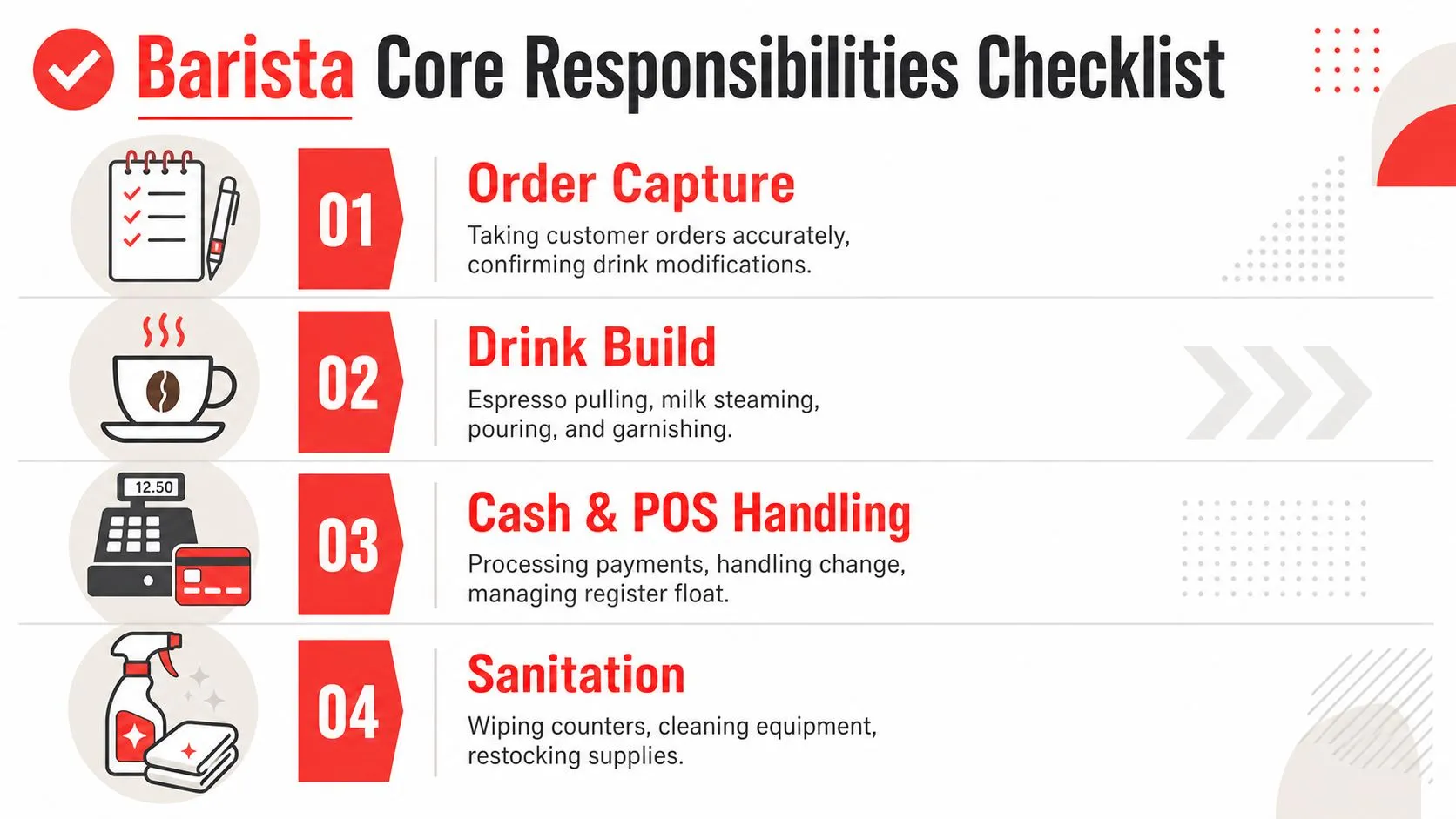
A clean way to write this section of the posting is as bullets, not prose:
- Order capture: Take orders accurately, confirm modifications, and enter all items correctly.
- Drink build: Pull espresso to spec, steam milk correctly, and finish drinks consistently.
- Cash and POS handling: Process payments, manage the register, and keep transactions moving.
- Sanitation: Keep the bar clean, restock supplies, and maintain equipment throughout service.
Required Skills and Qualifications
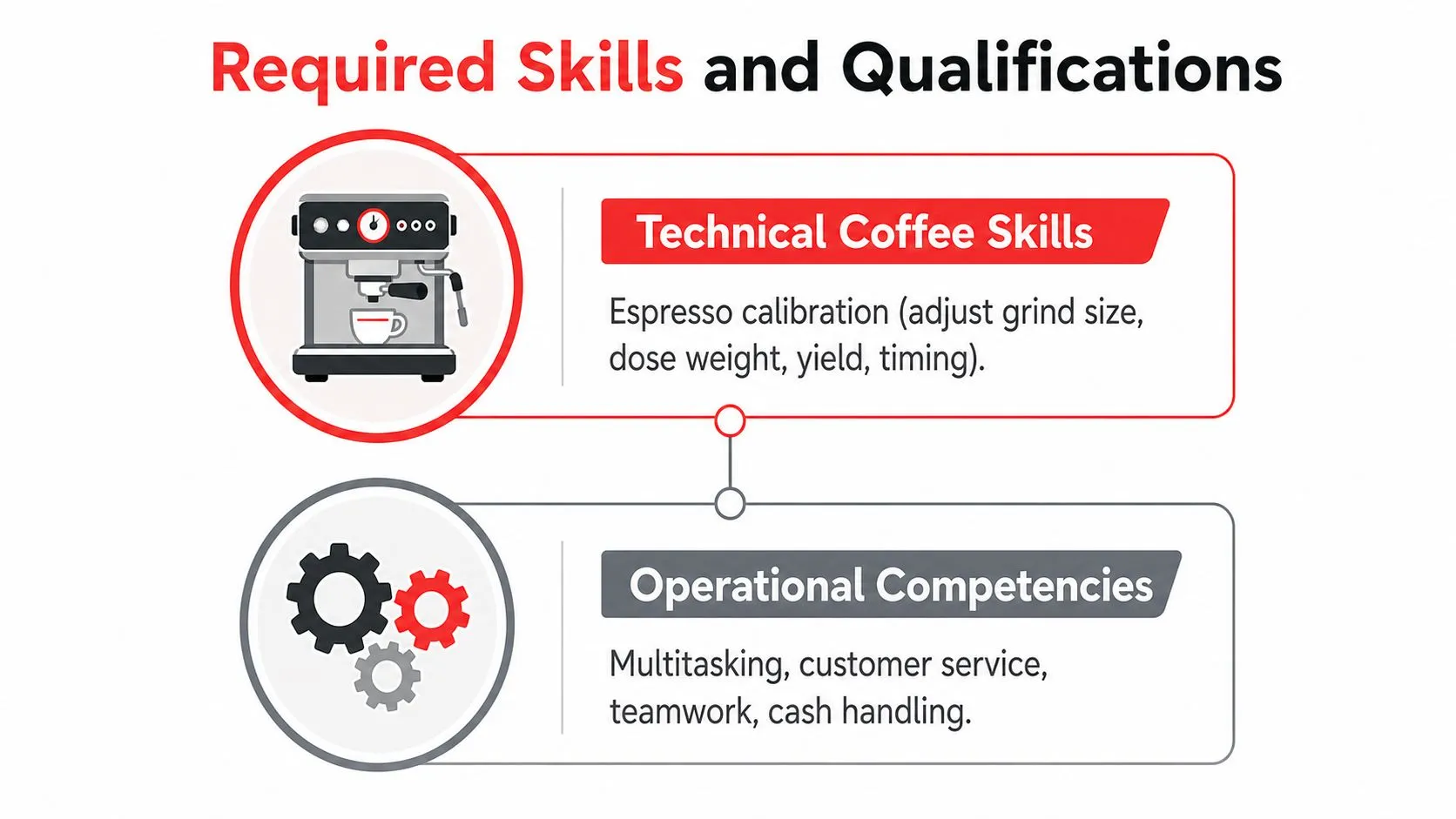
The strongest baristas bring technical coffee skill and steady execution under pressure. A job post should separate what can be taught on the floor from what a hire needs before day one. If that line is unclear, you either lose capable entry-level applicants or bring in someone who can make a decent drink but falls apart when the bar gets busy.
Technical skills that should be explicit
Espresso calibration should be written as a real process, not a vague “knowledge of espresso.” A strong candidate understands that each shift may require adjusting grind size, dose weight, yield, and extraction time to keep flavor consistent. Steaming milk to the right texture matters too, and the operational target from this barista technique guide is 140–160°F for many drinks, with microfoam quality affecting pour consistency.
Operational skills that matter just as much
POS fluency belongs in the requirements, not the “nice to have” section. So do speed under pressure, accuracy with modifications, and physical stamina for sustained standing and repeated movement. For cafés that run like quick service, experience in QSR-style service environments can be a useful signal because the work depends on pacing, ticket flow, and repeatable accuracy, not just product knowledge.
A candidate who cannot keep the line moving while protecting order accuracy is not a fit for a busy café, even if they make beautiful drinks.
How to write the qualifications so candidates self-filter
Use selection criteria that sound measurable, not aspirational. Instead of “great personality,” say comfortable working in a fast-paced service environment. Instead of “coffee lover,” say able to learn espresso calibration, milk steaming, and POS entry quickly.
It also helps to keep compliance and clarity in view when you write. Paradigm International Inc. job description guidance is a useful reference for making responsibilities and qualifications specific enough that candidates understand what is expected before they apply.
For restaurant groups that need stronger hiring language across roles, the same clarity should show up in other front-of-house posts too. This server job description guide shows how service roles should spell out pace, accuracy, and guest interaction without sounding generic.
Sample Templates for Different Experience Levels
Using one template for every applicant is a fast way to get the wrong mix of candidates. Entry-level baristas need a post that signals training and pace. Experienced baristas need a post that signals autonomy, technical control, and the ability to lead a rush without constant direction.
| Element | Entry-Level Template | Experienced Template |
|---|---|---|
| Role focus | Learn the bar, support service, build fundamentals | Run the bar, stabilize workflow, support newer hires |
| Coffee skills | Willingness to learn espresso, milk steaming, and drink build | Able to dial in grinders, troubleshoot shots, and maintain consistency |
| POS and service | Basic POS training provided, accuracy expected | Confident with POS, customizations, and ticket flow |
| Shift expectations | Flexible support role during busy times | Independent shift management during peak service |
| Growth language | Training, coaching, and practice on the line | Leadership, mentoring, and more responsibility over time |
| Compensation language | Transparent starting pay, tips, and schedule details | Higher hourly range, tips, and possible lead responsibilities |
The entry-level version should make room for learners who bring strong customer service instincts. That’s the version you use when you’re willing to teach espresso technique and POS habits from scratch. It should still mention speed and willingness to work in a busy café, because kindness alone won’t keep up with a Saturday morning rush.
The experienced version should go further. It should call out grinder dialing, shift flow, and the ability to train others or step in when the bar gets behind. This restaurant server job description guide is a good reminder that front-of-house roles become much stronger when the wording matches the level of responsibility.
A useful way to think about it is this, the more complex the café, the more explicit the barista expectations need to be. A neighborhood shop with regulars can be more flexible. A high-volume coffee bar needs tighter language, because the job is operational, not just social.
Compensation Benchmarks and Scheduling Realities
A barista job post has to be plain about pay and time commitment. Applicants are usually trying to figure out whether the role fits around school, another job, or a short-term plan. If the listing only says “competitive pay,” people have to guess what they are walking into.
That matters because the barista labor pool is young and heavily part-time in many markets. In Australia, the official profile shows 78% part-time share and a median age of 24 in one dataset, with the newer profile showing 52.2% aged 15–24 and 78.3% part-time. As noted in Jobs and Skills Australia’s barista profile, barista hiring often revolves around flexible shifts rather than traditional full-time paths.
What to say in the compensation section
State the pay structure, tip expectations, and shift patterns in direct language. If the role includes early starts, weekends, or split coverage, say so. If there is a path to more responsibility, describe how that usually works in your café, even if the process is informal.
Be specific about the trade-offs. A higher hourly rate can help, but if the shifts are short or irregular, candidates need to know that upfront. If tips are part of the total picture, make that clear too, because applicants compare take-home pay against the actual hours they can work.
Why transparency helps retention
A lot of turnover starts before the interview because the applicant misunderstood how demanding the job is. Instawork’s barista job description article notes that barista wages and take-home pay can depend on tips, location, and volume, so vague pay language tends to attract people who underestimate the pace.
Scheduling clarity matters just as much. If your rosters are built around rush periods, school schedules, and shorter shifts, the job post should say that the role requires sustained standing and flexible availability. A clear restaurant staff scheduling guide can help if you are tightening shift rules at the same time you rewrite the ad.
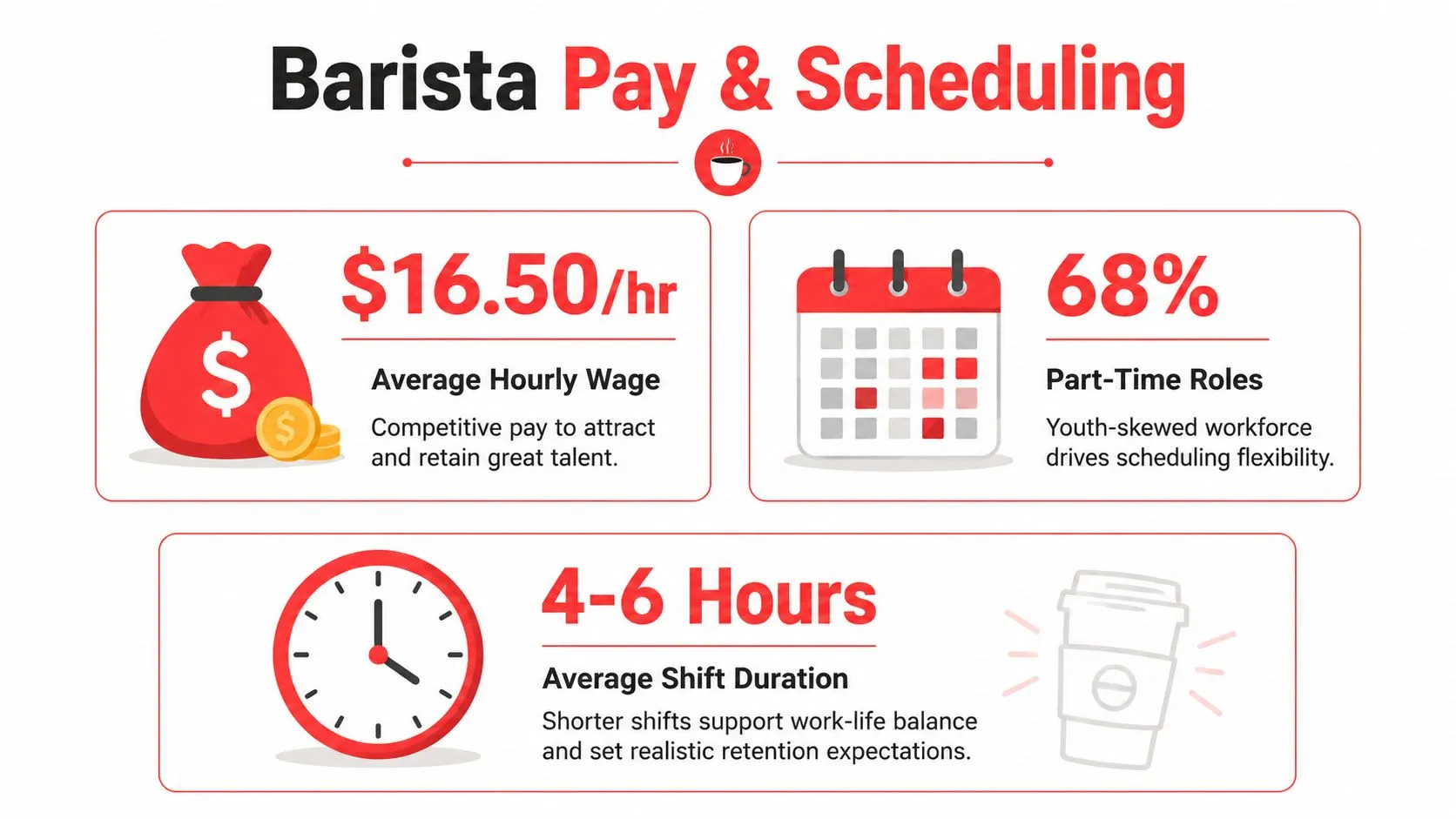
A clean compensation section might read like this:
- Pay: State the starting hourly rate or range clearly.
- Tips: Explain whether tips are pooled, shared, or kept individually.
- Availability: Note early mornings, weekends, and holidays if they are part of the role.
- Growth: Mention whether experienced baristas can move into lead shifts, training, or opening and closing responsibilities.
Interview Questions and Onboarding Checklist
The interview should test the exact things you wrote into the posting. If the job requires speed, accuracy, and espresso control, then the questions need to surface those traits. Otherwise, you’re hiring from confidence instead of evidence.
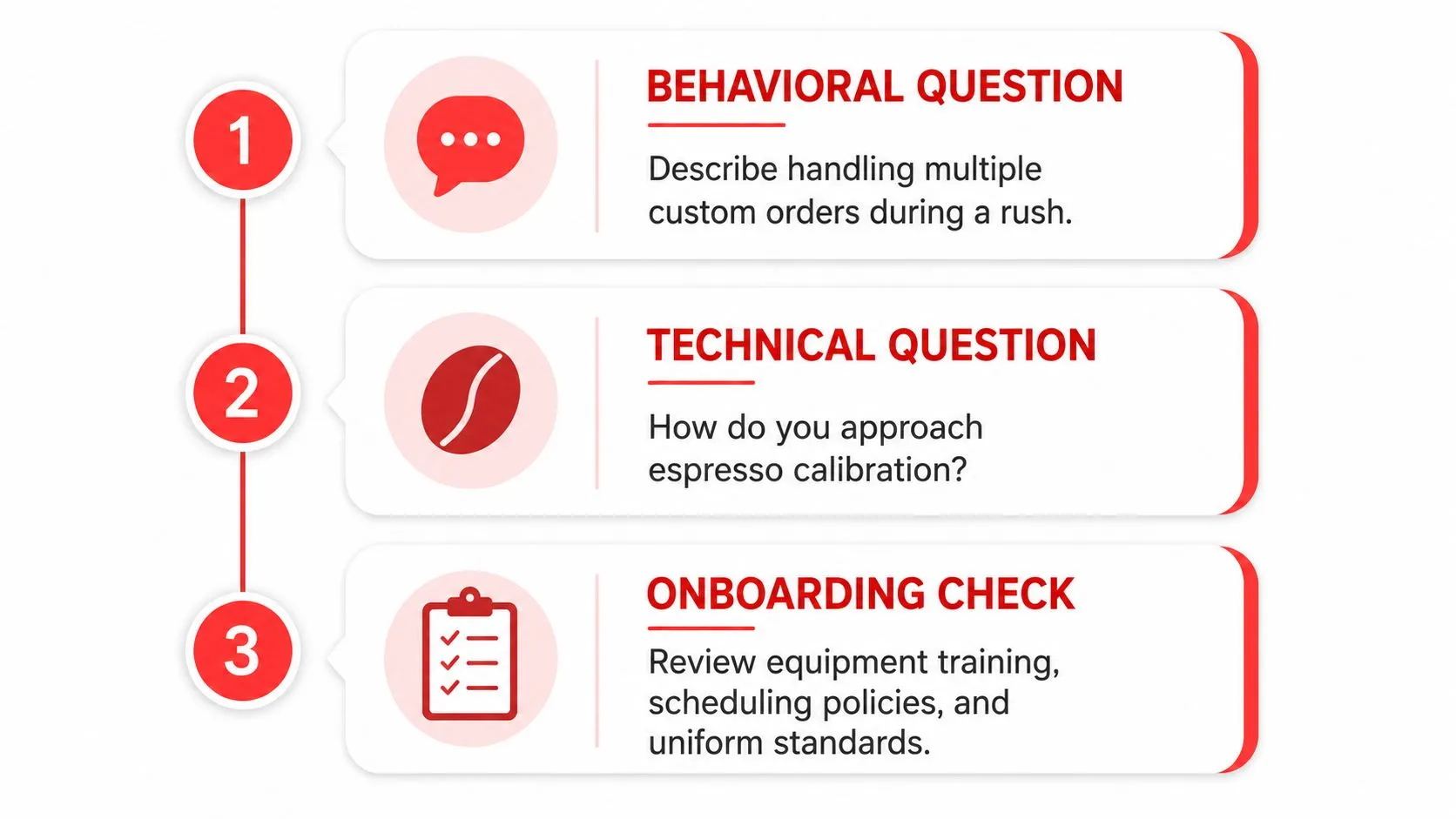
A few questions work especially well in a café setting:
- Rush handling: Ask how the candidate manages multiple custom orders when the line is growing.
- Technical discipline: Ask how they approach espresso calibration at the start of a shift.
- POS accuracy: Ask how they stay accurate when the register is busy and the customer is waiting.
- Team behavior: Ask how they handle a teammate who is falling behind on drinks.
For onboarding, the first two weeks should test real work, not interview polish. A strong checklist usually includes equipment orientation, shadow shifts, point-of-sale practice, and independent service benchmarks once the basics are in place. If you want a broader framework for paperwork, training, and role setup, LeaveWizard’s employee onboarding checklist for HR is a practical reference.
An operator who does this well watches three things closely: speed, accuracy, and teamwork. That’s the true test. If the new hire can maintain all three during live service, the job description did its work.
If you’re rewriting your hiring process, use the barista role as the template for everything else in the café, clear duties, honest scheduling, and measurable expectations. OrderOut helps restaurants keep frontline operations cleaner by reducing the chaos that spills into hiring, scheduling, and service. If you want to tighten the systems behind the bar and make the whole operation easier to run, visit OrderOut and see how it fits your café.
Frequently Asked Questions
What should a barista job description include
It should cover drink preparation, customer service, POS handling, cleaning, and the physical pace of the role. Good descriptions also spell out schedule expectations, tip structure, and whether training is provided.
Should I hire baristas with no experience
Yes, if they show strong service instincts and can learn quickly. Entry-level hires can work well in cafés that have a simple training process and clear shift supervision.
How do I make a barista job description more accurate
Write it around actual shift blocks, order capture, drink build, cash handling, and sanitation. Then add the specific pace, availability, and equipment expectations your café really uses.
What interview questions work best for baristas
Ask about rush handling, custom orders, espresso calibration, and POS accuracy. The best answers are specific and show how the candidate thinks under pressure.
How long should barista onboarding take
It depends on your café’s complexity, but the first two weeks should include shadowing, equipment practice, and live-service evaluation. Use that time to judge speed, accuracy, and teamwork, not just attitude.
If you’re ready to tighten up your barista hiring and make the role easier to staff, start with the systems behind the counter as well as the wording on the page. OrderOut helps restaurants reduce operational friction so the team can stay focused on guests, drinks, and service. Visit OrderOut and see how it can support your café’s day-to-day flow.