
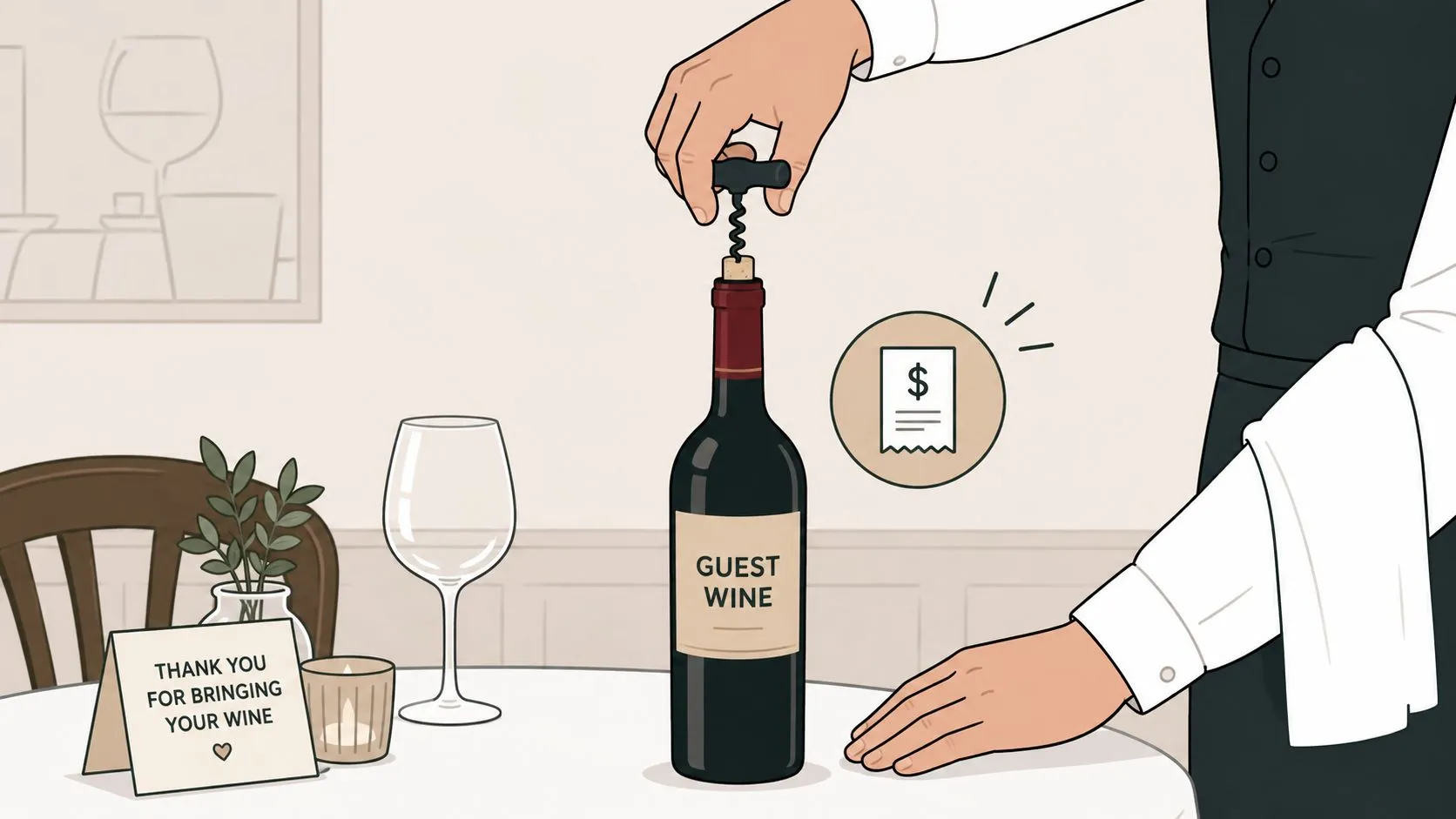
Corkage is the fee a restaurant or venue charges for opening and serving a bottle of wine, or another outside beverage, that a guest brought in themselves, and it’s usually billed per bottle as a service charge. In practice, it’s often the difference between a smooth birthday dinner and a confused manager trying to explain why the guest’s bottle isn’t “free.”
A new manager usually meets the word in the middle of service. A couple arrives with a bottle they brought for an anniversary, the server checks the policy, and the check gets a corkage line item. If you’ve ever wondered why that charge exists, how much to set it at, or how to keep it out of delivery orders, the answer starts with the basic meaning and then moves into operations.
What Corkage Means at a Restaurant
A guest walks in with a bottle in hand, and the question at the host stand is simple: can the restaurant serve it, and what does that cost? Corkage is the charge a restaurant or venue makes when it allows guests to drink wine, or another outside beverage, on the premises. Cambridge defines it as “the charge made by some restaurants for allowing customers to drink wine that has been bought from somewhere else,” and Merriam-Webster defines it as “a charge (as by a restaurant) for opening a bottle of wine bought elsewhere” Cambridge Dictionary, Merriam-Webster.
The plain-English version
The basic idea is easy to miss if you only read the dictionary definition. A guest brings the bottle, but the restaurant still has to open it, pour it, supply glassware, and have a server handle the table-side work. That is why corkage exists. It is a service charge, not a tax, and not a markup on the wine itself.
A straightforward example makes the idea clearer. A couple arrives with a bottle they saved for a birthday dinner. The server says, “Absolutely, we can open that for you. Corkage is $25 tonight.” The guest is paying for the restaurant’s labor and tools, while still enjoying the bottle they chose.
The term also shows up beyond the dining room floor. If you are setting policies, training staff, or entering charges in a POS, the definition matters because it tells you what the fee is tied to, a bottle brought from outside and opened by the restaurant. That operational meaning is the part managers need to recognize when service has to flow cleanly through the check.
Corkage also sits inside guest expectations. A house can set the policy, but the team still has to explain it in a way that feels consistent with guest service in restaurant. If a guest is deciding on a bottle before they leave home, that decision belongs to the same general conversation as choosing wine to bring to a dinner party, except the restaurant setting adds service work that a private dinner does not have.
For operators, that difference is the key. Corkage is not just a word from a dictionary. It is the label for a real service the restaurant provides, and once that service is recognized, it can be priced, explained, and configured the same way other front-of-house charges are handled.
What the Corkage Fee Covers as a Service Charge
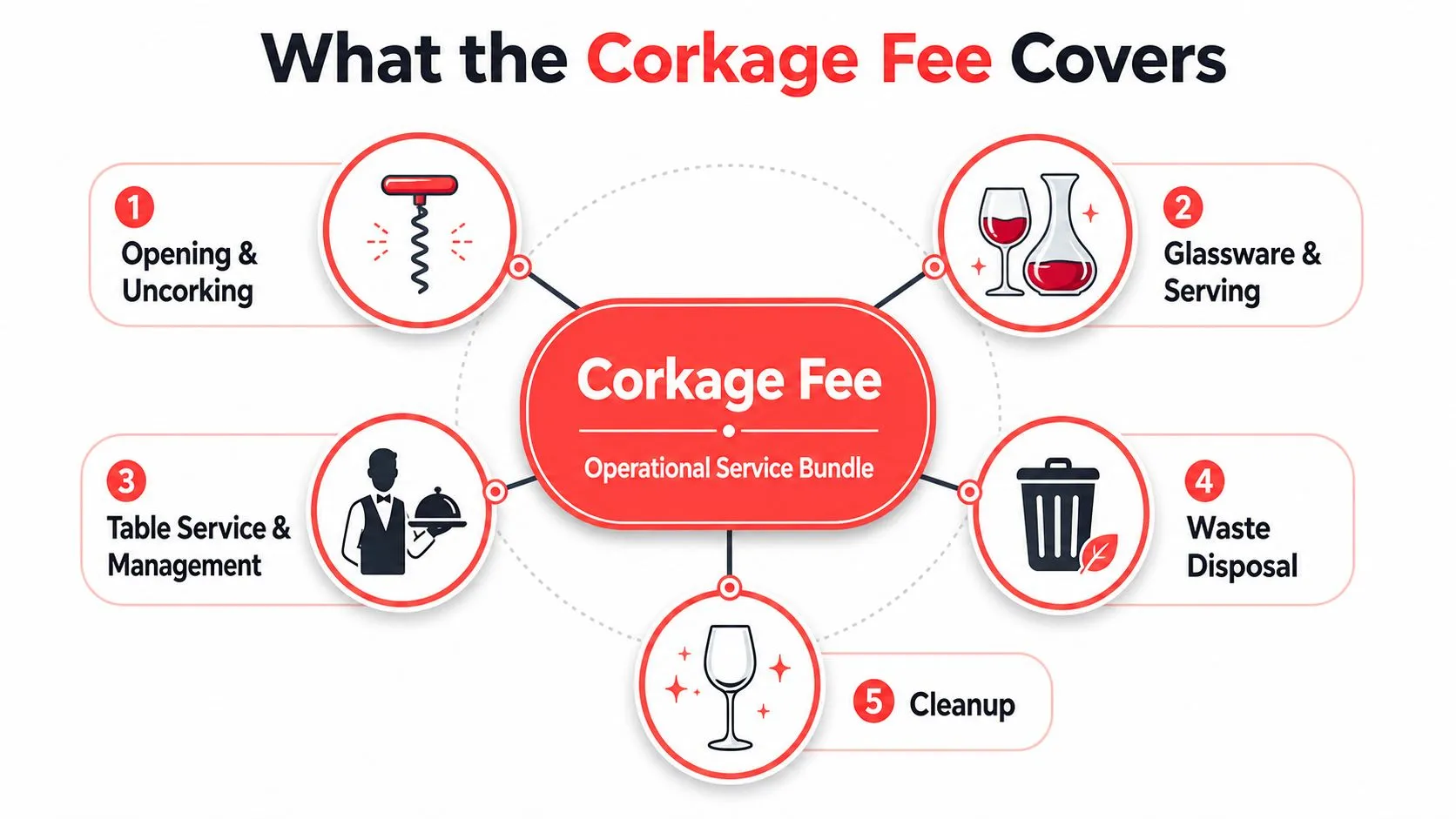
The fee isn’t really about the cork. It’s about the work around the bottle. Restaurant references frame corkage as compensation for opening, pouring, glassware use, storage or chilling, and handling the bottle after service AM World Group.
What the guest is actually paying for
A host or server has to do more than twist the cap. They bring clean stemware, open the bottle, pour it at the table, and keep the bottle in good condition during service. If the wine needs chilling or decanting, that adds more handling. When service ends, there’s clean-up and disposal too.
That’s why corkage is usually treated as a service bundle rather than a beverage surcharge. A guest isn’t paying for the bottle’s retail value. They’re paying for the restaurant’s labor and overhead tied to that bottle.
The fee is also usually per bottle, because the operational trigger is the bottle being opened on site. Vocabulary.com describes corkage as a charge added for every bottle of wine served that wasn’t bought on the premises Vocabulary.com. That per-bottle structure is easier for a manager to track and easier for staff to explain.
A good corkage policy doesn’t sound punitive. It sounds like a fair exchange for service the restaurant is actually providing.
This is also where managers can confuse corkage policy, BYOB, and wine markup. A policy says what’s allowed. BYOB is the larger guest-brings-beverage framework. Wine markup is the profit built into the restaurant’s own list. Corkage sits beside those ideas, not inside them.
For managers comparing fees to other restaurant charges, it helps to separate service fees from gratuities with service charge vs tip. That distinction is useful when a guest asks why the bottle isn’t just “part of the meal.”
Typical Corkage Fee Ranges You Can Anchor To
A guest who brings a bottle usually wants one simple answer, what will the restaurant charge to open and serve it? That answer has to fit the room, the service, and the policy, so managers need a range they can explain without hesitation.
In the UK, Square reports average BYOB corkage charges of around £12–£15 for still wine, £15–£20 for regular sparkling wine, and £20–£35 for champagne Square. U.S.-focused hospitality sources commonly place typical restaurant corkage between $10 and $50 per bottle Square.
A simple pricing table
| Market | Beverage Type | Typical Per-Bottle Range |
|---|---|---|
| UK | Still wine | £12–£15 |
| UK | Regular sparkling wine | £15–£20 |
| UK | Champagne | £20–£35 |
| U.S. | Restaurant corkage | $10–$50 per bottle |
These ranges help because they show corkage as a familiar hospitality charge, not an open-ended negotiation. The fee is tied to the service of handling the bottle, opening it, and taking responsibility for it at the table.
Why the fee stays flat
A flat fee is easier to explain than a percentage of retail price. A server still has to carry, open, present, and clear the bottle whether the guest brought a modest wine or a premium label, so the work does not change with the bottle’s shelf value.
The right number still depends on the business model. A neighborhood trattoria, a steakhouse, and a tasting-menu room do not price guest experience the same way. If you are working out your own baseline, compare beverage margin thinking with how to calculate food cost percent, because the logic behind protecting margin is similar even when the charge itself is different.
Manager’s shortcut: choose a corkage fee that fits your service level and room, without confusing guests with a hidden wine markup.
Beyond Wine
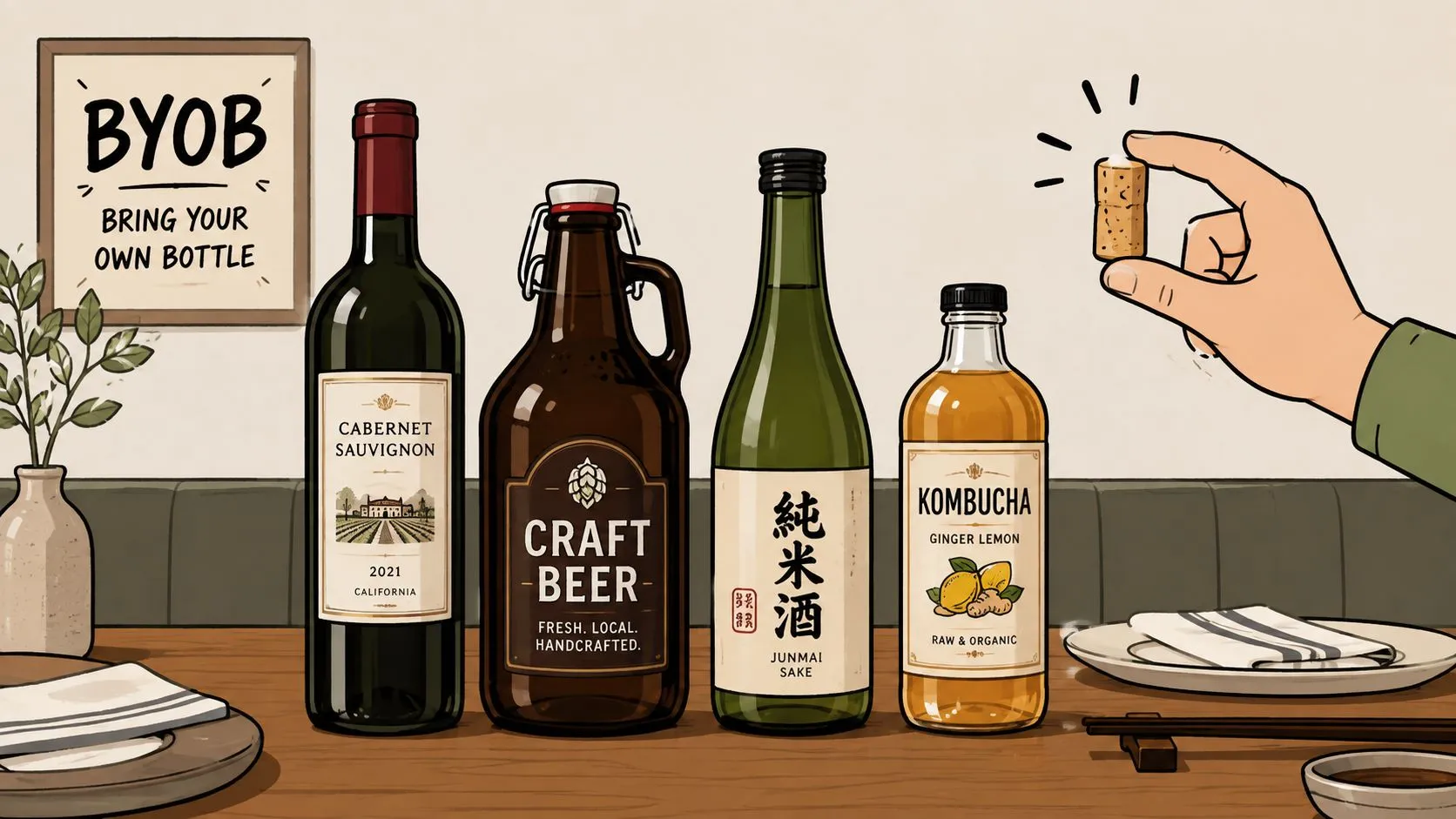
A guest walks in with a bottle that is not on your list. The question at the host stand is no longer only about wine, it is whether your restaurant allows outside beverages at all, and under what terms. That is where corkage reaches beyond the narrow dictionary idea and becomes an operating rule for the floor.
Where the term stretches
Some restaurants apply corkage to beer, cider, spirits, and even soft drinks brought from outside. Others keep the policy limited to wine only. A manager has to define the scope before service starts, because a rule that is fuzzy on paper will be fuzzy at the table.
The exact boundary should match the kind of room you run. A craft-beer bar may allow outside cans under a BYOB policy, while a spirits-focused cocktail room may prohibit outside liquor because of safety and liability concerns. Guests can accept a firm rule when it is clear, but they notice confusion right away if one server says yes and another says no.
Why delivery orders change the picture
Corkage is a dine-in issue. Once a restaurant is handling Uber Eats, DoorDash, or Grubhub orders, the outside-beverage question no longer belongs on the delivery side. A guest can bring a bottle to the table and have it opened there. A bottle does not belong on a delivery ticket, and it should not be attached to a driver under a corkage policy.
That is why staff training matters as much as menu wording. The host team, the server team, and the closing manager all need the same scope in mind. If one person thinks corkage applies to beer and another thinks it applies only to wine, the guest experience gets messy fast.
Best practice: write down exactly which beverage categories your policy covers, then train to that wording instead of relying on memory.
For restaurants that want a cleaner operational setup, the same discipline used for beverage policies should also show up in an integrated POS system. Clear rules are easier to enforce when the POS, menu, and staff script all match.
Setting Up Corkage in Your POS and Delivery Setup
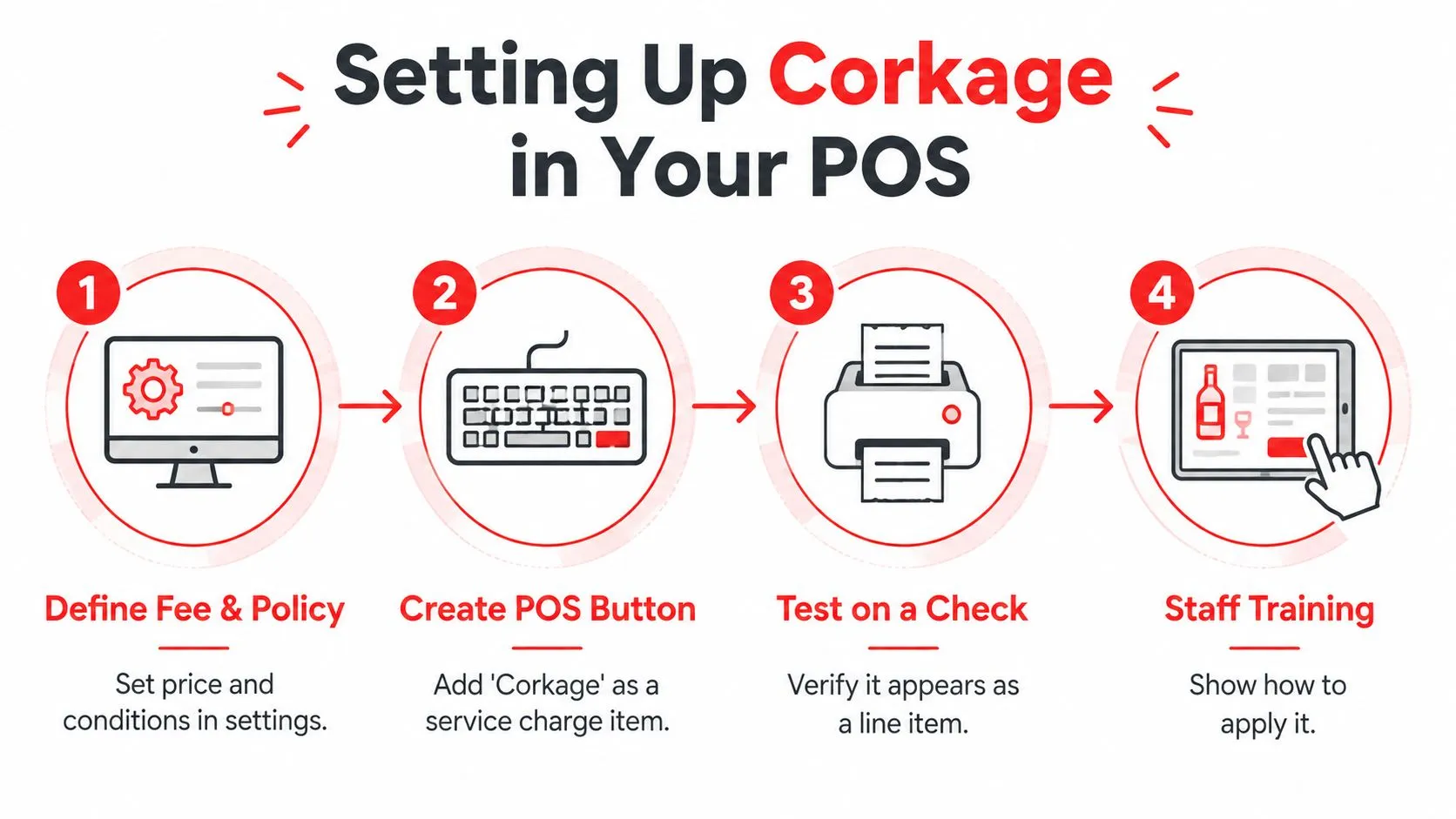
In a POS, corkage usually shows up as a service-charge item or a dedicated modifier that a server adds when a guest brings outside wine. For a manager, the goal is simple, the fee should be easy to add on a dine-in check and impossible to leak into a third-party delivery order.
What it looks like in practice
On systems like Clover or Square, many operators set corkage up as a flat per-bottle item tied to a dummy menu entry or service charge button. That keeps it visible to staff without making it look like a food item. It also makes it easier to train consistently across logins and locations.
The language matters too. A good internal label might be “Corkage, dine-in only.” That makes the rule obvious at the POS level, which helps reduce confusion during a rush. It also reminds staff that the charge belongs to a table service moment, not a delivery ticket.
Why delivery integration matters
POS structure and delivery flow have to stay separate. OrderOut maps each marketplace menu to a normalized POS schema so Uber Eats, DoorDash, and Grubhub orders inject cleanly into Clover or Square without extra tablets or manual re-keying. That separation helps keep a dine-in corkage modifier from accidentally landing on a marketplace order.
If you’re setting up this kind of workflow, the practical question is whether the delivery menu and the dine-in service charge live in clearly different places. When they do, staff spend less time correcting tickets and more time serving guests.
For Clover users, the cleanest starting point is the OrderOut Clover delivery integration, and the broader 3rd-party order engine shows how channels map into POS logic. Clover merchants can also start from OrderOut for Clover if they want the delivery side handled without extra hardware.
Best Practices for Communicating Corkage to Guests and Staff
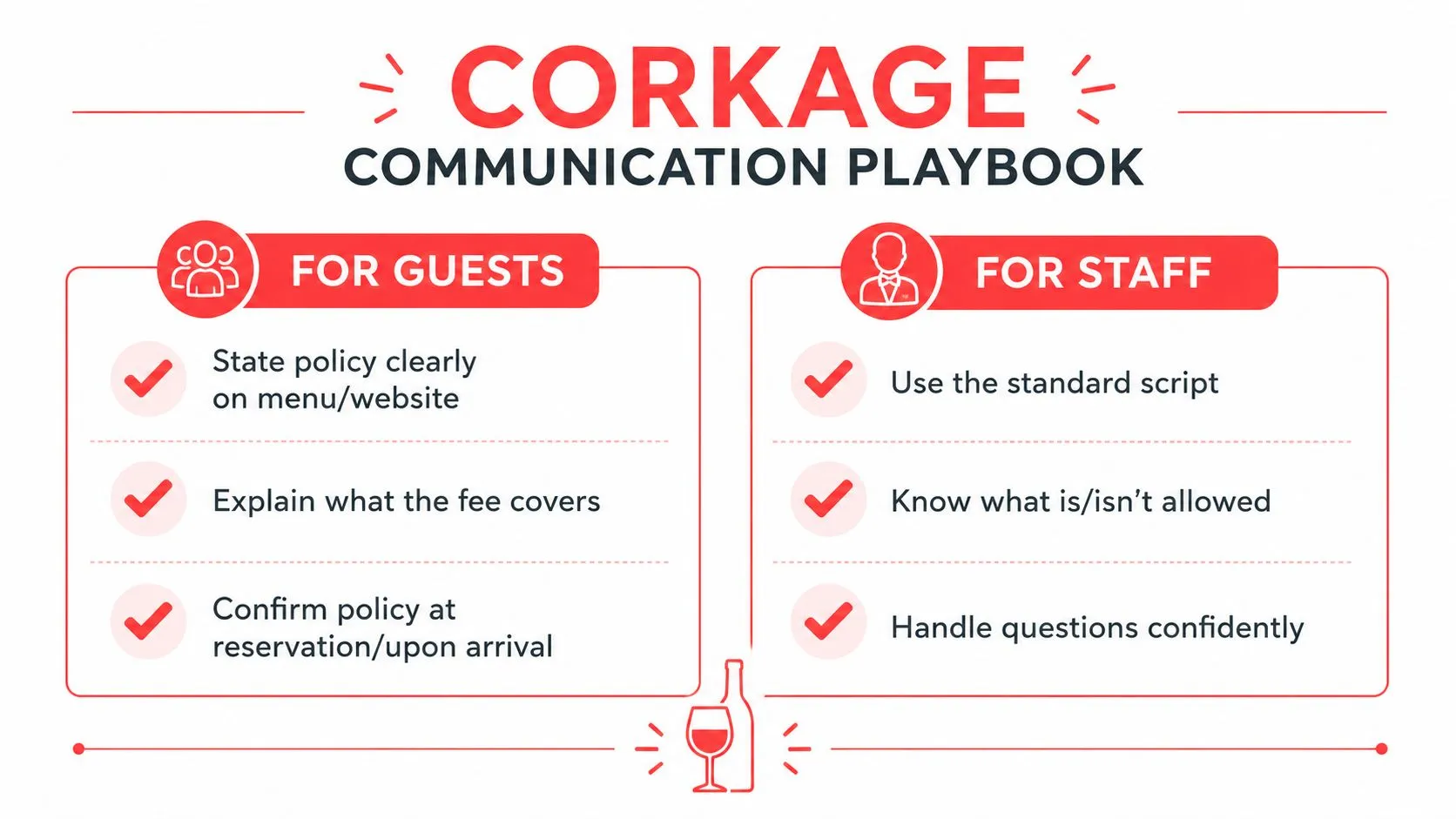
Corkage works best when nobody feels surprised. Guests are usually fine with a clear, stated policy. Problems start when the fee appears after the bottle is already on the table.
Simple wording wins
Use neutral language on the menu and website, such as “outside beverage fee” or “corkage applies.” That sounds more professional than a penalty. Reservation notes and host scripts should repeat the same wording so guests hear the policy before service begins.
Staff need a short response they can use without sounding defensive. Something as simple as, “We’re happy to open that for you, the corkage fee is listed on the menu,” keeps the interaction calm and direct. If a guest asks why the fee exists, the answer should stay practical, tied to service, glassware, and handling.
Train for consistency
Hosts, servers, and managers should all know the amount, what categories it covers, and who handles exceptions. If the policy allows wine but not spirits, or still wine but not champagne, that distinction has to be clear in training. Otherwise the team starts improvising, and that’s when consistency disappears.
Put the policy where guests can see it before they arrive, not after they open the bottle.
A clean SOP helps here. When staff know where to look and what to say, they’re less likely to frame corkage as a fight. For operators tightening up the rest of their service flow, it’s worth reviewing SOP in restaurant alongside the beverage policy.
Frequently Asked Questions
What is the definition of corkage?
Corkage is the fee a restaurant or venue charges when a guest brings in outside wine or another beverage and the venue opens or serves it. The word is simple, but the operation behind it is not. In practice, the restaurant is charging for labor, handling, and the service tied to opening and presenting the drink.
How much is a typical corkage fee?
The exact amount depends on the venue and the level of service it provides. As noted earlier, typical charges vary by market and by beverage type, so the cleanest way to think about it is as a service fee that is set locally rather than a fixed industry number.
Does corkage apply only to wine?
No. Some venues use corkage for beer, cider, spirits, or even soft drinks brought from outside, while others keep it limited to wine. That decision should be written into the policy so staff know exactly what is covered and guests do not have to guess.
Does corkage apply to delivery orders?
Corkage is a dine-in policy. It applies when a guest brings an outside beverage into the restaurant and the staff serves it at the table. It does not belong on Uber Eats, DoorDash, or Grubhub tickets, because those orders are part of delivery flow, not in-house service.
How do I set up corkage in a Clover or Square POS?
Most operators set it up as a flat service-charge item or a dedicated modifier tied to a dine-in check. In a POS, that means the fee should sit with the table order, not with third-party delivery tickets. Keep it separate from delivery orders and train staff to apply it the same way every time, so the fee follows the right workflow instead of drifting into the wrong one.
If you want to see how corkage fits into broader restaurant setup, Square explains the fee as a service charge tied to outside drinks and handling. That lines up with the operational side here, where the key job is making sure the charge is configured in the POS and used only where it belongs.
What should staff say when a guest asks about corkage?
Use plain language. A host or server can say, “We’re happy to open that for you, the corkage fee is listed on the menu.” If a guest asks why it exists, the answer should stay practical and focus on service, glassware, and handling.
How should corkage be communicated before service begins?
Put the policy where guests can see it before they arrive, not after they open the bottle. Use the same wording on the menu, website, reservation notes, and host script so there is no mismatch between what guests read and what the staff say. A clear SOP helps here, because it gives the team one place to check and one way to explain the rule when questions come up.