
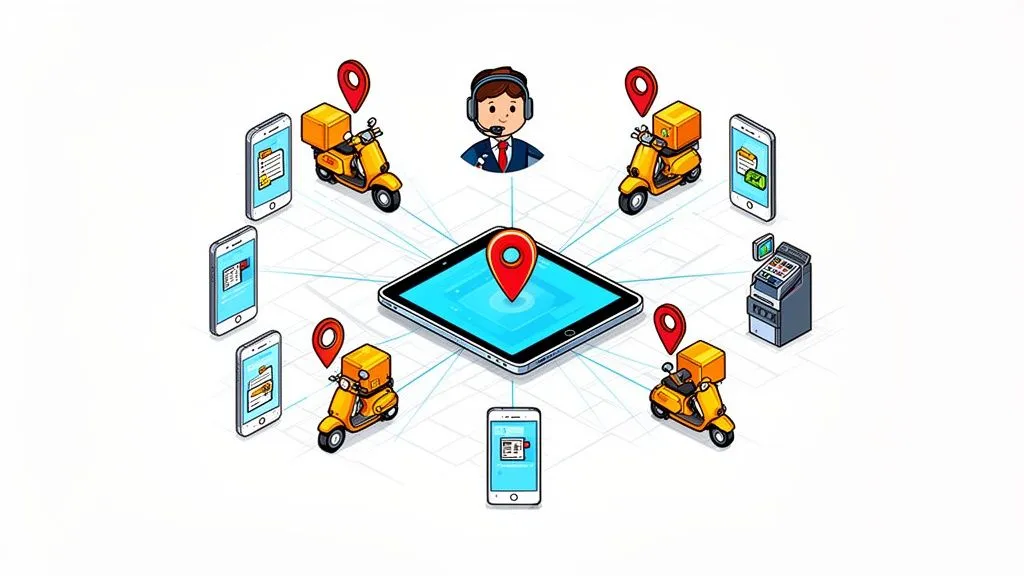
A dispatch tracking app is the mission control for your restaurant’s delivery operation. In simple terms, it’s a single dashboard that automatically collects every order from all your delivery platforms—like Uber Eats and DoorDash—and organizes them in one place.
Why does this matter? It’s the key to transforming a chaotic, frustrating delivery process into a smooth, efficient, and profitable part of your restaurant. By connecting directly to your restaurant’s POS system, it automates the entire flow, saving time, reducing costly errors, and letting your staff focus on what they do best: serving great food.
The Hidden Costs of Manual Restaurant Delivery Management
If you run a restaurant, you know the scene. It’s 7 PM on a Friday. You have a line of tablets on the counter, each one dinging with new orders. Your front-of-house staff is swamped, trying to manually punch every order into the POS without making a mistake. This isn’t just stressful; it’s a direct hit to your bottom line and restaurant efficiency.
Every missed order, incorrect entry, and delay in assigning a driver means an unhappy customer and a frazzled team. This manual process costs you dearly in wasted time, food from remakes, and staff productivity. For example, a simple typo when entering a DoorDash order into a Clover POS can lead to a completely wrong meal, requiring a refund and a new dish—doubling your cost for that order.
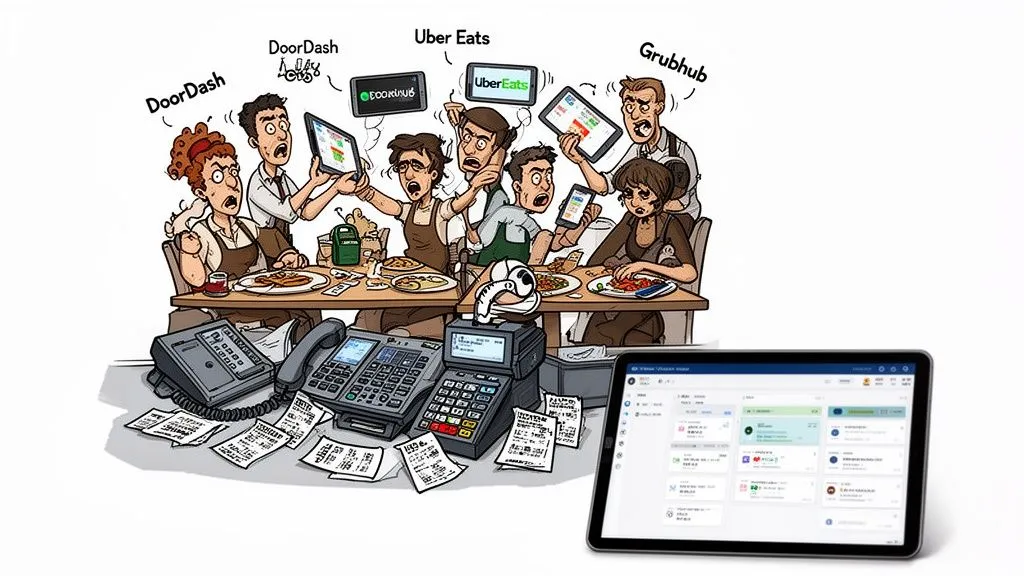
Trying to manage this all by hand is a losing game. The online food delivery market is booming, and restaurants stuck in the old way of doing things are leaving money on the table. For owners using a Square POS, the hours spent on manual entry are a huge drain on labor costs. Worse, those inevitable human errors can cost you an estimated 5-10% of an order’s value in refunds, redos, or wasted food.
From Chaos to Control: Improving Your Restaurant Operations
Think of a dispatch tracking app as an air traffic controller for your food. Instead of your team trying to juggle every order coming in, the software automates the entire flow, from the moment the customer taps “order” to the moment it leaves with the driver.
Here’s why that’s a game-changer for your daily restaurant operations:
- Drastically Reduces Errors: By sending order details directly to your POS and kitchen printers, you eliminate typos, missed modifiers, and forgotten special instructions for good. This directly reduces food waste and refund requests.
- Frees Up Your Staff: Your team can stop acting like data-entry clerks and focus on what matters: the food and the customers in your restaurant. This boosts staff productivity and morale.
- Boosts Kitchen Efficiency: When orders are organized and flow seamlessly to the kitchen, the whole workflow gets smoother. Ticket times drop, and you can push out more food, faster, increasing your revenue during peak hours.
Manual vs. Automated Dispatch At a Glance
The difference between wrestling with tablets and using an automated system is night and day. Here’s a quick breakdown of how everyday tasks change.
| Task | Manual Process (Without App) | Automated Process (With App) |
|---|---|---|
| Order Entry | Staff manually types each order from multiple tablets into the POS. | Orders from all platforms automatically inject into the POS. |
| Driver Assignment | Staff monitors each app to confirm a driver is assigned and on the way. | The system automatically requests a driver and tracks their status. |
| Customer Updates | Relies on the delivery platform’s app; staff has limited visibility. | Real-time tracking is available in one place; some systems can send alerts. |
| Reporting | Requires manually pulling and combining reports from each delivery service. | A single dashboard provides consolidated sales and performance data. |
| Menu Changes | Staff must log into each platform individually to 86 an item or update a price. | Update the menu once in the system, and it syncs across all platforms. |
Ultimately, this food tech is about more than just managing orders—it’s about taking back control. It transforms a reactive, high-stress environment into a proactive and efficient machine. To dive deeper, check out our guide on finding the right online order management system.
By centralizing and automating delivery, you regain command over a critical—and rapidly growing—part of your business.
Essential Features for Restaurant Delivery Success
Not all dispatch tracking apps are created equal. A truly effective app is more than just a dashboard; it’s the central nervous system for your off-premise business. Let’s break down the must-have features that provide actionable insights and improve your restaurant operations.
Think of it this way: managing deliveries without these core functions is like running a kitchen with a dull knife. You might get the job done, but it’s messy, slow, and frustrating. A powerful app gives you the sharp tools you need to succeed.
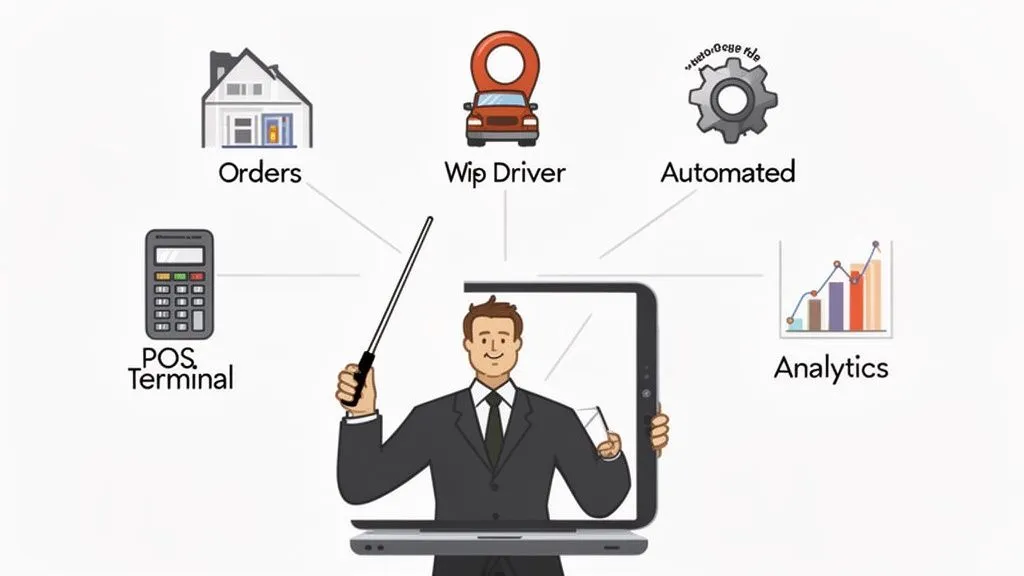
Real-Time Order Consolidation
This is where it all starts. In simple terms, order consolidation pulls every order from all your delivery platforms—like Uber Eats and DoorDash—onto one unified screen. Say goodbye to the dreaded “tablet farm” cluttering your counter.
Why it matters for your restaurant: Instead of staff frantically checking multiple devices, one screen shows them everything. This instantly cuts down on chaos, reduces the risk of missed orders during a dinner rush, and brings a sense of calm to your front-of-house. It’s the first actionable step toward taking back control and reducing staff stress.
Seamless POS Integration for Food Tech Automation
Order consolidation is a huge win, but it becomes truly powerful when paired with seamless POS integration. This feature is the digital bridge that automatically sends all that order information straight into your restaurant’s point-of-sale system. This is where true automation happens.
Technically, this is handled by an Application Programming Interface (API), which is just a set of rules that lets different software programs talk to each other. The result is a perfect, error-free flow of information.
Why it matters: When an order from a delivery app instantly appears on your Square POS or Clover POS and prints in the kitchen, you’ve eliminated the biggest source of human error: manual data entry. This saves an incredible amount of staff time and slashes costly mistakes.
Live Driver Tracking and Automated Dispatching
Once the order is ready, the app should handle dispatching automatically. Smart automated dispatching logic assigns the order to the best available driver, whether you’re using a third-party service like DoorDash or your own in-house team.
Simultaneously, live driver tracking gives you a bird’s-eye view of every driver’s location and ETA.
Why it matters: This visibility is critical for managing customer expectations and getting ahead of potential delays. You can get a deeper sense of this by looking into different types of order status software. This feature ensures food gets out the door efficiently, leading to faster delivery times and happier customers.
Performance Analytics and Reporting
Finally, a top-tier dispatch app must give you actionable data. You can’t improve what you don’t measure. The best systems come with built-in performance analytics that track the metrics that actually matter for your restaurant.
- Average Delivery Time: Pinpoint bottlenecks in your prep or handoff process.
- Order Volume by Platform: See which delivery services are bringing in the most business.
- Peak Order Hours: Staff your kitchen and front-of-house based on real data, not guesswork, to control labor costs.
- Order Accuracy Rates: Quantify how much automation is reducing costly errors and saving you money.
Why it matters: This data turns your delivery operation from a guessing game into a data-driven part of your business, empowering you to make smarter decisions that boost both restaurant efficiency and your bottom line.
How Automation Slashes Errors and Boosts Customer Ratings
Manual order entry is one of the biggest—and most avoidable—headaches in restaurant delivery. Every time a staff member has to squint at a tablet and re-type an order into your POS, you’re rolling the dice. A missed “no onions” note or a typo can lead to an unhappy customer, a bad review, and lost revenue.
A dispatch tracking app with POS integration makes these issues a thing of the past. Orders flow seamlessly from platforms like Uber Eats right to your kitchen printers with zero human intervention.
Why it matters: This one change is huge for restaurant efficiency. It dramatically reduces food waste from remakes, cuts down on frustrating customer complaint calls, and frees up your managers from processing endless refunds. This directly improves your profit margins and staff productivity.
Turning Accuracy into Higher Ratings
There’s a straight line connecting operational accuracy to customer happiness. When customers get exactly what they ordered, on time, every time, they trust your restaurant. That reliability is how you build a stellar reputation on third-party delivery apps.
For example, a customer using the Uber Eats app expects to see real-time GPS tracking for their order. A good dispatch system provides this transparency, which slashes the “where is my order?” calls and makes the experience feel professional. Happy customers are far more likely to leave glowing reviews, which attract new business.
The Real-World Impact on Restaurant Operations
Let’s make this tangible. Picture a chaotic Friday night. An order comes in from DoorDash with a critical allergy note. In a manual system, it’s dangerously easy for a rushed employee to miss that detail while punching the order into a Clover or Square POS.
With an automated system, that risk simply vanishes. The special instruction is transferred digitally, ensuring the kitchen sees it exactly as the customer wrote it. You just avoided a potentially serious health incident, a scathing one-star review, and a customer you would have lost forever.
This isn’t just about damage control; it’s about proactively building a reputation for getting things right. The powerful benefits of this precision are covered in more detail in our article on automation in restaurants. The bottom line is simple: automating your dispatch process directly improves your finances by cutting waste and refunds while earning you the five-star ratings that fuel long-term growth.
Unlocking Total Efficiency with Seamless POS Integration
If you want true automation for your restaurant’s delivery, it all comes down to one thing: POS integration. But what does that actually mean for your day-to-day operations?
In simple terms, your delivery apps (like DoorDash or Uber Eats) and your point-of-sale system speak different languages. A dispatch tracking app acts as the universal translator, letting them communicate perfectly. On the technical side, this translator is an Application Programming Interface (API)—a set of rules that lets different software programs talk to each other automatically.
Why it matters: This connection is what transforms your workflow from a clunky, manual headache into a smooth, automated machine. It eliminates the need for a tablet farm and frees up your staff.
How POS Integration Works for Your Restaurant
Let’s walk through a real-world example. An order comes in from Uber Eats. Without integration, your staff has to stop what they’re doing, grab the tablet, and manually punch every detail into your POS. It’s a recipe for mistakes and slows down your whole kitchen.
With POS integration, the dispatch app instantly grabs that order and sends it directly into your system. Here’s what happens next:
- A ticket automatically prints in the kitchen with 100% accuracy.
- The sale is instantly recorded in your financial reports.
- Your inventory count for those ingredients is adjusted in real-time.
This all happens in seconds. For instance, a dispatch app can send a DoorDash order straight into a Clover or Square POS without anyone lifting a finger. The entire process becomes frictionless, moving from manual errors to automated efficiency.
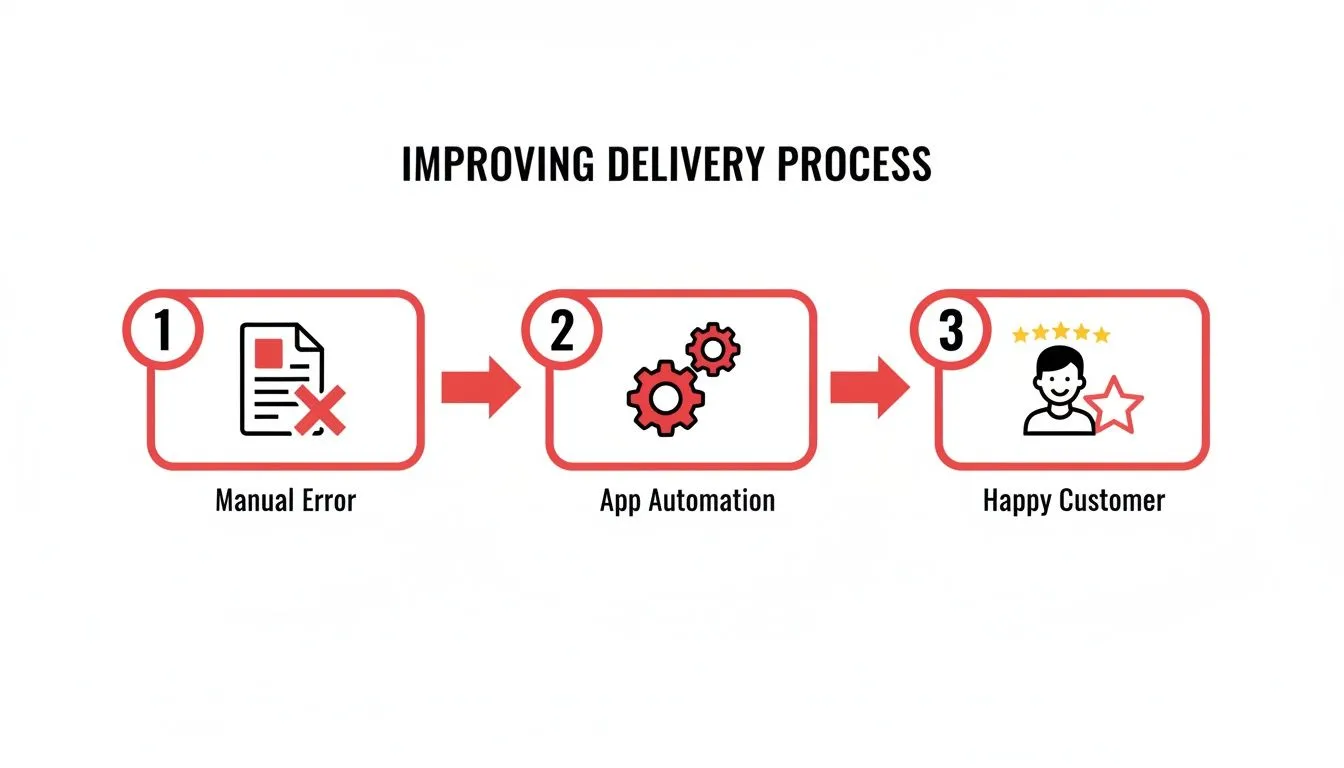
As you can see, automation is the bridge between error-prone manual work and the kind of great service that keeps customers coming back.
The Tangible Wins for Restaurant Operations
This seamless flow of information delivers immediate, measurable benefits. It’s where food tech stops being a buzzword and starts providing a clear return on investment.
Why It Matters: By eliminating manual data entry, you give your staff back precious time. They’re no longer bogged down by tedious tasks and can focus on what really matters—taking care of dine-in guests, ensuring order quality, and boosting team morale. This directly impacts labor costs and staff productivity.
The gains go beyond labor savings. Your kitchen gets a huge boost because orders arrive instantly and correctly, making the whole line run faster. Your financial data becomes impeccably accurate, making end-of-day reconciliation a breeze. You can dig deeper into the different kinds of POS integration software to see just how much it can do.
Turning Smoother Operations into Real Profit
We all know that making things run better in the restaurant is great, but what really matters is whether those improvements show up on your P&L. A dispatch tracking app isn’t just a fancy gadget; it’s a direct line to a healthier bottom line.
First, you’ll see a return in reduced labor costs. Think about how many hours your team burns every week re-punching orders from tablets into your POS. Automating that gives you those hours back. Your staff can now focus on revenue-generating activities, like taking care of dine-in guests or upselling. This is a real cut in your day-to-day overhead.
More Orders, More Revenue
A solid dispatch app also lets you increase revenue. During a rush, every second counts. Getting orders into the kitchen faster and more accurately means you can handle a higher volume of deliveries without your team hitting a breaking point.
Why it matters: This boost in throughput is everything. When you shave minutes off each ticket, you can squeeze in more deliveries per hour. That’s a direct increase to your top-line revenue, capitalizing on every sale during crucial lunch and dinner rushes.
Stop Bleeding Money on Mistakes
Finally, let’s talk about pure profit. Every wrong order means wasted food, refunds, and paying a driver for a second trip. These small mistakes shred your margins. By eliminating manual entry errors, a dispatch app acts as a shield for your bottom line.
The numbers back this up. Restaurants using this kind of food tech see serious financial lifts. Statistics show that manual dispatch is the culprit behind 74% of delays during peak hours, and dual-entry errors mess up about 18% of orders. In contrast, real-time tracking helps restaurants hit a 90% on-time rate, which boosts customer retention. You can find more details in these food delivery statistics on oysterlink.com.
For example, a local pizza shop like Domino’s built its empire on efficient delivery. Imagine if they constantly got addresses wrong or mixed up toppings. They would lose thousands of dollars weekly on remakes and refunds. By automating their process, they ensure accuracy, which protects their profit on every single order.
It’s crucial to understand how these savings fit into the bigger financial picture. To see exactly where these improvements land on your books, it helps to look at a detailed restaurant income statement example.
When you connect the dots, it’s clear that a dispatch tracking app is one of the smartest investments a modern restaurant can make.
Practical Next Step: Calculate how many hours your team spends on manual order entry each week. Multiply that by their hourly wage. That number is your immediate potential savings, and it often makes the decision to invest a no-brainer.
It’s Time to Take Back Your Restaurant Delivery Operations
If you’ve been wrestling with a mess of tablets, missed orders, and manual dispatching, you know the cost. The constant juggling act doesn’t just create chaos; it chips away at your profits and frays your staff’s nerves. A dispatch tracking app isn’t just another piece of software—it’s your command center for getting a handle on delivery once and for all.
Think about it: all your orders from Uber Eats, DoorDash, and your own channels, all flowing into one place. This system talks directly to your POS, takes the guesswork out of assigning drivers, and gives you a clear view of your entire operation. It’s about turning a reactive, stressful process into a smooth, efficient part of your business.
The Takeaway: Stop letting technology dictate your workflow. It’s time to implement the right food tech to manage your growth, cut down on costly mistakes, and free up your team to focus on what they do best: creating amazing food and taking care of your customers.
Integrating directly with your existing POS, whether it’s Clover or Square, can happen quickly and immediately starts paying off by reducing errors and saving your staff valuable time.
Ready to see the difference? Get started for Free in just a few clicks at https://dashboard.orderout.co.
Frequently Asked Questions
Jumping into new restaurant tech always brings up practical questions. Let’s tackle some common concerns restaurant owners have about implementing a dispatch tracking app.
How Hard Is It to Set Up a Dispatch App with My Existing POS?
You’ll be surprised how simple it is. Most modern dispatch apps are built for easy POS integration.
In simple terms, setting it up is like adding an app to your phone. You can usually find it in your POS marketplace, like the ones for Clover or Square. From there, a guided setup walks you through connecting your Uber Eats, DoorDash, and other accounts. Most restaurant owners are up and running in under an hour, with no IT expert needed.
Will This Work with My Own Delivery Drivers Too?
Absolutely. While these apps are a lifesaver for managing third-party drivers, many of the best ones also have strong features for your in-house team. This lets you manage all your deliveries from a single dashboard.
Why it matters: You can assign orders to your own staff, track them on a map in real-time, and give your customers the same live tracking experience they get from major platforms like DoorDash. This creates a professional, consistent delivery experience for your brand.
What’s the Real ROI of a Dispatch Tracking App?
The return on investment shows up in a few key areas of your restaurant operations, making it a powerful tool.
The ROI is clear and multifaceted. You gain significant time savings by eliminating manual order entry—often reclaiming 10-15 staff hours per week. Simultaneously, you reduce costly errors, which can save 5-10% of order value that would otherwise be lost to refunds and food waste. This directly impacts your staff productivity and bottom line.
But it’s not just about cutting costs. Getting orders out faster and more accurately makes for happier customers. That translates directly to better online reviews and more repeat business, which is how you grow your revenue. Most operators find the app pays for itself within the first couple of months.
Ready to stop juggling tablets and start streamlining your restaurant delivery? OrderOut integrates your delivery apps directly into your POS, eliminating manual entry and costly errors.
See how much time and money you can save by onboarding for Free in just a few clicks at https://dashboard.orderout.co.